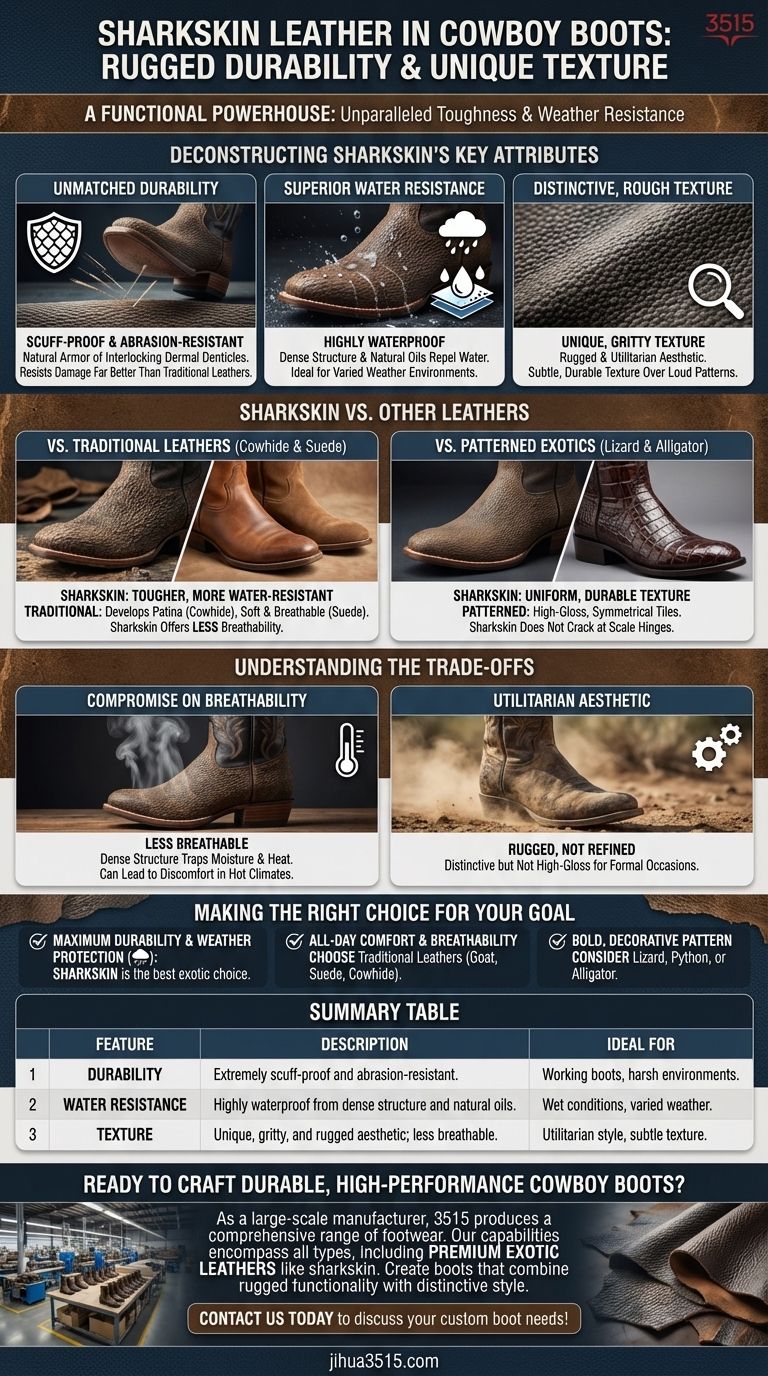
Sharkskin leather is defined by its extreme durability and unique, rough texture. Unlike many exotic leathers chosen purely for aesthetics, sharkskin offers a rare combination of visual distinction and functional toughness, making it one of the most practical choices for a hard-wearing cowboy boot. Its key features are exceptional scuff-proof durability and high water resistance, though this comes at the cost of breathability.
While many exotic boots are prized for delicate patterns, sharkskin is a functional powerhouse. You are essentially choosing unparalleled toughness and weather resistance over the softer, more breathable comfort of traditional leathers.
Deconstructing Sharkskin's Key Attributes
To understand if sharkskin is the right choice for you, it’s important to analyze its specific properties. Each feature directly impacts the boot's performance, comfort, and ideal use case.
Unmatched Durability
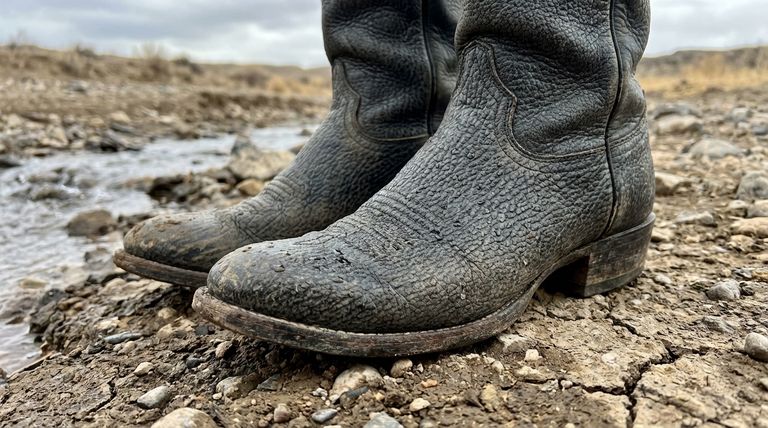
Sharkskin is famously scuff-proof and abrasion-resistant. Its interlocking dermal denticles (the structures that make the skin feel rough) create a natural armor.
This makes it an excellent choice for a working boot or for anyone who is hard on their footwear. It resists scratches and damage far better than most other leathers, including traditional cowhide.
Superior Water Resistance
The natural oils and dense structure of sharkskin make it highly waterproof. While not a substitute for a rubber boot, it will repel water and keep your feet drier in wet conditions than almost any other natural leather.
This feature is a significant advantage for those who wear their boots in varied weather environments.
Distinctive, Rough Texture
Visually, sharkskin is defined by its unique, gritty texture. It lacks the large, glossy tile patterns of alligator or the smooth quill marks of ostrich.
Its appearance is rugged and utilitarian. While different shark species have varying skin patterns, the overall aesthetic is one of subtle, durable texture rather than a loud, decorative pattern.
How Sharkskin Compares to Other Leathers
Sharkskin exists in a class of its own, but understanding its place relative to other popular boot materials provides critical context for your decision.
vs. Traditional Leathers (Cowhide & Suede)
Full-grain cowhide is the industry standard, known for its ability to develop a rich patina over time. Suede offers exceptional softness and breathability.
Sharkskin is significantly tougher and more water-resistant than both but offers very little of the breathability found in suede or a well-worn cowhide boot.
vs. Patterned Exotics (Lizard & Alligator)
Lizard and caiman alligator are popular for their high-gloss, symmetrical tile patterns that create a sleek, formal look.
These leathers, however, require careful maintenance to prevent the hinges between the scales from drying out and cracking. Sharkskin’s uniform, durable texture does not have this vulnerability.
Understanding the Trade-offs
No leather is perfect for every situation. Being aware of sharkskin's limitations is crucial for making an informed choice and avoiding disappointment.
The Compromise on Breathability
The primary trade-off with sharkskin is its lack of breathability. The same dense structure that makes it waterproof also traps moisture and heat.
This can lead to discomfort in hot, dry climates or for individuals prone to sweaty feet. It is less of an all-day comfort choice compared to more porous leathers like goat or suede.
A Utilitarian Aesthetic
While highly distinctive, the look of sharkskin is more rugged than refined. If you are seeking a boot with a polished, high-gloss finish for formal occasions, an exotic like alligator or lizard might be a more suitable choice.
Making the Right Choice for Your Goal
Your ideal boot leather depends entirely on your priorities. Use these guidelines to determine if sharkskin aligns with your needs.
- If your primary focus is maximum durability and weather protection: Sharkskin is one of the best exotic choices, perfectly suited for withstanding harsh use and wet conditions.
- If your primary focus is all-day comfort and breathability: You will likely be better served by traditional leathers like goat, suede, or a premium full-grain cowhide.
- If your primary focus is a bold, decorative pattern: Consider lizard, python, or alligator for a more striking visual statement that stands out.
Ultimately, choosing sharkskin is a commitment to rugged functionality and a unique, textured style.
Summary Table:
| Feature | Description | Ideal For |
|---|---|---|
| Durability | Extremely scuff-proof and abrasion-resistant due to natural dermal denticles. | Working boots, harsh environments. |
| Water Resistance | Highly waterproof from dense structure and natural oils. | Wet conditions, varied weather. |
| Texture | Unique, gritty, and rugged aesthetic; less breathable than traditional leathers. | Utilitarian style, subtle texture. |
Ready to Craft Durable, High-Performance Cowboy Boots?
As a large-scale manufacturer, 3515 produces a comprehensive range of footwear for distributors, brand owners, and bulk clients. Our production capabilities encompass all types of shoes and boots, including premium exotic leathers like sharkskin. We can help you create boots that combine rugged functionality with distinctive style, ensuring your products stand out in the market.
Contact us today to discuss your custom boot needs and leverage our expertise in durable, weather-resistant footwear!
Visual Guide
Related Products
- Durable Leather Tactical Boots Wholesale & Custom Manufacturing for Brands
- Durable Leather High-Ankle Tactical Boots for Wholesale & Custom Manufacturing
- Durable Leather Work Boots Wholesale Manufacturer & Custom Factory
- Durable Leather Work Boots for Wholesale & Custom Manufacturing
- Durable Leather Moc Toe Work Boots for Wholesale & Custom Manufacturing
People Also Ask
- What specialized protections do tactical boots offer? Maximize Endurance with High-Performance Footwear
- What features should law enforcement officers look for in tactical boots? Essential Guide for Safety & Performance
- Importance of Professional Tactical Boots in Loess Gully Regions: Ensure Safety and Precision for Field Monitoring
- What is rucking, and why are tactical boots suitable for it? Discover the Ultimate Footwear for Heavy Loads
- What makes the traction of tactical boots superior? Unlock the Science of Unbeatable Grip