
The right fit for a hiking shoe is the most critical gear choice you will make. To test them properly in-store, you should always shop at the end of the day when your feet are naturally swollen. Crucially, you must wear the exact socks you plan to hike in and walk around the store, paying close attention to any rubbing in the heel or pressure on your toes.
Your goal in the store is not just to see if a shoe fits, but to simulate the stressful conditions of a real hike. Your feet swell and change shape under load, and a successful fitting anticipates and accommodates this transformation to prevent pain and blisters on the trail.
Preparing for Your In-Store Test
A successful fitting begins before you even leave the house. Proper preparation ensures your in-store test is an accurate representation of how the footwear will perform on the trail.
Shop in the Afternoon or Evening
Your feet swell over the course of the day from walking and standing. Trying on shoes late in the day mimics the natural swelling that occurs during a long hike, giving you the most accurate assessment of the required size.
Bring Your Own Hiking Socks
The thickness and material of your socks dramatically alter the volume and fit of a shoe. Never rely on the thin disposable socks offered at a store. Always bring the specific pair of hiking socks you intend to wear to ensure the fit is precise.
Consider Your Insoles
If you use custom orthotics or specialized insoles for support, bring them with you. A shoe's factory insole can be easily removed, and testing the shoe with your own insert is the only way to know if the combination will work for you.
The In-Store Fitting Protocol
Once you have the right shoe and are properly prepared, follow a specific protocol to diagnose the fit. This is about more than just walking a few steps on a flat floor.
Check the Length First
Before lacing up, slide your foot forward until your toes touch the front of the shoe. You should be able to slide one finger (about a half-inch) between your heel and the back of the shoe. This "rule of thumb" ensures your toes won't slam into the front on steep descents.
Lace Them for a Secure Fit
Lace the shoes snugly, but not so tight that you feel pressure points or cut off circulation. Your heel should feel locked into the back of the shoe, with minimal movement.
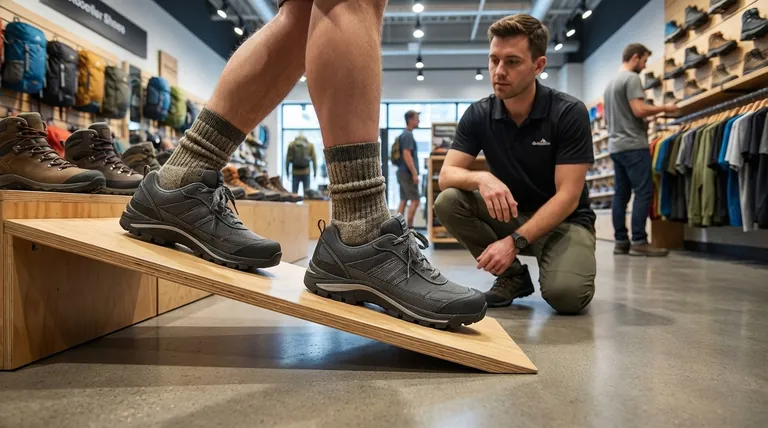
Find an Incline Ramp
This is the single most important test. Nearly all specialty outdoor stores have a small ramp for this purpose.
- Walking Downhill: This simulates descending a steep trail. Your foot should not slide forward, and your toes should not violently jam into the front of the boot.
- Walking Uphill: This tests for heel lift. A small amount of lift is normal, but if your heel is rubbing up and down excessively, it's a guaranteed recipe for blisters.
Spend Time in the Shoes
Don't be in a rush. Walk around the store for at least 10-15 minutes. Stand, squat, and notice any pinching, rubbing, or uncomfortable pressure points anywhere around your foot.
Common Pitfalls and Misconceptions
Buying the wrong shoe is a costly and painful mistake. Avoiding these common misconceptions is critical for making a confident choice.
Myth #1: "It Will Break In"
While heavy leather boots of the past required a long break-in period, modern hiking shoes and boots are designed to be comfortable out of the box. Do not buy a shoe that is actively painful, assuming it will improve. Minor stiffness is acceptable, but pinching and sharp rubbing are red flags.
Myth #2: Forgetting About Width
Fit is three-dimensional. A shoe can be the perfect length but too narrow, causing pinching on the sides of your foot. If you feel pressure on the sides of your forefoot, ask if the model comes in a wide version.
Myth #3: Confusing "Snug" with "Tight"
A proper fit should be snug and secure, not tight. You want your foot held firmly in place to prevent the friction that causes blisters, but you also need enough room for your foot to swell and your toes to splay. If your foot feels cramped, the shoe is too small.
Making the Right Choice for Your Hike
Your final decision should be based on a meticulous in-store test, not on brand loyalty or color.
- If your primary focus is day hiking on maintained trails: A snug but comfortable fit that prevents any heel rub is your top priority.
- If your primary focus is multi-day backpacking with a heavy pack: Ensuring there is ample toe room for descents and a completely locked-in heel is non-negotiable.
- If you have a history of foot problems or blisters: Spending extra time walking on the incline ramp to diagnose any potential rubbing is the most important step you can take.
A few minutes of methodical testing in the store will save you from miles of pain on the trail.
Summary Table:
| Key Fitting Tip | Why It Matters |
|---|---|
| Shop in the Afternoon | Mimics foot swelling during a hike for accurate size. |
| Bring Your Hiking Socks | Ensures a precise fit with the actual gear you'll use. |
| Test on an Incline Ramp | Simulates uphill/downhill walking to check for heel lift and toe jam. |
| Spend 10-15 Minutes Walking | Reveals pressure points that aren't immediately obvious. |
Ready to find the perfect fit for your next adventure? As a large-scale manufacturer, 3515 produces a comprehensive range of high-quality hiking footwear for distributors, brand owners, and bulk clients. Our production capabilities encompass all types of hiking shoes and boots, designed for comfort and durability on any trail. Let us help you equip your customers with the right gear. Contact our team today to discuss your footwear needs!
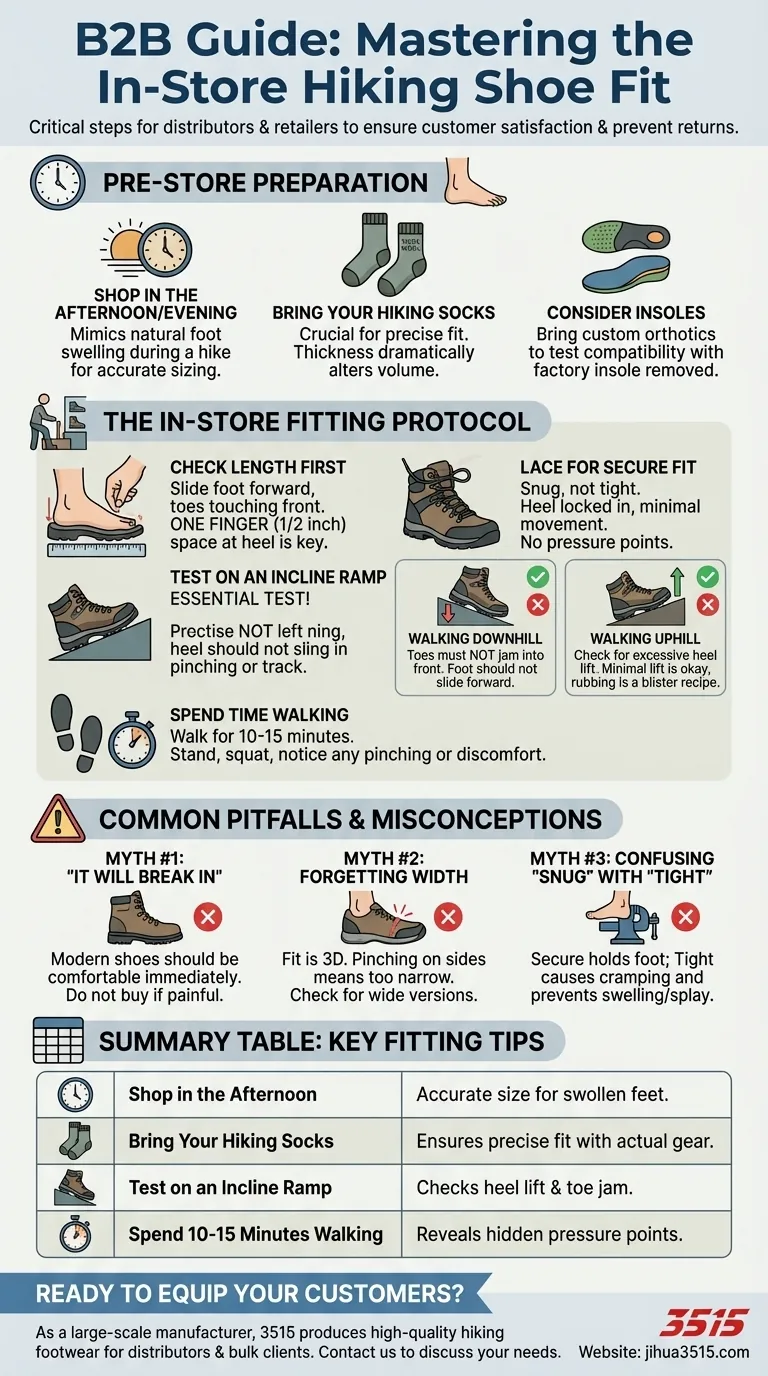
Visual Guide
Related Products
- Durable Rubber Sole Outdoor Shoes Wholesale & Custom Manufacturing
- Wholesale High-Traction Camo Boots - Custom Manufacturer for Brands
- Wholesale Durable Camouflage Canvas Shoes with High-Traction Cleated Rubber Sole
- Wholesale Durable Camo Canvas Shoes with High-Traction Rubber Soles
- Wholesale Breathable Perforated Leather Derby Shoes with Modern Comfort Sole
People Also Ask
- What is the function of the sole in outdoor shoes? Find the Perfect Grip and Support
- What role do outdoor shoes and sneakers play in navigating external terrains? Engineered Stability for Every Surface
- How is AI utilized in the design of outdoor and safety footwear? Harnessing Big Data for Market-Driven Shoe Innovation
- Why is durability important when selecting outdoor shoes? A Guide to Safety & Long-Term Value
- What are the key components of outdoor shoes that affect comfort and sturdiness? A Guide to Durable, High-Performance Footwear



















