To ensure a proper hiking boot fit, you must go beyond your standard shoe size. The process involves trying boots on at the end of the day when your feet are slightly swollen, wearing the exact socks you'll hike in, and performing specific tests to check for heel lift and adequate toe room. This systematic approach prevents the pain and potential injury that can ruin an otherwise excellent trek.
The core principle of fitting a hiking boot is to accommodate the dynamic nature of your foot. A boot that feels perfect in the store must also perform correctly when your foot swells and moves on uneven terrain, which requires a more rigorous testing process than buying a casual shoe.
The Foundation of a Perfect Fit: Preparation is Key
Before you even step into a store, a few preparatory steps will dramatically increase your chances of finding the right boot. Rushing this process is the most common mistake.
Measure More Than Just Length
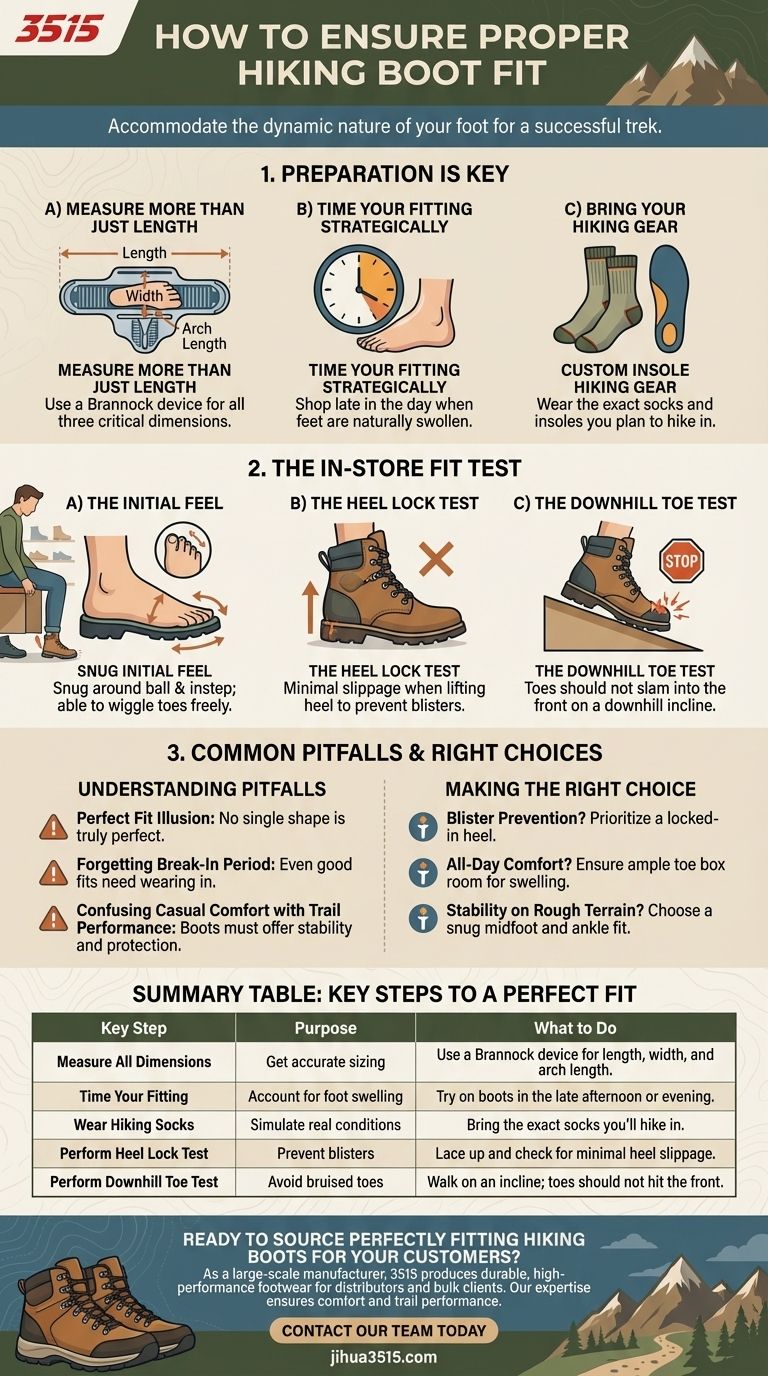
Your foot has three critical dimensions: length, width, and arch length. Most people only know their length. A proper outfitter will use a Brannock device to measure all three, as this provides a much more accurate starting point for selecting a boot.
Time Your Fitting Strategically
Always shop for boots in the late afternoon or evening. Feet naturally swell throughout the day, and they expand even more during a long hike. Fitting your boots to your largest foot size prevents them from becoming painfully tight miles into the trail.
Bring Your Hiking Gear
Never try on boots with the thin socks provided at the store. Bring the exact socks you plan to wear while hiking. The thickness of a good hiking sock significantly impacts the volume and fit inside the boot. If you use custom insoles or orthotics, bring those as well.
The In-Store Fit Test: A Practical Checklist
Once you have a boot on your foot, you need to simulate the stresses of a trail. Walk around the store for at least a few minutes, paying close attention to how your foot feels and moves.
The Initial Feel: Snug, Not Constricting
The boot should feel snug around the ball and instep of your foot, but not uncomfortably tight. You should have enough room in the toe box to wiggle your toes freely. If your toes are cramped, the boot is too small.
The Heel Lock Test
A secure heel is the single most important factor in preventing blisters. With the boot laced up, stand up and try to lift your heel. There should be minimal to no slippage. A slight amount of movement (less than a quarter-inch) can be acceptable, but significant lift means your heel will be rubbing with every step.
The Downhill Toe Test
Find an incline ramp or a set of stairs in the store to simulate walking downhill. Your feet should not slide forward, and your toes should not slam into the front of the boot. If they do, you risk bruised toes and blackened toenails on your hike. This is a critical test for ensuring you have enough length.
Understanding the Common Pitfalls
Achieving the perfect fit involves navigating a few common challenges. Understanding these will help you make a more informed and realistic decision.
The "Perfect" Fit Is an Illusion
Due to the dynamic swelling of feet during a hike and the natural variations between your left and right foot, no single boot shape is truly perfect. The goal is to find the best possible compromise that secures your heel while giving your toes and forefoot room to expand.
Forgetting the Break-In Period
Even a boot that fits well in the store requires a break-in period. Modern synthetic boots require less time, but sturdy leather boots need to be worn in. Start by wearing them around your house, then on short walks, gradually increasing the distance before you commit to a long trek.
Confusing Casual Comfort with Trail Performance
A boot that feels like a comfortable sneaker on a flat store floor might not provide the necessary support on a rocky, uneven trail. The goal of a hiking boot is stability and protection, which often means it will feel stiffer and more substantial than your everyday shoes.
Making the Right Choice for Your Hike
Your final decision should be guided by your primary goal for the footwear. Use these points to prioritize what matters most for your intended activity.
- If your primary focus is avoiding blisters: Prioritize a locked-in heel with absolutely minimal slippage, even if it means sacrificing a little room elsewhere.
- If your primary focus is all-day comfort on long treks: Ensure there is ample room in the toe box to accommodate foot swelling and prevent toe-bang on descents.
- If your primary focus is stability on rough terrain: Choose a snug fit through the midfoot and ankle to prevent your foot from rolling or shifting inside the boot.
Ultimately, a well-fitted boot is the most critical piece of gear for a successful hike, so invest the time to get it right.
Summary Table:
| Key Step | Purpose | What to Do |
|---|---|---|
| Measure All Dimensions | Get accurate sizing | Use a Brannock device to measure length, width, and arch length. |
| Time Your Fitting | Account for foot swelling | Try on boots in the late afternoon or evening. |
| Wear Hiking Socks | Simulate real conditions | Bring the exact socks you'll hike in. |
| Perform Heel Lock Test | Prevent blisters | Lace up and check for minimal heel slippage. |
| Perform Downhill Toe Test | Avoid bruised toes | Walk on an incline; toes should not hit the front. |
Ready to source perfectly fitting hiking boots for your customers? As a large-scale manufacturer, 3515 produces a comprehensive range of durable and high-performance footwear for distributors, brand owners, and bulk clients. Our expertise ensures every pair meets the exacting standards for comfort and trail performance discussed in this guide. Let us help you equip your customers for their next adventure. Contact our team today to discuss your production needs.
Visual Guide
Related Products
- Wholesale High-Traction Camo Boots - Custom Manufacturer for Brands
- Durable Rubber Sole Outdoor Shoes Wholesale & Custom Manufacturing
- Durable Spiked Camouflage Boots Wholesale & Factory Production
- Wholesale Lightweight Tactical Boots Custom Manufacturer for Desert & Combat Use
- Wholesale Waterproof Tactical Boots Custom Suede & High-Traction Soles
People Also Ask
- What are the key features of the new line of camo boots? Built for Extreme Cold & Rugged Terrain
- Are camo boots necessary for hunting success? Prioritize Performance Over Pattern
- What is the technical logic behind using closed-eye testing for tactical boots? Unlocking Peak Footwear Stability
- How does the Rank Score Test identify the primary causes of premature failure in tactical and work boots? Key Insights
- What shoes to wear for a security job? Durable, Protective Footwear for Long Shifts