The primary advantage of breathable hiking boots is their ability to regulate temperature and manage moisture. By allowing the hot, damp air generated by your feet to escape, they keep your feet significantly cooler and drier, which is the single most important factor in preventing blisters and maintaining comfort on the trail.
Breathability is not a luxury feature; it is a core performance characteristic that directly impacts foot health. The central trade-off is often between maximizing airflow and ensuring complete waterproofing and durability.
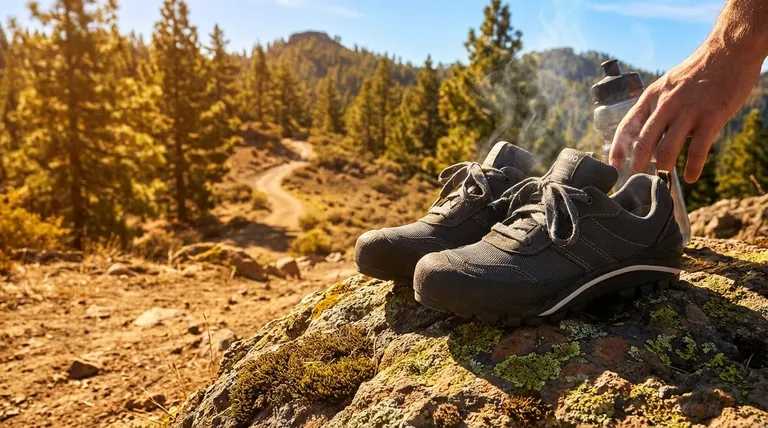
How Breathability Works for Your Feet
Your feet sweat significantly when you hike, generating heat and moisture inside your boots. Without a way to escape, this buildup creates an environment ripe for discomfort and friction.
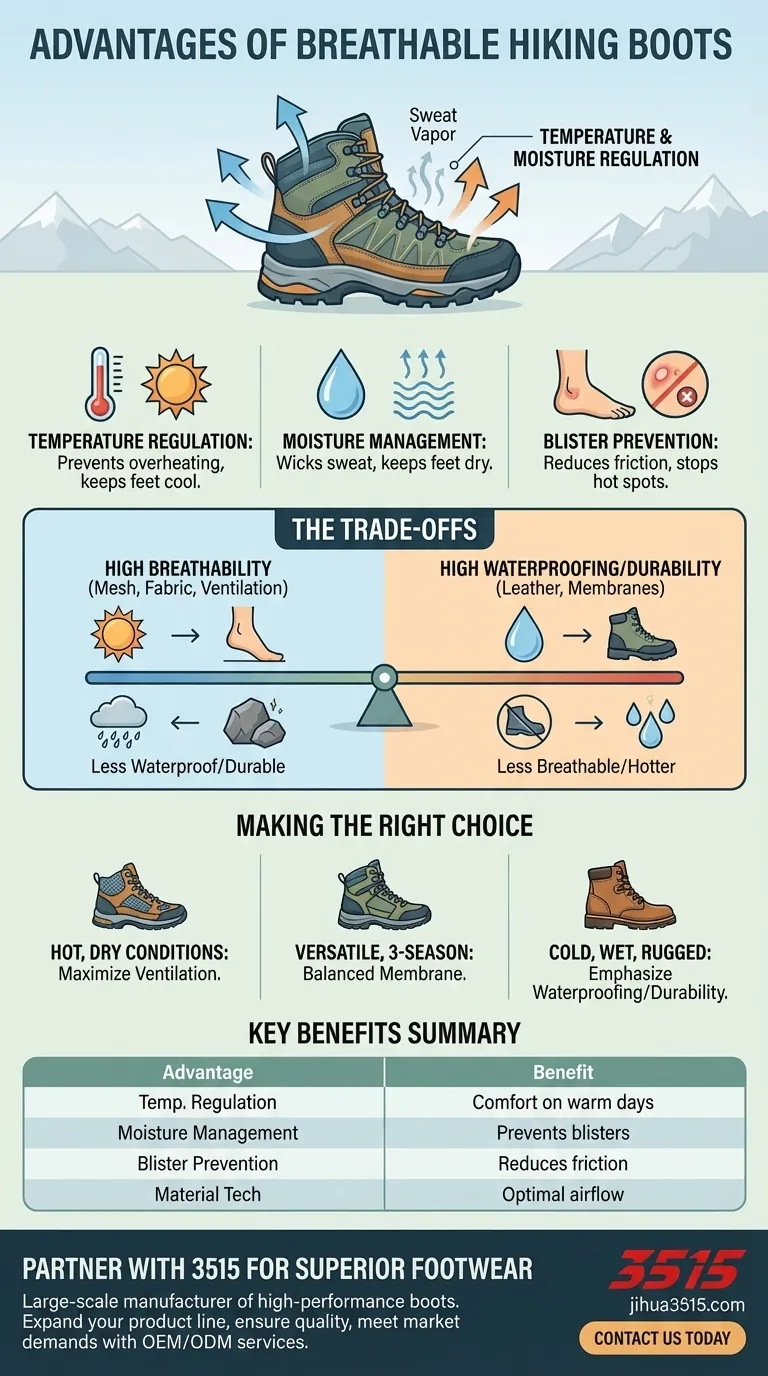
The Core Function: Temperature Regulation
Your feet are a key area for body temperature regulation. Breathable boots act like a ventilation system, preventing your feet from overheating on warm days or during strenuous climbs.
This constant airflow keeps the internal climate of the boot stable and comfortable.
The Primary Benefit: Moisture Management
The most critical role of breathability is moisture wicking. It actively moves sweat vapor from inside the boot to the outside air.
Dry feet are happy feet. When your skin and socks become saturated with sweat, the skin softens and is far more susceptible to damage.
Preventing Blisters and Hot Spots
Friction is the enemy of the hiker, and moisture is friction's best friend. Sweat-soaked socks rub against softened skin, quickly creating painful hot spots and blisters.
By keeping your feet dry, breathable boots drastically reduce the friction that leads to these common hiking ailments.
Materials That Make it Happen
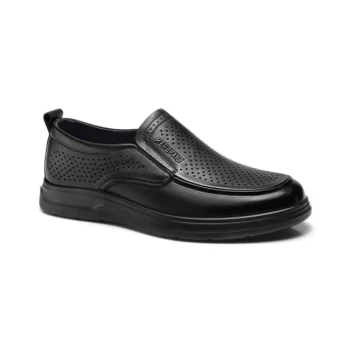
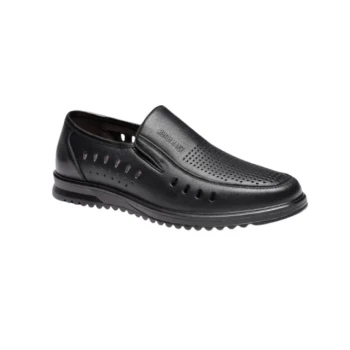
Breathability is achieved through specific materials and construction. You will often see boots with mesh panels, perforated leather, or specialized linings designed to allow air exchange while still providing structure.
Understanding the Trade-offs
Choosing a hiking boot is a balancing act. Prioritizing one feature, like breathability, often means accepting a compromise in another area.
Breathability vs. Waterproofing
There is an inherent conflict between letting air out and keeping water out. Boots with extensive mesh panels offer excellent breathability but will get wet quickly in rain or stream crossings.
Boots with waterproof membranes (like Gore-Tex) attempt to solve this by allowing water vapor to escape while blocking liquid water, but even they are less breathable than a non-waterproof, highly ventilated boot.
Breathability vs. Durability
The materials that make a boot highly breathable, such as fabric and mesh, are generally less resistant to abrasion than full-grain leather.
For rugged, off-trail scrambling over sharp rocks, a durable leather boot may be necessary, even at the cost of some breathability.
Making the Right Choice for Your Goal
The ideal level of breathability depends entirely on where and when you plan to hike.
- If your primary focus is hiking in hot, dry conditions: Prioritize a boot with maximum ventilation, likely featuring large mesh panels, and accept that it will offer minimal water resistance.
- If your primary focus is versatile, three-season hiking: Look for a balanced boot, perhaps one with a reliable waterproof-breathable membrane that provides a good compromise for varied conditions.
- If your primary focus is cold, wet, or rugged terrain: Emphasize waterproofing and durability from materials like leather, as keeping feet dry from external water and protecting them from terrain is more critical than maximum airflow.
Ultimately, selecting the right footwear begins with a clear understanding of the environment your journey will take you through.
Summary Table:
| Key Advantage | How It Benefits You |
|---|---|
| Temperature Regulation | Prevents feet from overheating, keeping you comfortable on warm days and strenuous climbs. |
| Moisture Management | Wicks sweat away from your feet, the #1 factor in preventing painful blisters and hot spots. |
| Blisters Prevention | Reduces friction by keeping skin and socks dry, minimizing the risk of common hiking injuries. |
| Material Technology | Achieved through mesh panels and specialized linings for optimal airflow and comfort. |
Ready to Equip Your Customers with Superior Hiking Footwear?
As a large-scale manufacturer, 3515 produces a comprehensive range of high-performance hiking boots for distributors, brand owners, and bulk clients. Our production capabilities encompass all types of footwear, including advanced breathable models designed for comfort and durability.
Partner with us to:
- Expand Your Product Line with technically advanced, market-ready hiking boots.
- Ensure Consistent Quality with our large-scale manufacturing expertise and rigorous quality control.
- Meet Specific Market Demands through custom OEM/ODM services tailored to your brand.
Let's discuss how we can support your business goals. Contact our team today for expert consultation and competitive pricing!
Visual Guide
Related Products
- Lightweight Breathable Training Shoes for Wholesale & Custom OEM Manufacturing
- Wholesale Breathable Training Shoes Custom Athletic Footwear Manufacturer
- Wholesale High-Traction Camo Boots - Custom Manufacturer for Brands
- Lightweight Breathable Sneakers with Wet-Traction Grip for Wholesale & Private Label
- Wholesale Durable & Breathable Training Shoes for Custom Brands
People Also Ask
- Why are lightweight training shoes often preferred over professional hiking boots in urban walking? Maximize City Comfort
- What is the primary role of specialized training or orthopedic shoes? Enhance Safety in Elderly Balance Training
- Why are professional-grade training shoes essential for physical therapy? Ensure Patient Safety and Gait Stability
- Why are the slip-resistance and stability performance of training shoes critical in gait analysis? Ensure Data Accuracy
- Why is the use of flat-soled or professional training shoes essential for WBV? Maximize Vibration Energy Transfer