
Wellington boots are primarily used for any activity where you need to keep your feet and lower legs dry, clean, and protected from the elements. Their most common applications include navigating rainy days and puddles, gardening in wet soil, attending muddy music festivals, and performing agricultural or farm work.
The fundamental purpose of a Wellington boot is to serve as an impermeable barrier. It is the definitive footwear solution for protecting you from water, mud, dirt, and snow in a wide range of outdoor environments.

The Core Principle: Environmental Protection
The design of the Wellington boot is brilliantly simple: create a seamless, waterproof shield for the foot and calf. This core function is what makes it so versatile across different activities and conditions.
Against Water and Mud
The most obvious use is protection from wetness. The rubber or PVC construction prevents water from soaking through, keeping your feet completely dry.
This is essential for walking through puddles, crossing muddy fields at festivals, walking dogs on wet trails, or standing near water while fishing.
Against Dirt and Debris
When gardening or working on a farm, your feet are exposed to soil, manure, and other debris.
Wellington boots provide a durable, easy-to-clean barrier that protects both your feet and your regular clothing from getting dirty or stained.
In Cold and Snowy Conditions
While not always insulated, wellies offer excellent protection against wet snow and slush.
By keeping your feet dry, they help maintain warmth, which is critical in cold weather. Many users pair them with thick socks for added insulation during winter activities.
Wellington Boots in Specific Contexts
While the principle of protection is universal, the application of wellies varies widely depending on the context, from casual recreation to demanding professional work.
Everyday & Recreational Use
For many, wellies are a staple for daily life and leisure. They are perfect for rainy day commutes, school runs, or simply taking a stroll through a wet park.
Dog walking and pottering in the garden are two of the most popular uses, where ground conditions can be unpredictable and messy.
Events and Leisure
Wellington boots are iconic at music festivals, where rain can quickly turn fields into mud pits. They are also invaluable on camping trips for navigating dewy morning grass or wet terrain.
Their utility extends to beach excursions for walking on wet sand and attending outdoor sporting events on damp touchlines.
Specialized and Professional Work
In more demanding environments, wellies are a critical piece of equipment. They are standard issue for farmers and agricultural workers who need protection from mud and waste.
They are also used for hunting and shooting in rough, wet terrain. Historically, they originated as military riding boots and are still issued to some armed forces for use in wet conditions.
Understanding the Trade-offs
Despite their versatility, Wellington boots are specialized tools with clear limitations. Understanding these is key to using them effectively.
Breathability and Comfort
The same waterproof quality that makes wellies effective also means they are not breathable. Over long periods, especially in warmer weather, your feet can become sweaty and uncomfortable.
They are generally not designed for long-distance hiking, as they lack the ankle support and breathable materials of dedicated hiking boots.
A Note on Fashion
While wellies have become a fashion staple, it's important to distinguish between fashion-oriented boots and functional ones.
Fashion wellies may prioritize style over durability and may not be suitable for heavy-duty work or challenging terrain.
Making the Right Choice for Your Goal
To get the most value from a pair of Wellington boots, match them to your primary activity.
- If your primary focus is daily convenience: A standard pair is perfect for rainy commutes, dog walking, and keeping in the car for unexpected downpours.
- If your primary focus is outdoor hobbies: Look for boots with better grip and durability for gardening, fishing, or camping in muddy conditions.
- If your primary focus is heavy-duty work: Consider specialized agricultural or industrial boots that offer enhanced protection, durability, and features like steel toes.
Ultimately, the Wellington boot is an essential tool for anyone who refuses to let wet or muddy conditions stop them from enjoying the outdoors.
Summary Table:
| Common Use Category | Key Activities |
|---|---|
| Everyday & Recreation | Rainy commutes, dog walking, school runs |
| Events & Leisure | Music festivals, camping, beach walks |
| Professional & Specialized | Farming, agriculture, hunting, military use |
Need durable, high-quality wellington boots for your business or customers?
As a large-scale manufacturer, 3515 produces a comprehensive range of waterproof footwear for distributors, brand owners, and bulk clients. Our production capabilities encompass all types of durable boots perfect for gardening, festivals, and professional work.
Contact us today to discuss your specific needs and discover how we can provide reliable, cost-effective footwear solutions for your market.
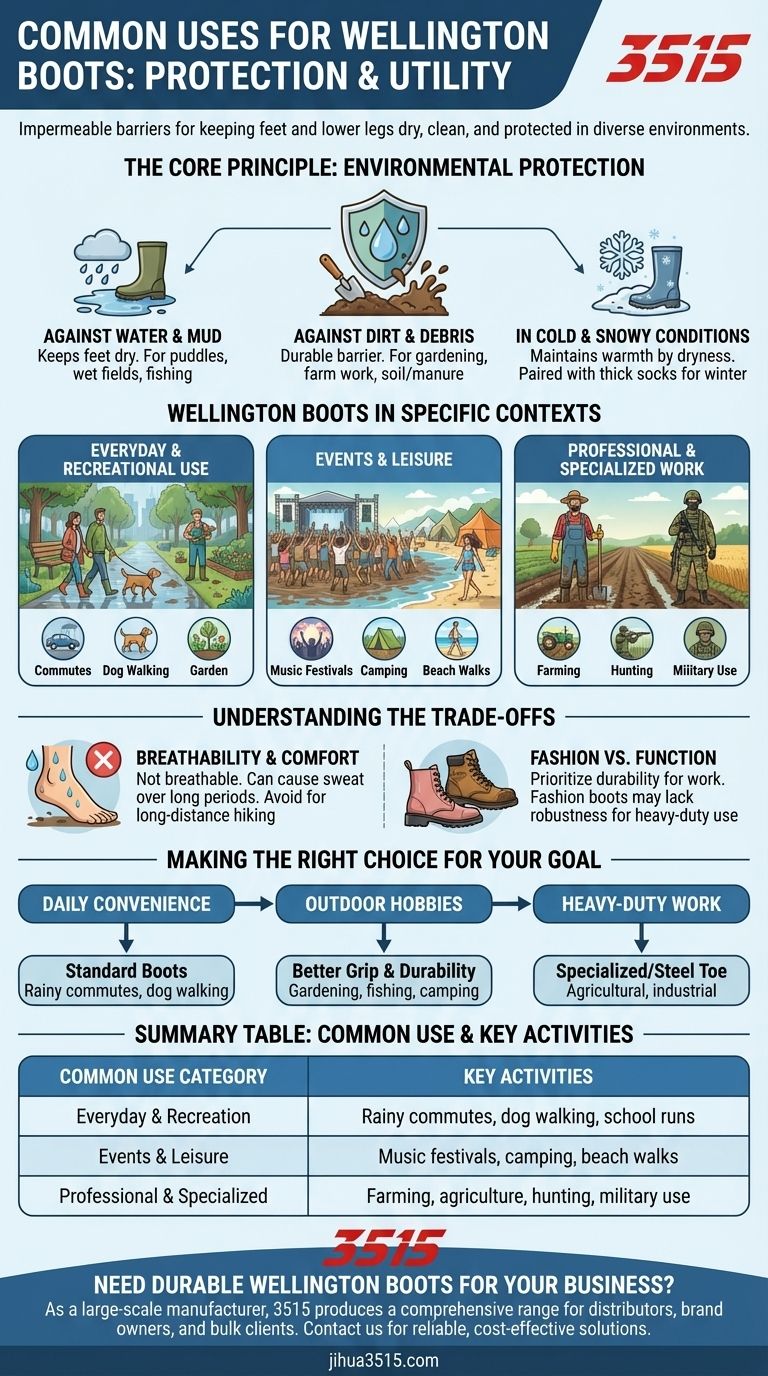
Visual Guide
Related Products
- Durable Waterproof Rain Boots | Custom Manufacturer for Wholesale & Brands
- Wholesale Durable Leather Work Boots | 8-Inch Goodyear Welt Manufacturer
- Factory Direct Wholesale Rain Boots Durable Waterproof & Fully Customizable
- High-Traction Suede Tactical Boots Wholesale & Custom Manufacturing
- Premium Wholesale Tactical Style Safety Shoes Boots with Quick Lacing
People Also Ask
- What are the main materials for waterproof rain boots? Choose the Right Material for Durability & Comfort
- What is the overall recommendation for choosing rain boot materials? A Guide to Rubber vs. PVC
- How does boot height affect waterproofing? Choose the Right Height for Ultimate Protection
- Why are rain boots more flexible and comfortable than snow boots? The Key Differences Explained
- What are the best types of shoes for different gardening conditions? Find Your Perfect Match.



















