
Motorcycle boot safety ratings are more than just a label; they are a standardized evaluation system that objectively measures a boot's ability to protect a rider. These ratings assess critical factors like impact absorption, abrasion resistance, and structural rigidity. Their importance is simple: they provide a clear, unbiased benchmark of protection, allowing you to make an informed decision that directly reduces your risk of serious injury in a crash.
A certified safety rating is the only way to verify that a motorcycle boot is genuine protective equipment, not just a reinforced fashion item. Understanding what these ratings test for is the key to ensuring your feet and ankles are properly shielded from the unique dangers of riding.
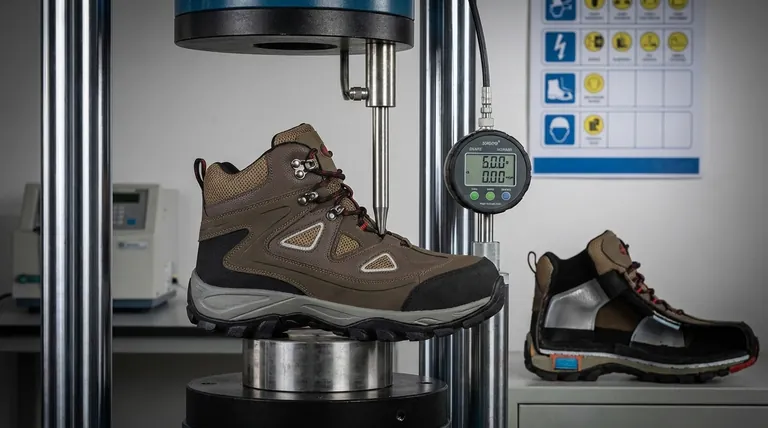
What a Safety Rating Truly Represents
A formal safety rating signifies that a boot has been independently tested to meet specific, measurable performance standards. This moves the evaluation from a manufacturer's marketing claims to a proven level of protection.
Beyond a Simple Pass/Fail
Most rating systems, such as the common European CE standard (EN 13634), are not a simple pass or fail. They often feature different levels of protection (e.g., Level 1 or Level 2), with the higher level indicating a greater capacity to absorb impacts or resist abrasion.
Key Areas of Tested Protection
Certified boots are subjected to a battery of tests that simulate real-world crash scenarios. The core areas of assessment include:
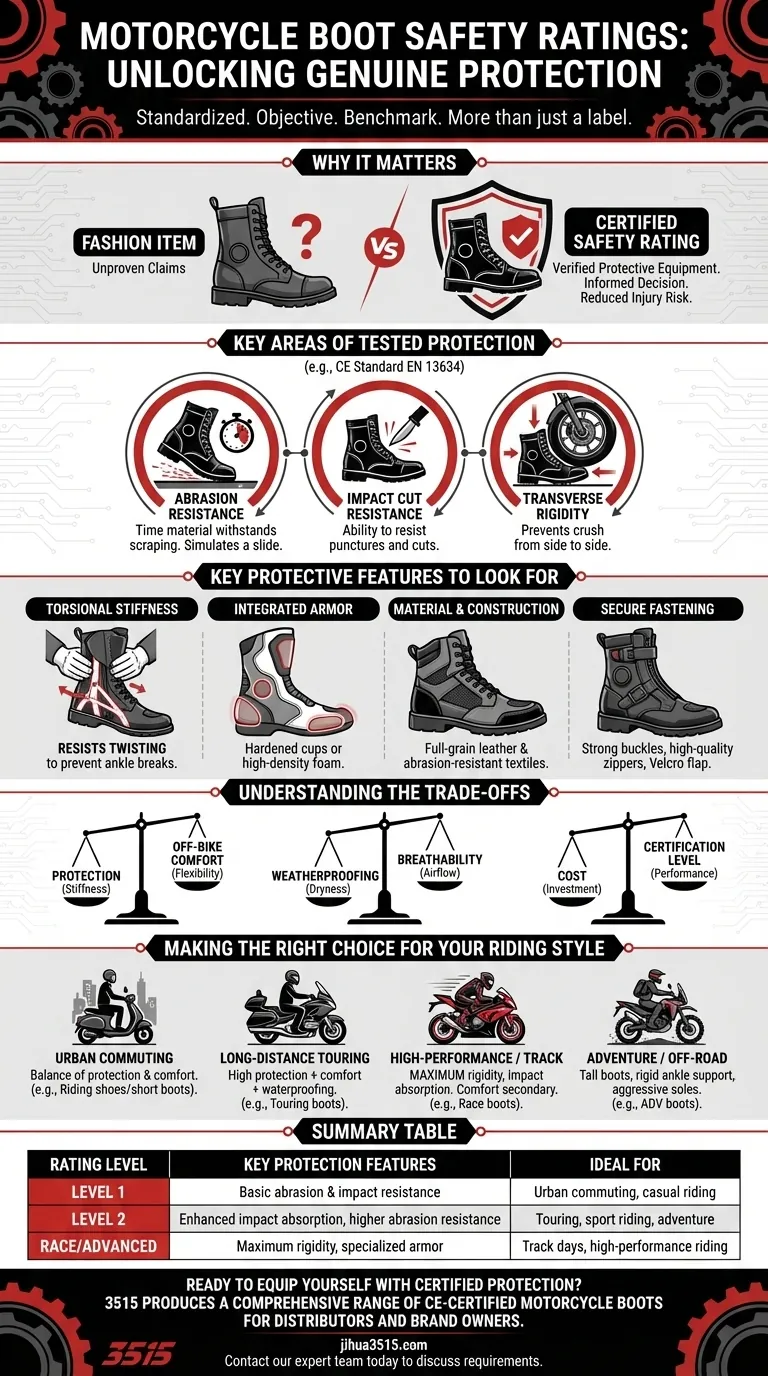
- Abrasion Resistance: The test measures how long the boot's material can withstand being scraped against an abrasive surface before wearing through, simulating a slide on asphalt.
- Impact Cut Resistance: This test evaluates the boot's ability to resist being cut or punctured by a sharp object during an impact.
- Transverse Rigidity: This is a crucial test that measures the boot's resistance to being crushed from side to side. A rigid sole prevents the foot from being flattened by the weight of the motorcycle in an accident.
Key Protective Features to Look For
While the rating gives you the overall performance grade, it's helpful to understand the physical features that contribute to that score. These are the components that do the work of protecting you.
Torsional Stiffness
A critical feature of any true riding boot is its resistance to twisting. The boot should be very difficult to twist by hand, as this rigidity is what prevents your ankle from breaking during a crash.
Integrated Armor
Look for armor that is built into the boot, not just added on. This typically includes hardened cups or high-density foam at the heel, toe box, and most importantly, around both sides of the ankle. Some boots also include shin protection.
Material and Construction
The boot's main structure acts as a second skin. Full-grain leather and advanced abrasion-resistant textiles are the primary materials used to ensure the boot holds together during a slide.
Secure Fastening System
A boot is useless if it comes off during a crash. Look for robust fastening systems, like strong buckles or high-quality zippers paired with a hook-and-loop flap to ensure the zipper stays closed.
Understanding the Trade-offs
Choosing the perfect boot always involves balancing competing priorities. Understanding these compromises is essential for finding the right gear for your specific needs.
Protection vs. Off-Bike Comfort
There is a direct trade-off between protective stiffness and walking comfort. A highly protective race boot with extreme rigidity will be awkward to walk in, while a more flexible short boot may sacrifice some protection for comfort.
Weatherproofing vs. Breathability
Waterproof membranes are excellent for keeping your feet dry in the rain, but they inherently reduce a boot's ability to breathe. In hot, dry climates, this can lead to sweaty and uncomfortable feet.
Cost vs. Certification Level
Higher levels of certified protection often require more advanced materials and complex construction techniques. As a result, boots with a higher safety rating typically come at a higher price point, which reflects the investment in R&D and testing.
Making the Right Choice for Your Riding Style
Your final decision should be guided by the type of riding you do most often.
- If your primary focus is urban commuting: Prioritize a certified boot that offers a good balance of protection and off-bike walking comfort, often found in riding shoes or short boots.
- If your primary focus is long-distance touring: Seek boots with a high protection rating combined with waterproofing and features designed for all-day comfort.
- If your primary focus is high-performance or track riding: Maximum torsional rigidity, impact absorption, and abrasion resistance should be your only priority; comfort is a secondary concern.
- If your primary focus is adventure or off-road riding: Look for tall boots with rigid ankle support, robust shin protection, and aggressive, high-grip soles.
Choosing footwear with a verified safety rating is a direct investment in your own protection on every single ride.
Summary Table:
| Rating Level | Key Protection Features | Ideal For |
|---|---|---|
| Level 1 | Basic abrasion & impact resistance | Urban commuting, casual riding |
| Level 2 | Enhanced impact absorption, higher abrasion resistance | Touring, sport riding, adventure |
| Race/Advanced | Maximum rigidity, specialized armor | Track days, high-performance riding |
Ready to Equip Yourself with Certified Protection?
As a large-scale manufacturer, 3515 produces a comprehensive range of CE-certified motorcycle boots for distributors, brand owners, and bulk clients. Our production capabilities encompass all types of protective footwear, from urban commuter boots to high-performance race models, ensuring every rider gets the verified safety they need.
Contact our expert team today to discuss your specific requirements and discover how we can deliver quality, certified protection for your customers.
Visual Guide
Related Products
- Wholesale Tactical Boots High-Traction & Reflective for Bulk & Brand Orders
- High Performance Fire-Retardant Waterproof Safety Boots
- Durable Goodyear Welt Leather Work Boots for Wholesale & Private Label
- Wholesale High-Traction Camo Boots - Custom Manufacturer for Brands
- Heavy-Duty Waterproof Nubuck Safety Boots Safety Shoes for Bulk Supply
People Also Ask
- How do tactical boots protect against injuries? Discover the Integrated Safety System
- Are tactical boots suitable for hiking? Discover the Ultimate Footwear for Rugged Trails
- What is the role of professional 3D medical imaging software in optimizing tactical boot design and performance?
- What are the recommended work boot features for military and law enforcement? Enhance Operator Performance & Safety
- What role does repairable design play in tactical boots? Extend Lifespan & Cut Total Ownership Costs



















