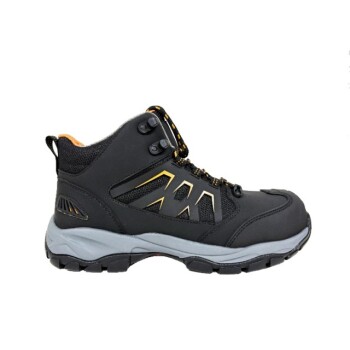
In short, ESD marked shoes are specialized safety footwear designed to protect sensitive electronic components from damage caused by electrostatic discharge. They are not primarily for protecting the wearer from electrical shock. Instead, they create a safe path for static electricity to travel from the human body to the ground, preventing a sudden "zap" that could destroy microprocessors or other delicate parts.
The fundamental purpose of ESD footwear is to protect the product, not the person. They prevent the wearer's naturally accumulating body static from damaging the sensitive electronic equipment they are working with.

The Core Problem: Static Discharge and Electronics
What is Electrostatic Discharge (ESD)?
You have likely experienced electrostatic discharge when you feel a small shock after walking across a carpet and touching a metal doorknob.
This same phenomenon occurs constantly on a smaller, unnoticeable scale. Your body acts as a capacitor, building up a static charge from simple movements.
Why It Matters in a Technical Environment
While that "zap" is harmless to you, it is catastrophic for modern electronic components.
A discharge that is too small for a human to even feel can carry enough voltage to permanently damage or destroy microchips, circuit boards, and other sensitive parts. This leads to costly product failures.
How ESD Shoes Provide Protection
Creating a Path to Ground
ESD shoes are constructed with materials that are electrically dissipative. This means they are neither fully conductive nor fully insulating.
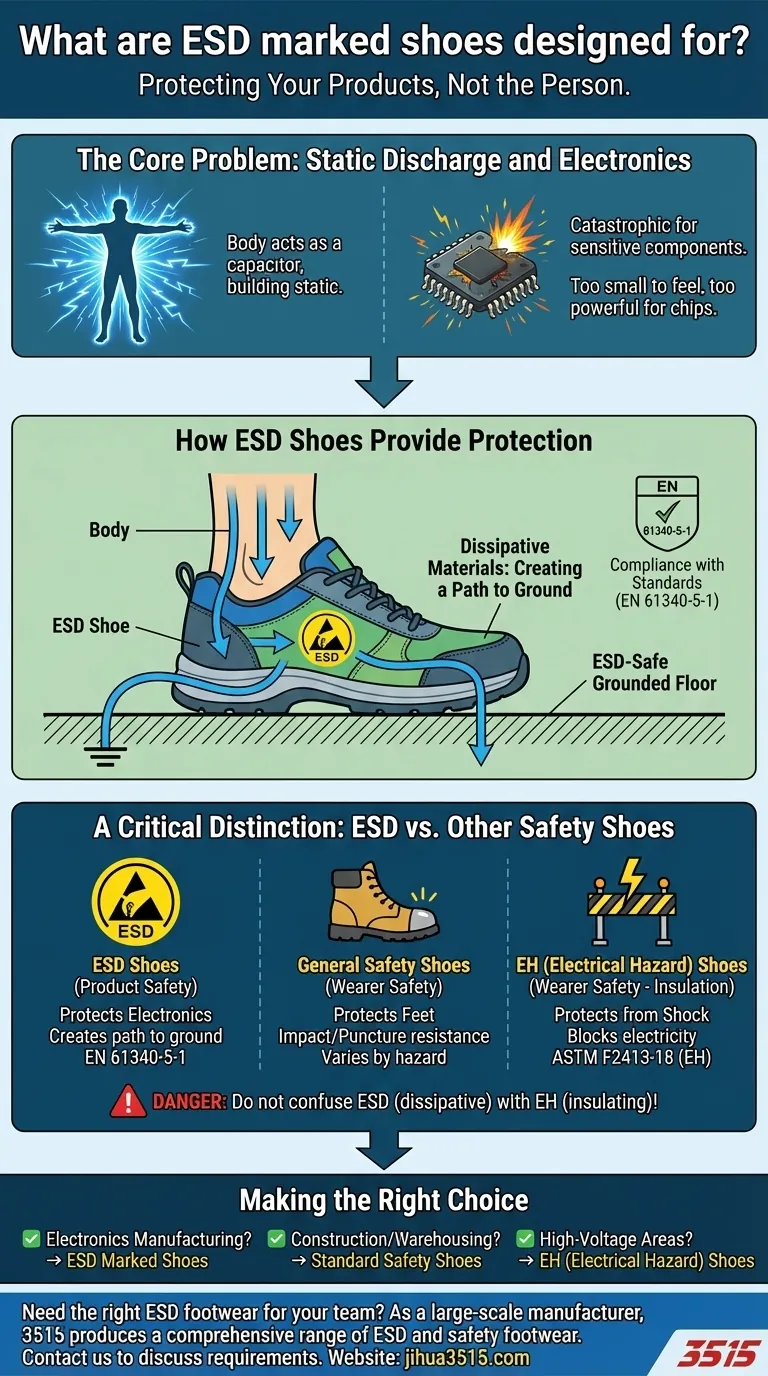
They create a continuous path for static electricity to safely and slowly bleed off from your body, through your shoes, and into a special ESD-safe grounded floor.
Compliance with Standards
This footwear must meet specific standards, such as EN 61340-5-1, which defines the required range of electrical resistance.
This ensures the discharge is fast enough to prevent static buildup but slow enough to not cause a dangerous spark.
Part of a Complete System
It's crucial to understand that ESD shoes are just one part of a complete ESD control program.
For them to be effective, they must be used in conjunction with other measures like ESD flooring, wrist straps, and proper handling procedures.
A Critical Distinction: ESD vs. Other Safety Shoes
General Safety Shoes Protect the Wearer
Standard safety shoes are Personal Protective Equipment (PPE) designed to prevent injury to your feet. They protect against impacts, punctures from sharp objects, and slips. Their primary goal is wearer safety.
ESD Shoes Protect the Product
ESD shoes, while often incorporating safety features like steel toes, have one unique and primary goal: product safety. They protect the electronics from the person.
The DANGER of Confusion with EH Shoes
Do not confuse ESD (Electrostatic Dissipative) shoes with EH (Electrical Hazard) rated shoes. Their functions are opposite.
EH shoes are designed to be electrical insulators. They protect the wearer from being electrocuted by high-voltage circuits by blocking the path of electricity. Wearing an ESD shoe in a high-voltage environment could be extremely dangerous, as it is designed to create a path to ground.
Making the Right Choice for Your Goal
- If your primary focus is protecting sensitive electronics: ESD marked shoes are the correct and necessary choice for environments like electronics manufacturing, assembly lines, and data centers.
- If your primary focus is protecting yourself from physical impact or punctures: A standard safety shoe with features like steel toes and puncture-resistant soles is what you need.
- If your primary focus is protecting yourself from shock from live electrical circuits: You must use specifically rated Electrical Hazard (EH) footwear, which provides insulation.
Choosing the correct footwear is a critical safety decision based on the specific hazards of your work environment.
Summary Table:
| Feature | ESD Shoes | Standard Safety Shoes | EH (Electrical Hazard) Shoes |
|---|---|---|---|
| Primary Purpose | Protects sensitive electronics from the wearer | Protects the wearer's feet from physical hazards | Protects the wearer from electric shock (insulation) |
| How It Works | Creates a safe, dissipative path to ground | Provides impact/puncture resistance | Blocks the path of electricity |
| Key Standard | EN 61340-5-1 | Varies by hazard (e.g., ANSI/CSA) | ASTM F2413-18 (EH rating) |
| Ideal Environment | Electronics manufacturing, cleanrooms, data centers | Construction, warehouses, manufacturing | Electrical work, high-voltage areas |
Need the right ESD footwear for your team?
As a large-scale manufacturer, 3515 produces a comprehensive range of ESD and safety footwear for distributors, brand owners, and bulk clients. We ensure your workers are equipped with the correct protection for their specific environment, safeguarding both your products and your people.
Contact us today to discuss your requirements and get a quote!
Visual Guide
Related Products
- Premium Lightweight Safety Shoes for Wholesale & Bulk Orders
- Heavy-Duty Waterproof Nubuck Safety Boots Safety Shoes for Bulk Supply
- Premium Wholesale Tactical Style Safety Shoes Boots with Quick Lacing
- Wholesale Mesh Steel Toe Safety Shoes with Dial Closure Factory Production
- Advanced KPU Athletic Safety Shoe with Steel Toe Cap Anti-Slip Rotary Lacing System
People Also Ask
- What is a recommended alternative to using hairspray for slip resistance? Ditch Unreliable Hacks for Real Safety
- How is the absence of PPE (safety shoes & helmets) categorized in construction motion data labeling? Unlock Real-Time Safety Insights!
- What role does blockchain play in footwear supply chain transparency? Enhance Safety Shoe Traceability and Verification
- What workplace hazards indicate the need for safety shoes? Identify risks to protect your workforce.
- What role do specialized safety shoes play in preventing falls? Engineering Stability in Industrial Environments