To put it simply, a dress boot is a type of men's footwear built with the refined materials and sleek silhouette of a dress shoe, but with a shaft that extends up to cover the ankle. They are an excellent and stylish component of modern business casual attire, offering more personality and weather resistance than a standard oxford or loafer.
The core principle to understand is that dress boots are not rugged workwear; they are an elegant hybrid. They merge the sophisticated upper of a dress shoe with the robust, ankle-high structure of a boot, making them a versatile choice for bridging the gap between formal and casual.
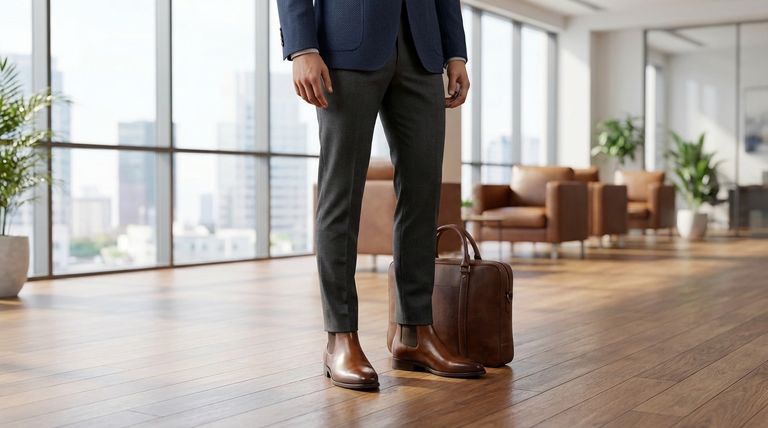
What Truly Defines a Dress Boot?
The term "boot" can bring to mind heavy, utilitarian footwear. However, in a business casual context, a dress boot is defined by its refinement and adherence to the principles of classic dress shoes.
The Anatomy of a Dress Boot
A true dress boot shares its DNA with a high-quality dress shoe. It typically features a sleek silhouette, a relatively smooth leather or suede upper, and a thin, elegant sole. Unlike work boots, they lack aggressive treads, bulky hardware, or overly thick construction.
Where They Sit on the Formality Spectrum
Dress boots occupy a specific place in your wardrobe. They are generally considered less formal than a classic leather oxford but more formal than a fashion sneaker or boat shoe. This positions them as a perfect choice for most business casual environments.
The Key Styles for Business Casual
While many variations exist, three core styles dominate the business casual landscape. Each offers a slightly different character to suit your specific workplace and personal style.
The Chelsea Boot: The Sleek Default
Characterized by its laceless design and elastic side panels, the Chelsea boot is arguably the most versatile dress boot. Its clean, minimalist look allows it to pair effortlessly with everything from dark denim to chinos and tailored trousers.
The Chukka Boot: The Versatile Workhorse
The Chukka boot is an ankle-high boot with open lacing, typically featuring only two or three eyelets. Often found in suede, it has a softer, more relaxed feel than a Chelsea, making it an ideal choice for creative offices or more casual business settings.
The Lace-Up Dress Boot: The Refined Classic
This style is essentially a traditional dress shoe, like a Derby or Oxford, extended into a boot format. Lace-up dress boots offer a more structured and classic appearance, making them a strong alternative to dress shoes during colder months or in inclement weather.
Understanding the Trade-offs
While dress boots are incredibly versatile, they are not a universal solution. Knowing when to wear them—and when not to—is key to maintaining a professional appearance.
When a Dress Boot Is the Perfect Choice
Dress boots excel in environments that value sharp, contemporary style. They are ideal for cooler weather, adding an extra layer of warmth and protection. They also inject a dose of modern personality into an outfit that might otherwise feel too conventional.
When to Opt for a Classic Dress Shoe
In highly conservative corporate settings or for critical, formal client meetings, a traditional dress shoe like a cap-toe oxford remains the safest and most appropriate choice. When wearing a full suit, a dress shoe is almost always the better option.
The Pitfall of the "Wrong" Boot
It is crucial not to confuse a dress boot with a rugged work boot. Styles with thick lug soles, moc-toes, or a bulky profile (like a classic Timberland or Red Wing boot) are too casual and should be avoided in a professional business context.
Making the Right Choice for Your Goal
Selecting the right boot depends entirely on the environment and the impression you wish to make.
- If your primary focus is maximum versatility: A sleek Chelsea boot in black or dark brown leather will seamlessly integrate with the widest range of business casual outfits.
- If your primary focus is a relaxed, creative look: A Chukka boot, particularly in a rich brown or grey suede, offers a sophisticated yet approachable style.
- If your primary focus is formality and weather-readiness: A classic lace-up dress boot in a polished leather provides the elegance of a dress shoe with the practicality of a boot.
Ultimately, incorporating the right dress boot into your wardrobe is a confident way to enhance your personal style while respecting professional standards.
Summary Table:
| Style | Key Characteristics | Best For |
|---|---|---|
| Chelsea Boot | Laceless, elastic panels, minimalist | Maximum versatility, sleek modern looks |
| Chukka Boot | 2-3 eyelets, often suede, relaxed feel | Creative offices, relaxed business casual |
| Lace-Up Dress Boot | Structured, classic design, polished | Colder weather, formal business casual settings |
Ready to Elevate Your Business Casual Footwear Collection?
As a large-scale manufacturer, 3515 produces a comprehensive range of sophisticated footwear for distributors, brand owners, and bulk clients. Our production capabilities encompass all types of shoes and boots, including the very dress boot styles detailed in this article. We can help you offer your customers the perfect blend of professional style and modern versatility.
Contact 3515 today to discuss your manufacturing needs and bring high-quality dress boots to your market.
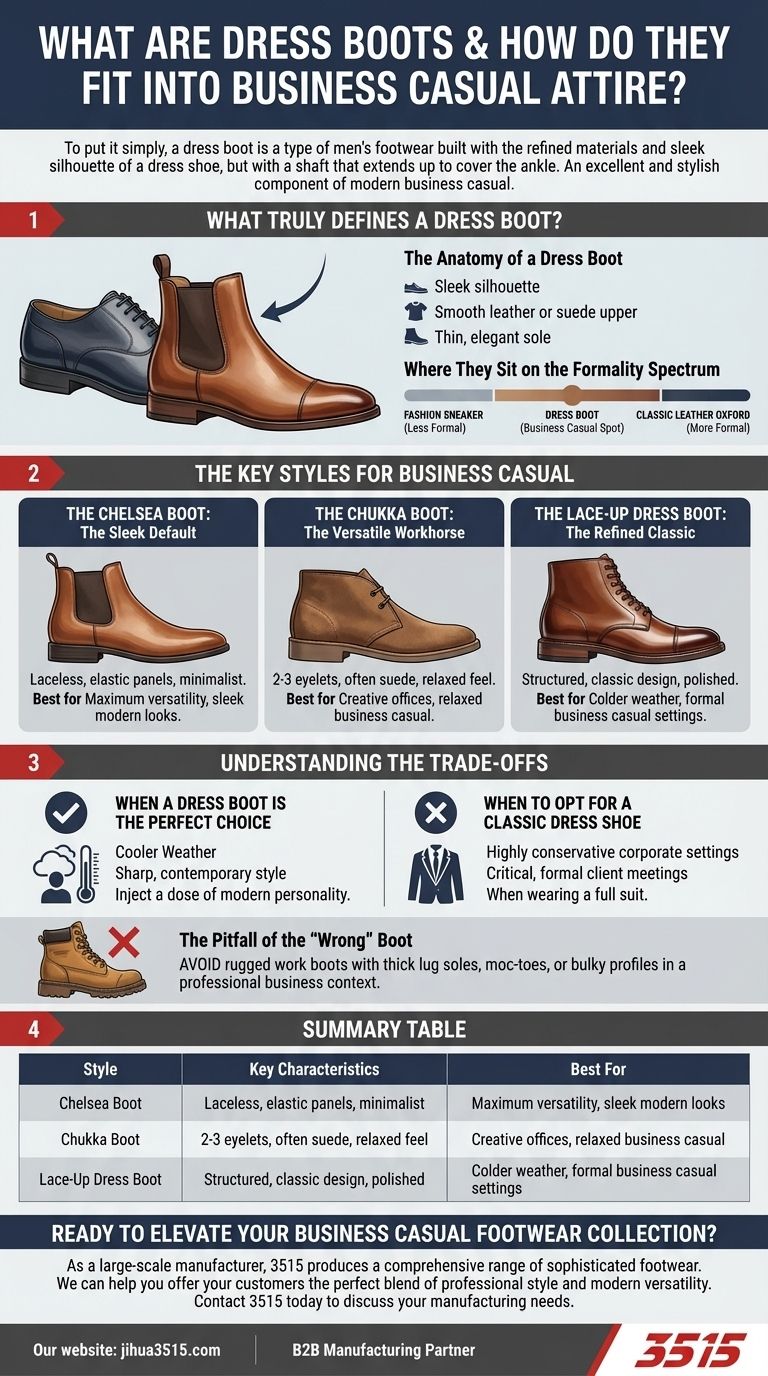
Visual Guide
Related Products
- Wholesale Comfort Dress Shoes with Dial Closure for Custom Manufacturing
- Wholesale Perforated Comfort Dress Shoes | Custom Derby Shoe Manufacturer
- Custom Manufactured Air Cushion Leather Business Shoes for Wholesale
- Wholesale Classic Leather Lace-Up Ankle Boots for Brand Manufacturing
- Wholesale Tactical Boots High-Traction & Reflective for Bulk & Brand Orders
People Also Ask
- How do comfort dress shoes differ from traditional dress shoes? Discover the Ergonomic Advantage
- Which dress shoe styles are suitable for wearing with jeans? A Guide to Smart-Casual Style
- What features make dress shoes suitable for standing all day? Achieve All-Day Comfort with Anatomical Design
- What are the benefits of resoling dress shoes? Extend Life & Boost Comfort
- What recent trends have influenced traditional dress shoe designs? The Shift to Modern Comfort