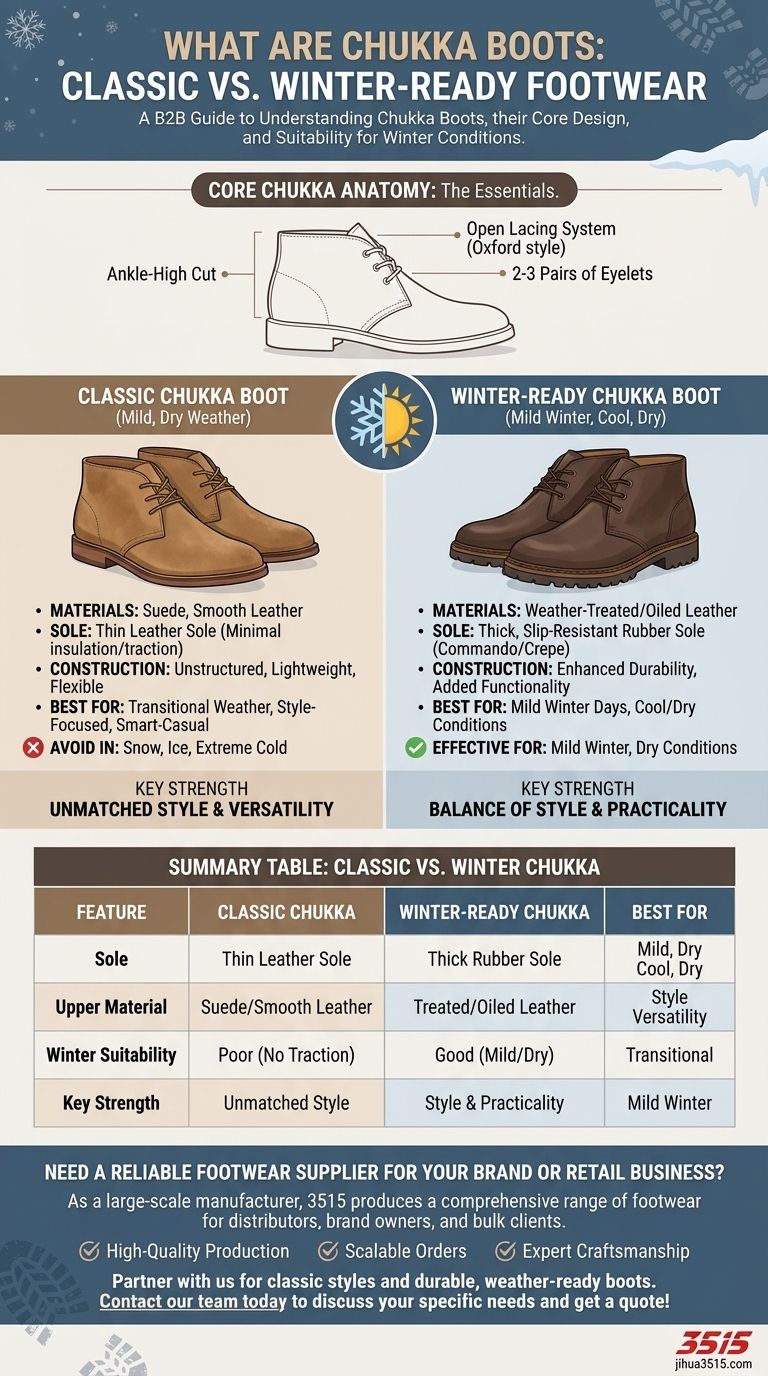
At its core, a Chukka is a simple, ankle-high boot defined by its open lacing system with just two or three pairs of eyelets. While some modern interpretations are built for colder weather, traditional Chukka boots are generally not a good choice for harsh winter conditions due to their lightweight construction and materials like thin suede.
The suitability of a Chukka boot for winter depends entirely on its specific design. A classic, thin-soled suede Chukka is best for transitional weather, while modern versions with thick rubber soles and weather-resistant leather can be effective for mild, dry winter days.

What Defines a Chukka Boot?
The Chukka boot's identity is rooted in its elegant simplicity. It strips the boot concept down to its essential elements, creating a silhouette that bridges the gap between a formal shoe and a rugged boot.
The Core Anatomy: Ankle-High, 2-3 Eyelets
The most defining characteristic of a Chukka is its height and lacing. It sits right at the ankle and features an open lacing system, similar to an Oxford shoe, but with only two or three eyelets. This minimalist design creates a clean, uncluttered look.
Common Materials: Suede and Leather
Chukkas are most famously made from suede, which gives them a soft, textured appearance perfect for smart-casual wear. Smooth leather is another common option, offering a more durable and slightly dressier alternative.
The Unstructured Construction
Traditionally, the boot's upper is made from just two pieces of leather. This, combined with an unstructured toe and thin sole, gives the Chukka a lightweight and flexible feel, making it far more comfortable out of the box than a heavier work boot.
The Winter Question: A Tale of Two Chukkas
The confusion about Chukkas for winter stems from the difference between the classic design and modern variations built with tougher conditions in mind.
Why the Classic Chukka Fails in Harsh Winter
The traditional Chukka is poorly equipped for snow, ice, and extreme cold. Its thin leather sole offers minimal insulation from the cold ground and provides poor traction on slippery surfaces. Furthermore, delicate materials like suede are easily damaged by water, salt, and slush.
The Modern, Winter-Ready Chukka
In response to the classic design's limitations, many brands now offer winterized Chukkas. These boots retain the signature ankle-high, 2-3 eyelet silhouette but add crucial functional upgrades. Look for versions with thick, slip-resistant rubber soles (like a commando or crepe sole) and uppers made from weather-treated or oiled leather for better durability.
Understanding the Trade-offs
Choosing a Chukka means understanding its specific strengths and weaknesses. It is a master of versatility but not a specialist for extreme weather.
The Versatility Factor
The Chukka boot's greatest strength is its versatility. It is arguably one of the few footwear styles that looks just as appropriate with a pair of jeans as it does with a casual suit. This makes it an exceptional choice for fall, spring, and mild winter climates.
The Durability Misconception
While well-made Chukkas are durable for everyday wear, materials like suede are inherently less resistant to the elements than the thick, oiled leather of a dedicated work boot. Proper care is essential, especially if you plan to wear them in anything but dry conditions.
When to Avoid Chukkas
Do not rely on a Chukka boot—even a winterized version—for severe winter weather. For heavy snow, sub-zero temperatures, or icy conditions, you need a purpose-built winter boot with proper insulation, waterproofing, and high-traction soles.
Making the Right Choice for Your Needs
To select the right boot, you must first define its primary purpose.
- If your primary focus is style for mild, dry weather: The classic suede or calfskin Chukka with a leather sole is an unmatched, elegant choice.
- If your primary focus is a versatile boot for cool-to-cold days without snow: A modern Chukka with a rubber sole and smooth leather upper offers the perfect balance of style and practicality.
- If your primary focus is warmth and safety in snow and ice: The Chukka is the wrong style; you should seek a dedicated, insulated, and waterproof winter boot.
Ultimately, understanding the Chukka's design is key to deploying it effectively in your wardrobe.
Summary Table:
| Feature | Classic Chukka | Winter-Ready Chukka |
|---|---|---|
| Best For | Mild, dry weather; style-focused | Cool, dry winter days; versatility |
| Sole | Thin leather sole | Thick, slip-resistant rubber sole |
| Upper Material | Suede or smooth leather | Weather-treated or oiled leather |
| Winter Suitability | Poor (no insulation/traction) | Good for mild, dry conditions |
| Key Strength | Unmatched style and versatility | Balance of style and practicality |
Need a reliable footwear supplier for your brand or retail business?
As a large-scale manufacturer, 3515 produces a comprehensive range of footwear for distributors, brand owners, and bulk clients. Whether you need classic styles or durable, weather-ready boots, our production capabilities encompass all types of shoes and boots.
Partner with us for:
- High-Quality Production: Consistent quality and durable materials.
- Scalable Orders: We cater to both small and large volume orders.
- Expert Craftsmanship: Decades of experience in footwear manufacturing.
Contact our team today to discuss your specific needs and get a quote!
Visual Guide
Related Products
- Durable Spiked Camouflage Boots Wholesale & Factory Production
- Wholesale High-Traction Camo Boots - Custom Manufacturer for Brands
- High-Traction Suede Tactical Boots Wholesale & Custom Manufacturing
- Durable Leather High-Ankle Tactical Boots for Wholesale & Custom Manufacturing
- Premium Wholesale Tactical Style Safety Shoes Boots with Quick Lacing
People Also Ask
- How does boot height affect waterproofing? Choose the Right Height for Ultimate Protection
- What are the best types of shoes for different gardening conditions? Find Your Perfect Match.
- What role does camouflage play in hunting boots? It's More Than Just a Pattern
- What should you look for to ensure boots are fully waterproof? The Essential 2-Part System
- How does boot construction affect waterproofing? The Science Behind Truly Dry Feet