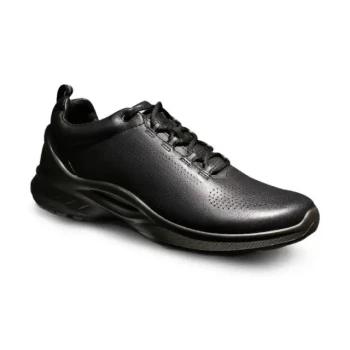
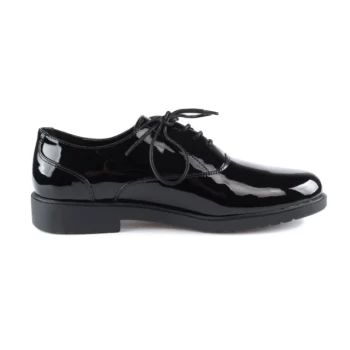
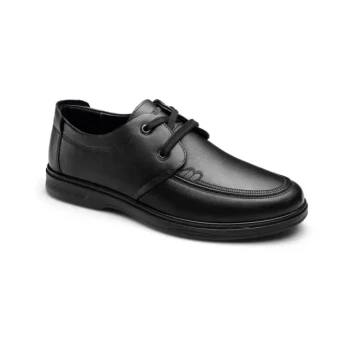
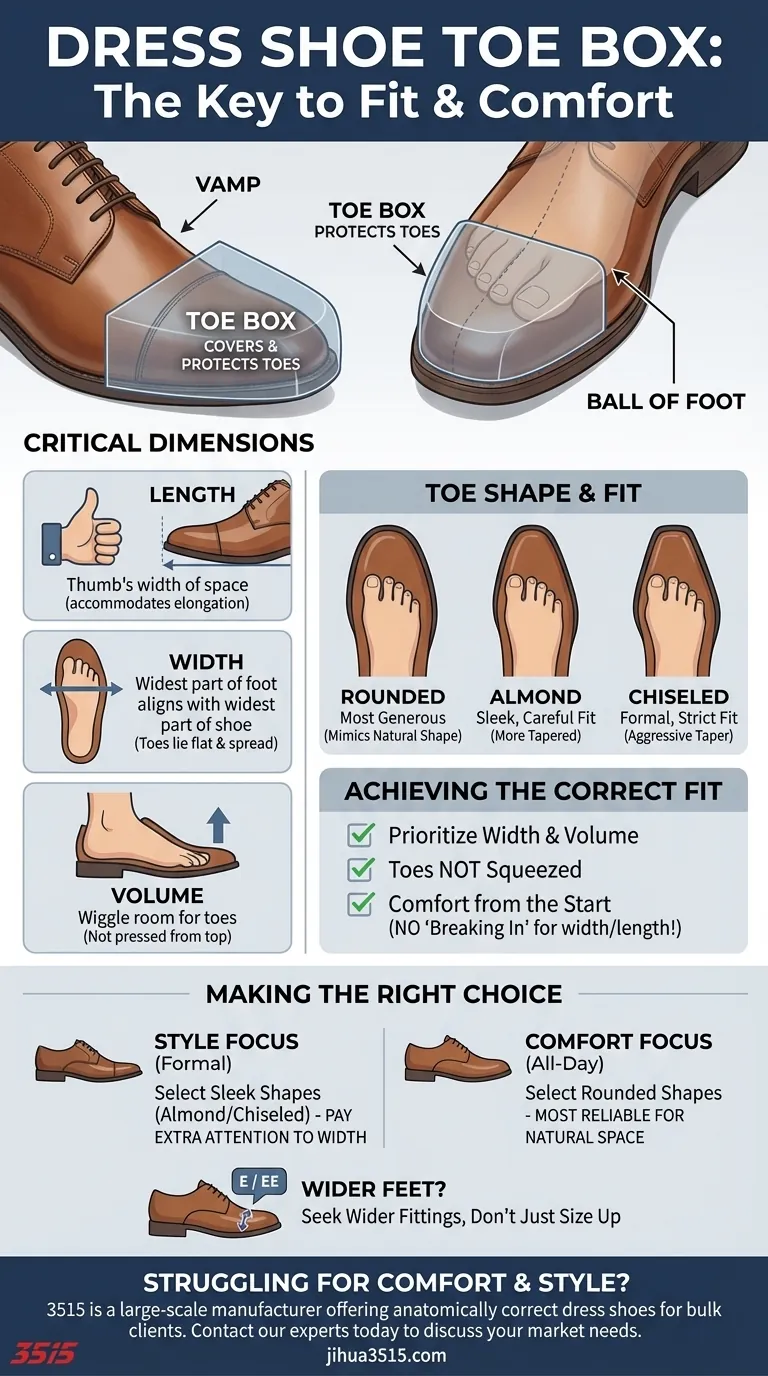
The toe box of a dress shoe is the entire front section of the shoe that covers and protects your toes. A proper fit is not about filling the shoe to the end; it's about providing enough room for your toes to lie flat and spread naturally without being squeezed from the sides or pushed down from the top.
The central challenge in fitting a dress shoe is that its traditionally sleek and tapered toe box styles often conflict with the natural shape of the human foot. The goal is to find a shoe shape that accommodates your foot, ensuring the widest part of your foot aligns with the widest part of the shoe, giving your toes ample functional space.
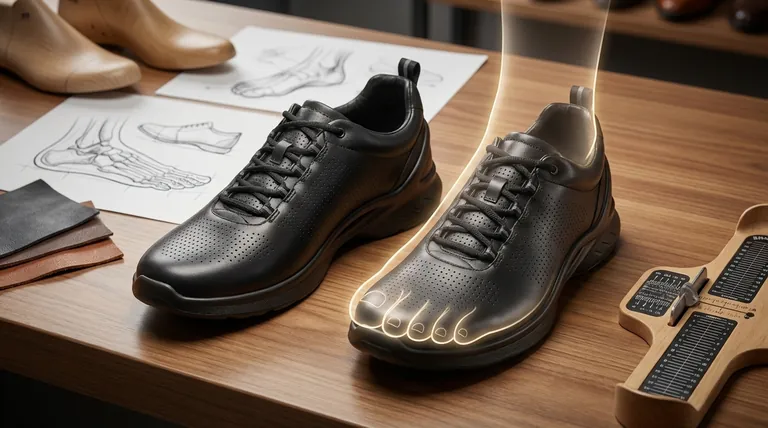
The Anatomy of a Dress Shoe's Forepart
To understand fit, you must first understand the key components of the front of the shoe and how they work together.
Defining the Toe Box
The toe box creates the chamber for your toes. It has three critical dimensions: length, width, and volume (the height from the sole to the top of the shoe). A well-designed toe box provides protective structure without constricting natural foot movement.
How Toe Shape Dictates Fit
The external shape of the toe heavily influences the internal space. Dress shoes commonly feature rounded, almond, or chiseled toes.
- Rounded toes typically offer the most generous fit, mimicking a more natural foot shape.
- Almond or chiseled toes create a sleeker, more formal silhouette but often taper more aggressively, which can crowd the toes if not sized correctly.
The Role of the Vamp
The vamp is the section of the shoe's upper that sits directly behind the toe box. This is the area that flexes and creases significantly as you walk. It's crucial that the vamp is flexible and that the shoe bends at the same point your foot does.
Achieving the Correct Fit
A proper fit in the toe box is the single most important factor for all-day comfort and long-term foot health.
Go Beyond the "Thumb Rule"
A common guideline is to have about a thumb's width of empty space between your longest toe and the end of the shoe. While this is a good starting point for length, it is an incomplete metric. This space exists to accommodate foot elongation while walking.
Prioritize Width and Volume
The most critical element is ensuring the widest part of your foot (the ball) sits comfortably in the widest part of the shoe. Your toes should not be squeezed together. You should have enough volume to wiggle your toes up and down slightly without them pressing against the top of the shoe.
Understanding the Trade-offs
Choosing a dress shoe involves balancing aesthetic goals with anatomical reality. Being aware of the potential pitfalls is key.
Style vs. Natural Foot Shape
Sleek, narrow toe boxes are a hallmark of formal footwear, but they are inherently less accommodating than shapes that follow the natural spread of the human foot. A shoe's visual appeal should never completely override its functional comfort.
The Consequences of a Poor Fit
Cramming your feet into a toe box that is too narrow or shallow can lead to significant discomfort, including blisters, corns, and bunions. An improper fit restricts circulation and prevents the muscles in your feet from functioning correctly.
The Myth of "Breaking In"
While high-quality leather will soften and mold to your foot over time, it will not stretch significantly in width or length. A shoe that feels painfully tight in the toe box when you first try it on will never become a comfortable shoe. The fit must be fundamentally correct from the start.
Making the Right Choice for Your Foot
Use your primary goal to guide your decision on toe box shape and fit.
- If your primary focus is formal aesthetics: Select a sleek almond or chiseled toe shape, but pay extra attention to finding a brand or size that offers enough width for your foot.
- If your primary focus is all-day comfort: A shoe with a more rounded and generous toe box is the most reliable choice, as it provides more natural space for your toes.
- If you have wider feet: Do not try to size up in a standard-width shoe. Specifically seek out brands that offer wider fittings (like E or EE) to ensure the toe box can accommodate your foot properly.
Ultimately, choosing a toe box that respects your foot's natural shape is the foundation of both lasting comfort and effortless style.
Summary Table:
| Fit Aspect | Ideal Condition | What to Avoid |
|---|---|---|
| Length | A thumb's width of space at the end | Toes touching the front of the shoe |
| Width | Widest part of foot aligns with widest part of shoe | Toes feeling squeezed together |
| Volume | Ability to wiggle toes up and down | Toes pressing against the top of the shoe |
| Toe Shape | Rounded for comfort; Almond/Chiseled for style (if sized correctly) | Choosing style over proper fit for your foot shape |
Struggling to find dress shoes that combine style with a truly comfortable fit?
As a large-scale manufacturer, 3515 produces a comprehensive range of footwear for distributors, brand owners, and bulk clients. Our production capabilities encompass all types of shoes and boots, including dress shoes engineered with anatomically correct toe boxes that prioritize both form and function. We help you offer your customers superior comfort without sacrificing elegance.
Contact our experts today to discuss how we can manufacture the perfect-fitting dress shoes for your market.
Visual Guide
Related Products
- Wholesale Perforated Comfort Dress Shoes | Custom Derby Shoe Manufacturer
- Wholesale Patent Oxford Dress Shoes | Custom & Bulk Manufacturing
- Wholesale Comfort Dress Shoes with Dial Closure for Custom Manufacturing
- Wholesale Leather Apron Toe Derby Shoes Custom Factory Production
- Durable Leather Moc Toe Work Boots for Wholesale & Custom Manufacturing
People Also Ask
- How do comfort dress shoes differ from traditional dress shoes? Discover the Ergonomic Advantage
- What are the recommended construction methods for quality dress shoes? Goodyear Welt vs. Blake Stitch Explained
- What are some quick tips for achieving a mirror shine on dress shoes? Speed Up Your Shine with Pro Hacks
- What is aniline leather and why is it considered high quality for dress shoes? Discover the Pinnacle of Luxury
- What role do socks play in improving the comfort of dress shoes? Essential Tips for All-Day Wear