For winter and rainy conditions, the primary footwear alternatives suggested are waterproof winter boots, versatile walking boots, classic rubber wellies, and supplementary gaiters. These options provide varying levels of insulation, waterproofing, and support to handle everything from simple rain to heavy snow.
The challenge of wet and cold weather isn't just about avoiding discomfort; it's about choosing the right tool for the job. Your ideal footwear depends on a trade-off between absolute waterproofing, necessary insulation, and the specific demands of your activity.
Foundational Options for General Use
Choosing the right everyday protection starts with understanding the most versatile options that cover a wide range of wet conditions.
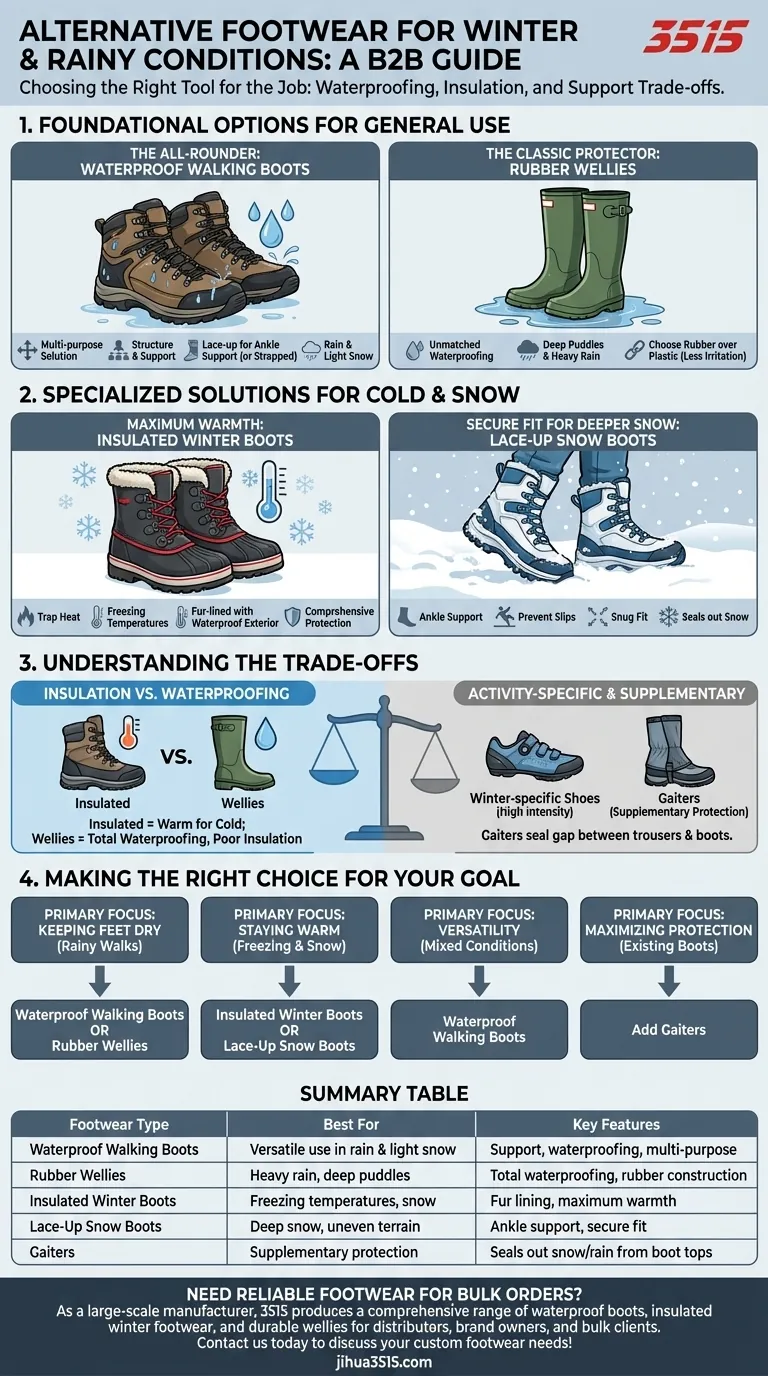
The All-Rounder: Waterproof Walking Boots
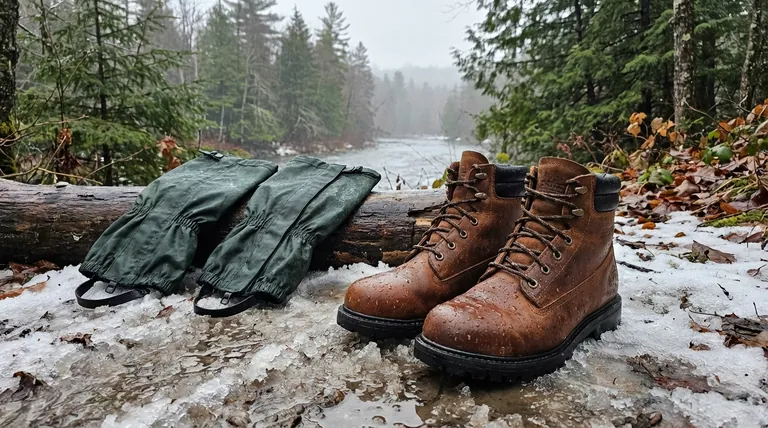
Waterproof walking boots are an excellent, multi-purpose solution. They are designed to keep water out while providing the structure and support needed for extended walks.
For more challenging terrain or deeper snow, lace-up versions offer superior ankle support. Strapped walking boots are also noted as a practical option, particularly for younger children.
The Classic Protector: Rubber Wellies
For dealing with significant rain and deep puddles, rubber wellies are a classic choice for their unmatched waterproofing.
It's recommended to choose wellies made from rubber over plastic. Brands like Seasalt are suggested, as rubber is less likely to cause skin irritation or breakdown with prolonged wear.
Specialized Solutions for Cold and Snow
When the temperature drops and snow begins to fall, general-purpose footwear is often insufficient. You need solutions specifically engineered for warmth and stability.
Maximum Warmth: Insulated Winter Boots
For true winter conditions, insulated boots are essential. These are specifically designed to trap heat and keep your feet warm in freezing temperatures.
Examples include German-made, fur-lined ankle boots, which combine insulation with a waterproof exterior for comprehensive protection.
Secure Fit for Deeper Snow: Lace-Up Snow Boots
When walking in snow, stability is as important as warmth. Lace-up snow boots provide crucial ankle support, which helps prevent slips and injuries on uneven, slippery ground.
This design ensures a snug fit, keeping the boot securely in place while also helping to seal out snow from entering at the top.
Understanding the Trade-offs
No single footwear option is perfect for every scenario. Making an informed choice requires understanding the inherent compromises between different designs.
Insulation vs. Waterproofing
Heavily insulated boots are ideal for the cold but can be too warm for mild, rainy days. Conversely, rubber wellies offer total waterproofing but provide almost no insulation, making them a poor choice for freezing weather without thermal socks.
Activity-Specific Durability
For frequent, high-intensity activities like cycling in harsh weather, winter-specific shoes are the best investment. They are built with enhanced durability and ease-of-use features that general-purpose boots may lack.
Supplementary Protection: Gaiters
Gaiters, such as those from the brand Raindrops, are not standalone footwear. They are a valuable accessory worn over your boots to bridge the gap between your trousers and footwear, effectively sealing out rain and snow from entering from the top.
Making the Right Choice for Your Goal
Your ideal choice depends entirely on the conditions you face most often. Use these guidelines to select the best option for your specific needs.
- If your primary focus is keeping feet dry during rainy walks: A quality pair of waterproof walking boots or rubber wellies is your most effective solution.
- If your primary focus is staying warm in freezing temperatures and snow: Prioritize dedicated, insulated winter boots, such as fur-lined models or supportive lace-up snow boots.
- If your primary focus is versatility across mixed conditions: Waterproof walking boots offer the best balance of support and protection for both rain and light snow.
- If your primary focus is maximizing protection for existing boots: Add a pair of gaiters to prevent water or snow from getting in over the top.
By matching the footwear's specific strengths to your environment, you can ensure your feet remain warm, dry, and comfortable.
Summary Table:
| Footwear Type | Best For | Key Features |
|---|---|---|
| Waterproof Walking Boots | Versatile use in rain & light snow | Support, waterproofing, multi-purpose |
| Rubber Wellies | Heavy rain, deep puddles | Total waterproofing, rubber construction |
| Insulated Winter Boots | Freezing temperatures, snow | Fur lining, maximum warmth |
| Lace-Up Snow Boots | Deep snow, uneven terrain | Ankle support, secure fit |
| Gaiters | Supplementary protection | Seals out snow/rain from boot tops |
Need reliable footwear for bulk orders? As a large-scale manufacturer, 3515 produces a comprehensive range of waterproof boots, insulated winter footwear, and durable wellies for distributors, brand owners, and bulk clients. Our production capabilities cover all types of shoes and boots tailored to harsh weather conditions. Contact us today to discuss your custom footwear needs and get a quote!
Visual Guide
Related Products
- Durable Waterproof Rain Boots | Custom Manufacturer for Wholesale & Brands
- Factory Direct Wholesale Rain Boots Durable Waterproof & Fully Customizable
- Wholesale Premium Waterproof Nubuck Safety Shoes Boots
- Wholesale Waterproof Tactical Boots Custom Suede & High-Traction Soles
- Premium Waterproof Nubuck Safety Boots for Wholesale
People Also Ask
- What are the main materials for waterproof rain boots? Choose the Right Material for Durability & Comfort
- What is the overall recommendation for choosing rain boot materials? A Guide to Rubber vs. PVC
- How does boot height affect waterproofing? Choose the Right Height for Ultimate Protection
- Why are rain boots more flexible and comfortable than snow boots? The Key Differences Explained
- What are the best types of shoes for different gardening conditions? Find Your Perfect Match.