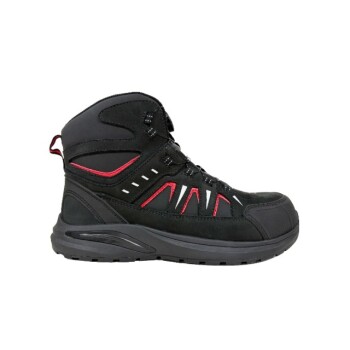
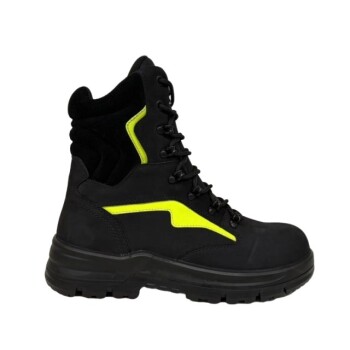
Beyond the iconic reinforced toe, modern steel toe work boots are engineered as a complete safety system for your feet. They commonly integrate features like puncture-resistant soles to guard against sharp objects, electrical hazard (EH) rated outsoles to protect from shock, and slip-resistant treads to ensure stable footing on hazardous surfaces.
A steel toe is just one component of a comprehensive safety platform. The real measure of a work boot is how its full set of features—from its sole to its electrical properties—matches the specific hazards of your environment.
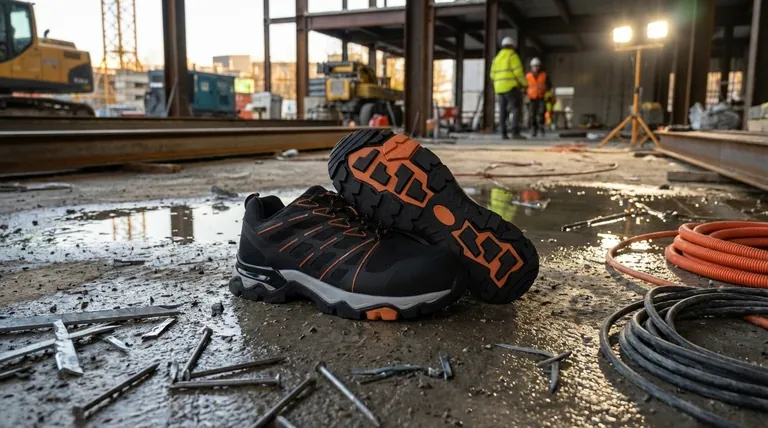
A System of Protection: Beyond the Steel Cap
A quality work boot protects you from multiple angles, not just from falling objects. Understanding these integrated features is key to selecting the right protection.
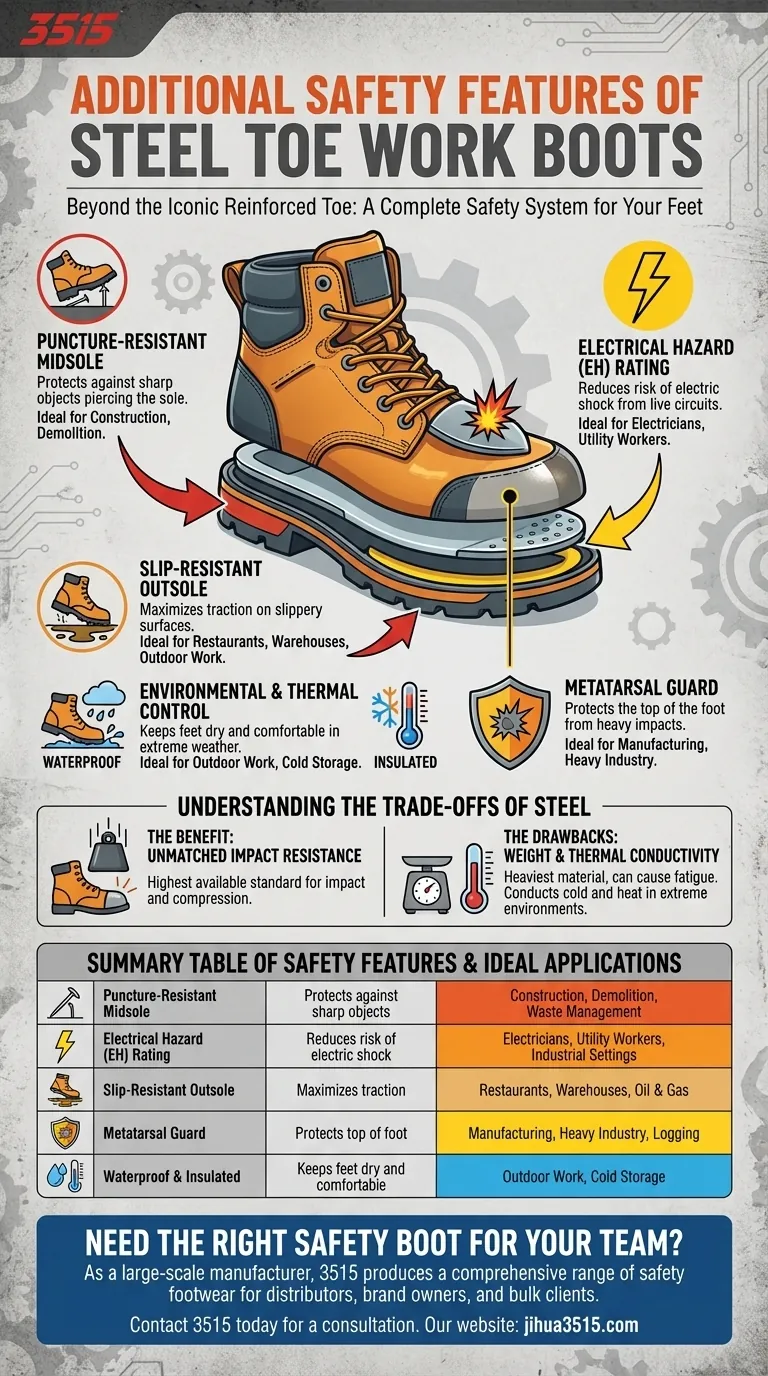
Puncture-Resistant Midsoles
Many safety boots include a protective plate embedded in the midsole, directly beneath your foot. This plate can be made of steel or a flexible, non-metallic material like Kevlar.
Its sole purpose is to prevent sharp objects like nails, screws, or metal shards from piercing the bottom of the boot and causing a serious foot injury.
Electrical Hazard (EH) Rating
Boots with an EH rating are designed with non-conductive soles and heels.
This feature provides a secondary source of protection against accidental contact with live electrical circuits, significantly reducing the risk of electric shock.
Slip-Resistant Outsoles
Slips, trips, and falls are among the most common workplace injuries.
High-quality work boots feature outsoles made from specific rubber or PVC compounds with tread patterns engineered to channel away water and oil, maximizing traction on slippery or uneven surfaces.
Environmental and Thermal Control
Work doesn't stop for bad weather or extreme temperatures.
Many boots incorporate features like waterproof membranes to keep feet dry and various levels of thermal insulation to protect against both extreme cold and heat.
Metatarsal Guards
For environments with a high risk of heavy objects dropping, some boots offer metatarsal guards.
This is an additional layer of protection, often external, that covers the top of the foot (the metatarsal bones) and extends beyond the steel toe cap for more comprehensive impact resistance.
Understanding the Trade-offs of Steel
While steel offers benchmark protection, it's essential to understand its specific characteristics compared to other options like composite or aluminum toes.
The Benefit: Unmatched Impact Resistance
Steel toe caps provide the highest available standard for both impact and compression resistance.
This makes them the classic and often required choice for heavy industrial, logging, and construction environments where the risk of severe impact is highest.
The Drawback: Weight and Fatigue
Steel is the heaviest material used for safety toes.
While modern designs have improved comfort, the added weight can contribute to foot fatigue over long shifts compared to lighter composite alternatives.
The Drawback: Thermal Conductivity
As a metal, steel readily conducts temperature.
In very cold environments, steel toe caps can become uncomfortably cold. Conversely, in extreme heat, they can retain heat.
How to Match the Boot to the Hazard
Choosing the right boot means looking past the toe cap to the complete safety system that protects you from the ground up.
- If your primary focus is maximum impact protection: A classic steel toe boot remains the benchmark for heavy industrial, construction, or machinery work.
- If you work around sharp ground-level debris: Prioritize a boot with a puncture-resistant midsole, which is a feature independent of the toe material.
- If you are an electrician or work near live circuits: An Electrical Hazard (EH) rating is a non-negotiable safety feature to look for.
- If you work in extreme temperatures or walk long distances: Carefully weigh the trade-offs of steel's weight and thermal conductivity against lighter, non-metallic alternatives like composite toes.
Ultimately, the best work boot is the one that addresses the full range of risks you face every day.
Summary Table:
| Feature | Purpose | Ideal For |
|---|---|---|
| Puncture-Resistant Midsole | Protects against sharp objects piercing the sole | Construction, demolition, waste management |
| Electrical Hazard (EH) Rating | Reduces risk of electric shock from live circuits | Electricians, utility workers, industrial settings |
| Slip-Resistant Outsole | Maximizes traction on slippery surfaces | Restaurants, warehouses, oil & gas, outdoor work |
| Metatarsal Guard | Protects the top of the foot from heavy impacts | Manufacturing, heavy industry, logging |
| Waterproof & Insulated | Keeps feet dry and comfortable in extreme weather | Outdoor work, cold storage, all-season environments |
Need the Right Safety Boot for Your Team?
As a large-scale manufacturer, 3515 produces a comprehensive range of safety footwear for distributors, brand owners, and bulk clients. Our production capabilities encompass all types of steel toe and composite toe work boots, engineered with the precise safety features your workforce needs.
We help you protect your team with durable, compliant, and comfortable footwear tailored to your specific industry hazards.
Contact 3515 today for a consultation and discover how our manufacturing expertise can meet your safety footwear requirements.
Visual Guide
Related Products
- Wholesale Durable 6-Inch Work Boots | Custom & Private Label Manufacturer
- Wholesale Durable Safety Boots Manufacturer Customizable Steel Toe Work Boots
- Wholesale Durable Breathable Safety Boots Custom OEM Manufacturer
- Wholesale Heavy-Duty Waterproof Steel Toe Work Boots OEM Manufacturer
- Durable Steel Toe Safety Boots Wholesale & Custom Manufacturing
People Also Ask
- What are the pros and cons of steel toe work boots? A Guide to Maximum Protection vs. Comfort
- What is the history of steel toe work boots? From German Invention to Modern Safety Standard
- What are the different types of steel toe work boots? Choose the Right Boot for Your Job
- How much weight can steel toe work boots withstand? Unpacking the 3,372 lb. Safety Standard
- Is there any truth to the myth about steel toe boots causing toe injuries upon impact? Debunking Common Safety Concerns