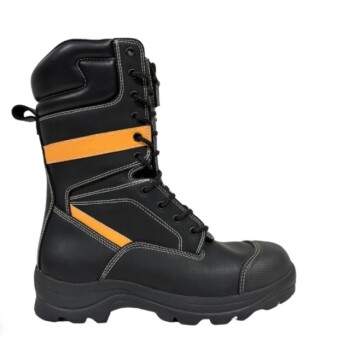
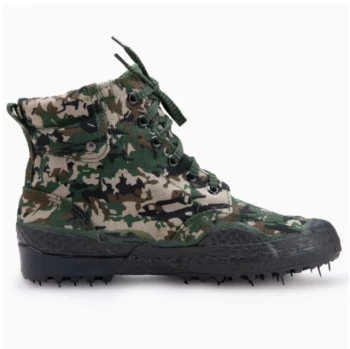
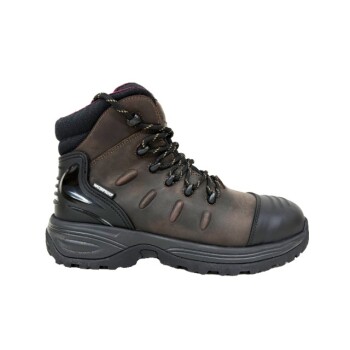
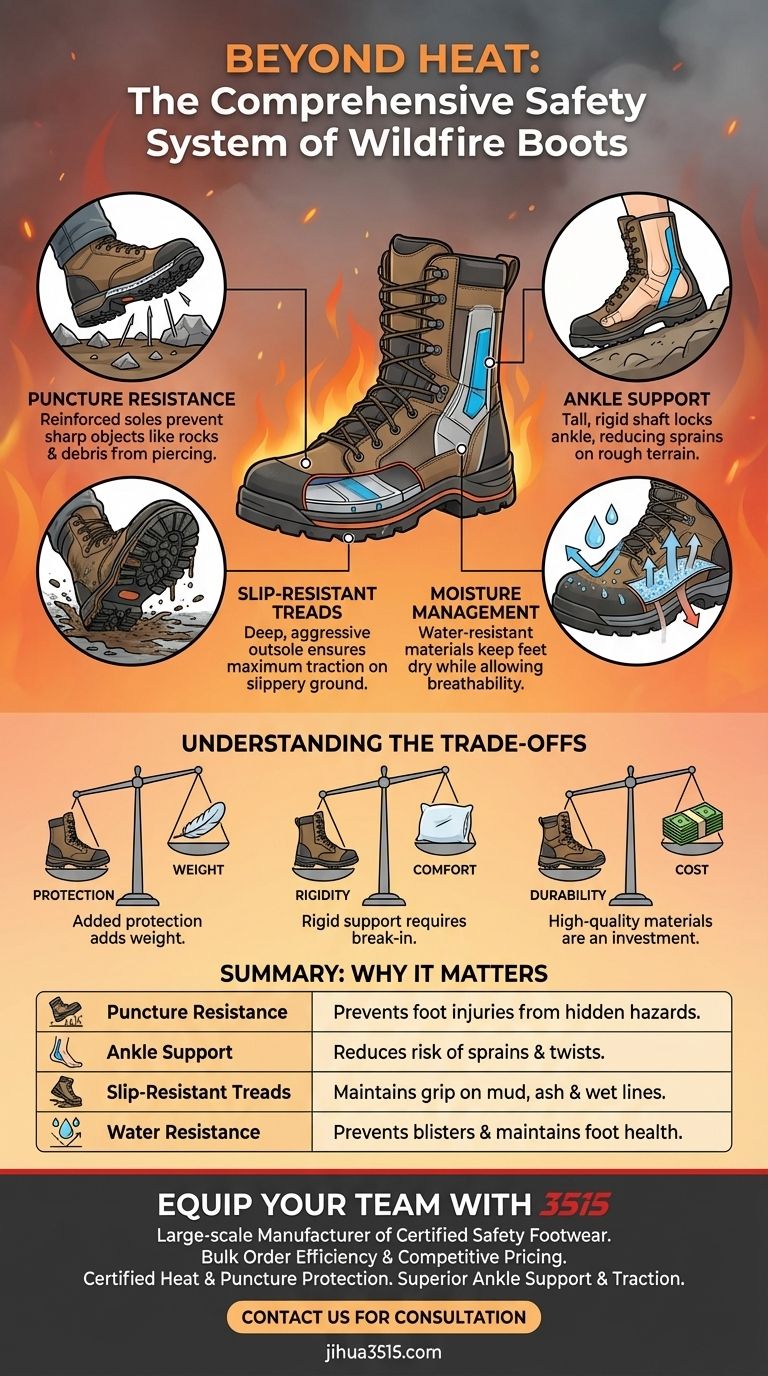
Beyond just heat protection, quality wildfire boots are a comprehensive safety system designed for extreme environments. They offer critical protection from sharp objects underfoot, provide essential ankle support for navigating rough terrain, and feature specialized slip-resistant treads to ensure stable footing on unpredictable surfaces.
A wildland firefighter's boot is not merely a shield against heat; it is a foundational tool that enables mobility, provides stability, and protects against the full spectrum of physical hazards encountered on the fire line.
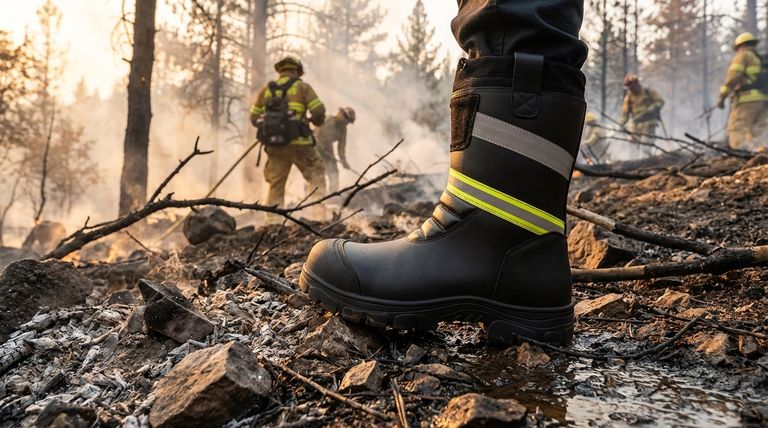
A System for Stability and Protection
While resisting flame and heat is a wildfire boot's most obvious function, its other features are what allow a firefighter to remain effective and safe in hazardous and unpredictable environments. Each component addresses a specific risk found on the ground.
Guarding Against Punctures and Debris
The ground in a wildfire area is littered with sharp objects, from jagged rocks and broken glass to burnt, splintered branches hidden under ash. A key feature of these boots is puncture resistance, typically achieved through reinforced soles that prevent sharp debris from piercing through to the foot.
This protection is non-negotiable for preventing severe foot injuries that can immediately incapacitate a firefighter.
Securing the Ankle on Uneven Ground
Wildland firefighters rarely work on flat, stable surfaces. They are constantly traversing steep slopes, loose soil, and uneven ground, where a twisted or sprained ankle is a constant risk.
High-quality boots provide robust ankle support, usually with a taller shaft (8-10 inches) and a rigid structure. This design helps lock the ankle in place, drastically reducing the risk of sprains and providing the stability needed to carry heavy gear across challenging terrain.
Maintaining Traction and Balance
Slippery conditions are common, caused by water from fire hoses, loose dirt, mud, or ash. A loss of footing can lead to a dangerous fall.
To counter this, wildfire boots are equipped with deep, aggressive, and slip-resistant treads. This outsole design ensures maximum grip and helps the firefighter maintain balance and traction, whether climbing a steep hill or navigating a wet fire line.
Keeping Feet Dry and Functional
While protecting from external heat, boots must also manage moisture from the inside and out. Keeping feet dry is crucial for preventing blisters and maintaining foot health during long shifts.
Many boots incorporate materials that offer water resistance while allowing some breathability, ensuring the foot remains dry and functional in wet or sweaty conditions.
Understanding the Trade-offs
Specialized wildfire boots are engineered for maximum protection, but this design comes with inherent trade-offs that are important to understand.
Protection vs. Weight
The materials required for heat resistance, puncture protection, and ankle support make these boots significantly heavier than standard hiking or work boots. This added weight can contribute to fatigue over a long operational period.
Rigidity vs. Comfort
The rigid construction needed for ankle support means these boots often have a lengthy and sometimes uncomfortable break-in period. They are not designed for immediate, out-of-the-box comfort like a trail shoe.
Durability vs. Cost
The high-quality materials and specialized construction that meet strict safety standards make these boots a significant investment. They are built for extreme durability, but their initial cost is much higher than that of non-specialized footwear.
Making the Right Choice for Your Goal
Selecting the right boot involves balancing a hierarchy of safety needs with the specific demands of your role.
- If your primary focus is frontline safety: Prioritize boots with the highest certifications for heat, puncture resistance, and robust ankle support.
- If your primary focus is navigating long distances: Carefully balance essential protective features with the overall weight of the boot to minimize fatigue.
- If your primary focus is working in varied, slippery conditions: Pay close attention to the outsole design, ensuring it has aggressive, multi-directional lugs for superior traction.
Ultimately, the right boot is a critical piece of personal protective equipment that serves as your foundation for operating safely and effectively in any environment.
Summary Table:
| Feature | Key Benefit | Why It Matters |
|---|---|---|
| Puncture Resistance | Protects from sharp debris | Prevents foot injuries from hidden hazards like rocks and glass. |
| Ankle Support | Stabilizes on uneven terrain | Reduces risk of sprains and twists on steep, unstable ground. |
| Slip-Resistant Treads | Ensures stable footing | Maintains grip on slippery surfaces like mud, ash, and wet fire lines. |
| Water Resistance | Keeps feet dry and functional | Manages moisture to prevent blisters and maintain foot health. |
Need High-Performance Wildfire Boots for Your Team?
As a large-scale manufacturer, 3515 produces a comprehensive range of certified safety footwear for distributors, brand owners, and bulk clients. Our production capabilities encompass all types of professional boots, including specialized wildfire footwear designed for extreme environments.
We can provide your team with durable, reliable boots that offer:
- Certified Heat & Puncture Protection
- Superior Ankle Support & Traction
- Bulk Order Efficiency and Competitive Pricing
Let's equip your first responders with the foundation they need for safety and effectiveness.
Contact our team today for a consultation to discuss your specific requirements and volume needs.
Visual Guide
Related Products
- Premium Flame-Retardant Waterproof Safety Boots and Shoes
- High Performance Fire-Retardant Waterproof Safety Boots
- Wholesale Lightweight Tactical Boots Custom Manufacturer for Desert & Combat Use
- Durable Military Combat Boots with Water Drainage for Wholesale & OEM
- Durable Spiked Camouflage Boots Wholesale & Factory Production
People Also Ask
- Why are waterproof safety boots recommended for certain work environments? Essential Protection for Wet & Hazardous Jobs
- What materials are commonly used in waterproof boots? The Complete Guide to Durable, Breathable Protection
- How does boot construction affect waterproofing? The Science Behind Truly Dry Feet
- What should you look for to ensure boots are fully waterproof? The Essential 2-Part System
- What is the advantage of one-piece construction in waterproof boots? Unbeatable Seamless Protection