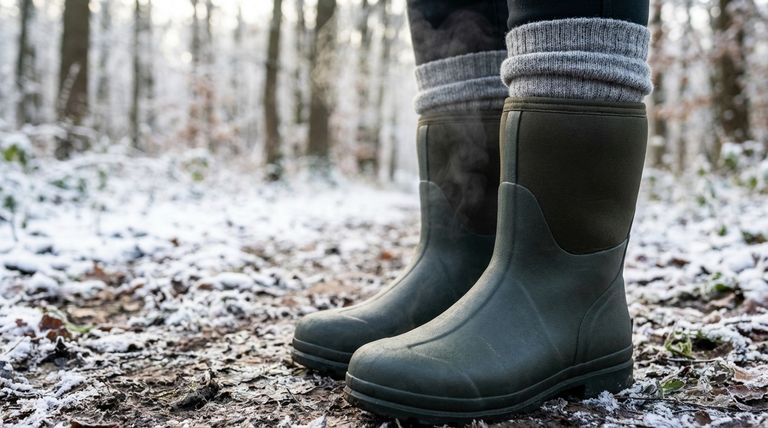
To significantly enhance the warmth of wellies, look for an integrated lining. The most effective options are neoprene, which offers robust insulation even in damp conditions, and fleece, which provides a soft, comfortable barrier that traps warm air against your skin.
The key to warm feet in wellies is not a single feature but a system. True warmth comes from combining an insulated, lined boot with proper moisture-wicking socks to manage sweat and prevent heat loss.
Why Standard Wellies Fail in the Cold
Unlined wellington boots are excellent for waterproofing but notoriously poor for warmth. Understanding why is the first step to finding a better solution.
The Problem with Rubber
A standard wellie is essentially a rubber shell. Rubber is a poor insulator and readily conducts cold from the ground, quickly chilling your feet.
The Moisture Trap
Your feet sweat, and in a non-breathable rubber boot, that moisture has nowhere to go. Wet feet lose heat up to 25 times faster than dry feet, making trapped sweat your biggest enemy in the cold.
The Key to Warmth: Insulation and Linings
Modern wellies designed for cold weather incorporate specific materials to combat heat loss and manage moisture.
Neoprene Lining: The Performance Choice
Neoprene is the same synthetic rubber used in wetsuits. It is filled with tiny air bubbles that trap heat exceptionally well, providing a powerful insulating barrier against the cold.
This material is ideal for colder climates and for those who spend extended periods outdoors, as it retains its insulating properties even when damp.
Fleece Lining: The Comfort-First Option
A fleece lining adds a soft, comfortable layer inside the boot. It works by creating an extra barrier that traps a layer of warm air, preventing it from escaping and stopping cold from getting in.
While very comfortable for general use, it may not offer the same high-performance insulation as neoprene in extreme cold or wet conditions.
Beyond the Boot: A System for Warmth
Even the best-insulated wellie can be undermined by the wrong accessories. The most effective approach treats warmth as a complete system.
The Critical Role of Socks
The right socks are non-negotiable. Wool, especially merino wool, is the ideal choice.
Wool naturally wicks moisture away from your skin and, crucially, continues to insulate even when it gets wet. This prevents the rapid cooling effect caused by trapped sweat.
Enhancing with Insulated Insoles
Adding an insulated or thermal insole is a simple, effective upgrade. These insoles provide an additional thermal barrier between your foot and the cold ground, which is a major source of heat loss.
Avoiding Direct Cold Contact
When possible, avoid standing on frozen ground, snow, or in cold puddles for prolonged periods. The constant contact will drain heat from your feet, regardless of your boot's quality.
Understanding the Trade-offs
Choosing an insulated wellie involves balancing competing factors. There is no single boot that is perfect for every situation.
Insulation vs. Breathability
Highly insulated boots, like those with thick neoprene linings, are excellent for freezing temperatures but can be too warm for mild, rainy days. This can lead to excessive sweating, which ironically makes your feet feel cold and clammy.
Bulk and Flexibility
Added linings and insulation invariably add bulk and weight to the boot. This can make them feel less flexible and more cumbersome than a simple, unlined wellie, which might be a factor for tasks requiring agility.
Making the Right Choice for Your Needs
Select your gear based on your specific activity and environment to ensure both comfort and performance.
- If your primary focus is casual wear on chilly, damp days: A fleece-lined wellie paired with quality wool socks offers the perfect blend of comfort and warmth.
- If your primary focus is extended outdoor work in cold climates: Prioritize a wellie with a neoprene lining (at least 3-5mm thick) for maximum thermal insulation.
- If your primary focus is upgrading existing wellies: Start by investing in high-quality merino wool socks and adding thermal insoles to create a better barrier against the cold.
Ultimately, keeping your feet warm is about managing heat and moisture effectively.
Summary Table:
| Feature | Best For | Key Benefit |
|---|---|---|
| Neoprene Lining | Cold climates, extended outdoor use | Excellent insulation, even when damp |
| Fleece Lining | Casual wear, general use | Soft comfort, traps warm air |
| Wool Socks | All conditions | Wicks moisture, insulates when wet |
| Thermal Insoles | Upgrading existing boots | Extra barrier against cold ground |
Need warm, durable wellies for your business?
As a large-scale manufacturer, 3515 produces a comprehensive range of insulated footwear for distributors, brand owners, and bulk clients. Our production capabilities encompass all types of lined wellington boots, ensuring your customers stay warm and dry in any condition.
Contact us today to discuss your bulk wellington boot needs and get a custom quote!
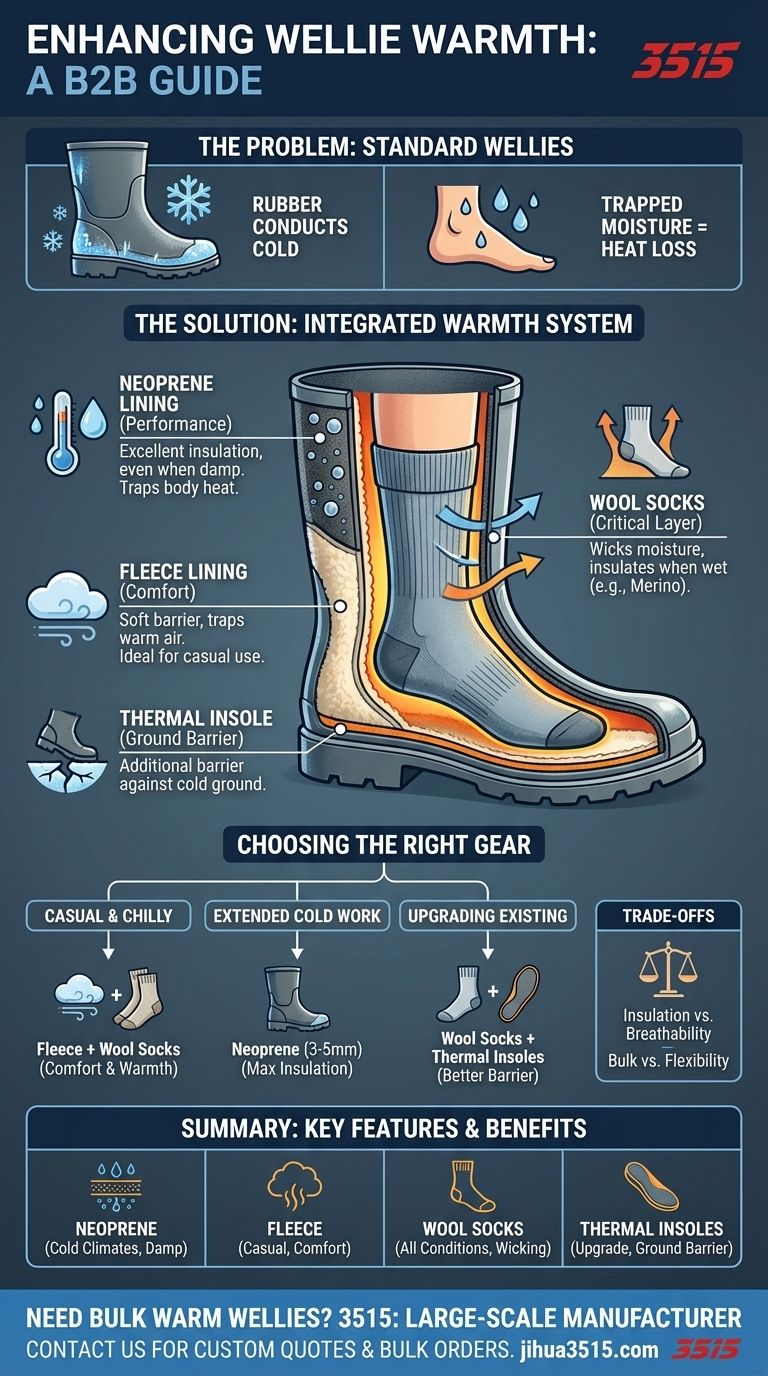
Visual Guide
Related Products
- Durable Waterproof Rain Boots | Custom Manufacturer for Wholesale & Brands
- Durable Goodyear Welt Leather Work Boots for Wholesale & Private Label
- Wholesale Durable Leather Work Boots | 8-Inch Goodyear Welt Manufacturer
- High-Traction Suede Tactical Boots Wholesale & Custom Manufacturing
- Durable Leather Tactical Boots Wholesale & Custom Manufacturing for Brands
People Also Ask
- What are the main materials for waterproof rain boots? Choose the Right Material for Durability & Comfort
- What is the overall recommendation for choosing rain boot materials? A Guide to Rubber vs. PVC
- How does boot height affect waterproofing? Choose the Right Height for Ultimate Protection
- Why are rain boots more flexible and comfortable than snow boots? The Key Differences Explained
- What are the best types of shoes for different gardening conditions? Find Your Perfect Match.