
When buying children's wellies, resist the common urge to size up. You should always purchase the child's current, true-to-size footwear. Manufacturers already build growing room into their designs, and sizing up further can compromise safety and comfort.
A proper fit is the most critical factor for a child's safety and foot development. Wellies are intentionally designed to accommodate both natural growth and thick socks, making it unnecessary—and unwise—to buy a larger size.
Why a True-to-Size Fit is Non-Negotiable
Understanding the design and function of children's footwear reveals why sticking to their current size is essential. The perceived benefits of sizing up are myths that can lead to negative consequences.
Built-in Growing Room
Footwear manufacturers are well aware that children's feet grow quickly. They factor this into their sizing, adding about 1-1.5 cm of extra space to allow for natural growth.
Buying an even larger size creates an excessive amount of room, defeating the purpose of a supportive shoe.
The Critical Role of Stability
Oversized wellies are a safety hazard. They can slip off, cause blisters from rubbing, and make a child's gait unstable, leading to trips and falls.
Growing feet require proper support and stability to develop correctly and stay safe during active play. A snug, correct fit provides this security.
Designed for Thick Socks
A common reason parents size up is to make room for warm winter socks. However, quality wellies are specifically designed to accommodate this.
Their internal volume is calculated to allow for thicker socks without needing to go up a full size, ensuring a comfortable fit even in colder weather.
How to Guarantee the Perfect Fit
Never guess your child's shoe size. A significant percentage of children wear improperly sized shoes simply because their feet weren't measured correctly before purchase.
The Importance of Measurement
Accurate measurement is the only way to ensure you are buying the right size. This simple step prevents discomfort and supports healthy foot development.
Measuring for Older Children
For a child who can stand steadily, place their bare foot on a piece of paper. Mark the back of the heel and the tip of their longest toe.
Measure the distance between these two marks to get an accurate insole length, which you can then compare to a brand's sizing chart.
Measuring for Babies and Toddlers
For younger children, carefully place a measuring tape along the sole of their bare foot.
Measure from the back of the heel to the tip of their longest toe to find the correct length.
Common Pitfalls to Avoid
Beyond sizing, a few common mistakes can compromise the fit and function of your child's wellies.
The Problem with Second-Hand Wellies
It is not recommended to buy used wellies. The interior of a boot molds to the shape of the original wearer's foot over time.
Putting your child in a pre-molded boot can cause discomfort, provide inadequate support, and feel less secure on their foot.
Don't Attempt to Stretch Them
Manually stretching wellies is a bad idea. This process can damage the rubber or synthetic material, compromising its structural integrity.
A damaged welly loses its ability to protect the foot properly and may no longer be fully waterproof.
Making the Right Choice for Your Child
Use your child's primary need as your guide to selecting the perfect pair of wellies.
- If your primary focus is safety and stability: Always buy true-to-size to prevent trips and ensure proper foot support during play.
- If your primary focus is comfort and warmth: Trust that standard-sized wellies are designed with enough room for thick, cozy socks.
- If your primary focus is getting the longest wear: Measure your child's feet accurately, but avoid sizing up, as the built-in room is sufficient for natural growth between seasons.
A well-fitting welly is the foundation for safe and happy outdoor adventures.
Summary Table:
| Key Point | Why It Matters |
|---|---|
| True-to-Size Fit | Ensures stability, prevents trips and falls, and supports healthy foot development. |
| Built-in Growing Room | Manufacturers already add 1-1.5 cm of space, making sizing up unnecessary. |
| Designed for Thick Socks | Quality wellies have internal volume calculated to accommodate warm socks without sizing up. |
| Avoid Second-Hand | Pre-molded interiors from previous wearers can cause discomfort and poor support. |
| Never Stretch Them | Manual stretching can damage the material, compromising waterproofing and structure. |
Ensure your child's outdoor adventures are safe and comfortable with perfectly fitting footwear from 3515.
As a large-scale manufacturer, 3515 produces a comprehensive range of high-quality children's wellies for distributors, brand owners, and bulk clients. Our designs prioritize safety, comfort, and durability, with built-in features that support healthy foot development.
Let us help you provide the best for your customers:
- Distributors & Brand Owners: Offer reliable, well-designed children's footwear that parents trust.
- Bulk Clients: Equip your organization with comfortable, safe footwear for all ages.
Contact 3515 today to discuss your footwear needs and explore our extensive product catalog.
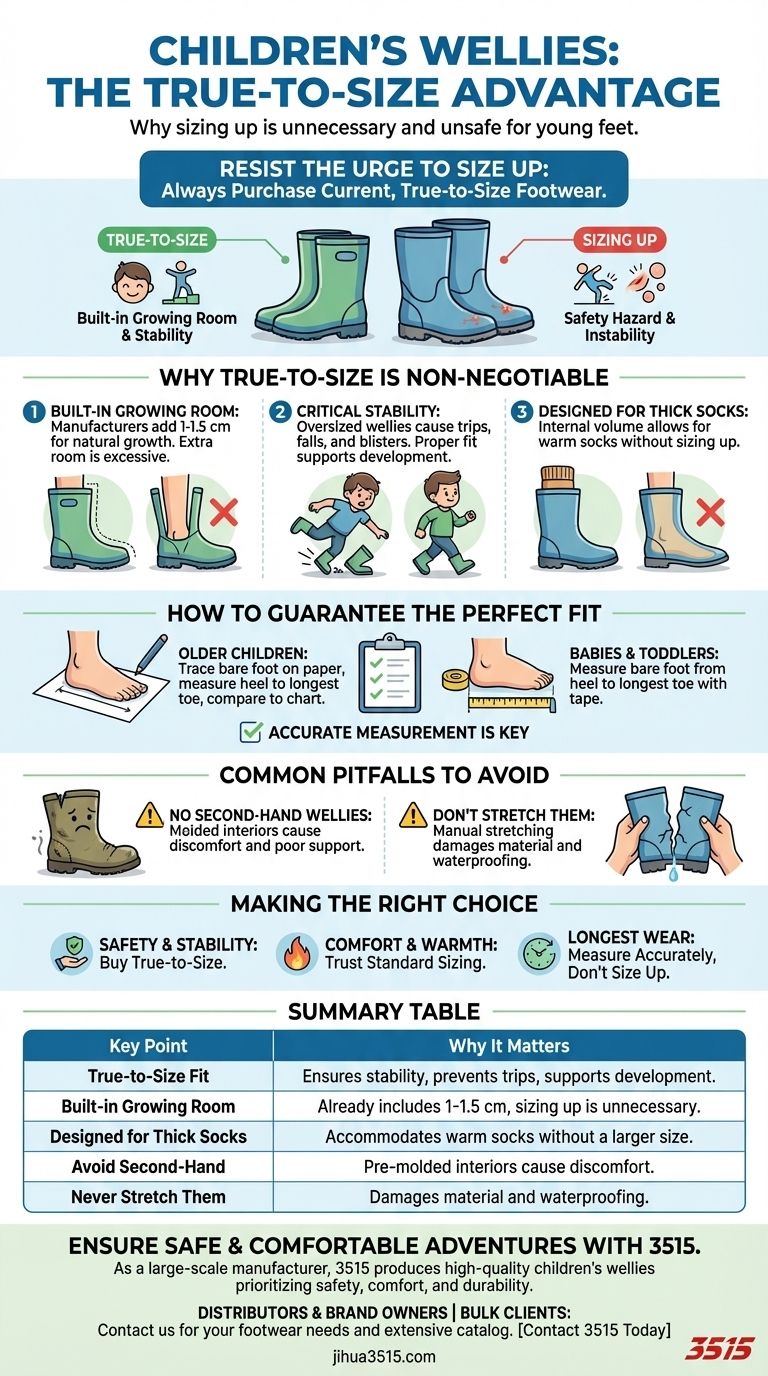
Visual Guide
Related Products
- Durable Waterproof Rain Boots | Custom Manufacturer for Wholesale & Brands
- Durable High-Ankle Tactical Boots Wholesale Manufacturer for Custom & Bulk Orders
- Durable Leather High-Ankle Tactical Boots for Wholesale & Custom Manufacturing
- Premium Wholesale Tactical Style Safety Shoes Boots with Quick Lacing
- Wholesale Lightweight Tactical Boots with Dial Closure OEM & Bulk Orders
People Also Ask
- What are the main materials for waterproof rain boots? Choose the Right Material for Durability & Comfort
- What is the overall recommendation for choosing rain boot materials? A Guide to Rubber vs. PVC
- How does boot height affect waterproofing? Choose the Right Height for Ultimate Protection
- Why are rain boots more flexible and comfortable than snow boots? The Key Differences Explained
- What are the best types of shoes for different gardening conditions? Find Your Perfect Match.










