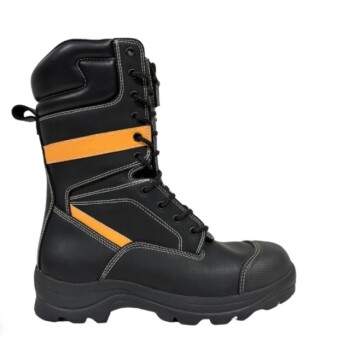
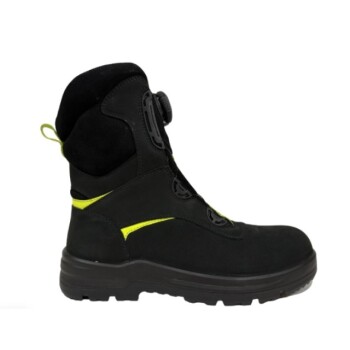
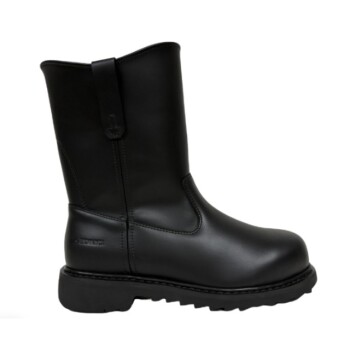
Modern firefighting boot flexibility is achieved through a combination of segmented construction and strategic flex zones. By placing these articulation points at the arch and above the heel, manufacturers allow for a natural range of motion that mimics the human foot. This engineering ensures that firefighters can climb, crawl, and sprint without the restrictive "stiffness" traditionally associated with heavy-duty protective footwear.
Central Takeaway: Modern flexibility is the result of a synergy between advanced geometric design and lightweight material science. For distributors and brand owners, this means offering products that bridge the gap between athletic agility and industrial-grade thermal protection.
Advanced Engineering for Enhanced Mobility
Strategic Flex Points and Segmented Design
The most significant advancement is the move away from monolithic boot structures toward segmented designs. By integrating specific flex points at the arch and the Achilles area, manufacturers ensure the boot bends exactly where the foot does.
This design philosophy maintains the structural integrity of the boot while providing the wearer with the agility needed for complex movements. This is particularly critical in structural firefighting where navigating unstable debris requires maximum tactile feedback and foot articulation.
Integration of Lightweight, High-Performance Materials
Modern manufacturing has shifted toward lighter-weight flame-retardant materials that offer the same protection as traditional leather but with significantly less bulk. These materials reduce the overall weight of the boot, which directly decreases user fatigue during long shifts.
By utilizing high-tensile, heat-resistant fabrics alongside treated leathers, producers can create a boot that is both supple and durable. This material evolution is a core component of high-volume OEM/ODM production today, meeting the demands of global distributors.
Tactical-Inspired Ankle Support
Drawing from tactical boot innovations, modern firefighting boots now feature flexible ankle supports. These systems allow for a maximum range of lateral movement while preventing rolls and strains on uneven terrain.
The firm but flexible sole construction provides a stable platform for rough terrain while the upper remains responsive to the firefighter's movements. This balance is essential for wildland firefighting, where long-distance hiking on steep gradients is common.
Manufacturing Excellence and Supply Chain Reliability
Precision OEM/ODM Capabilities
Achieving the perfect balance of flexibility and safety requires state-of-the-art equipment and deep technical expertise. Leading manufacturers, with heritage dating back to 1951, leverage decades of data to refine the placement of flex zones.
High-capacity production lines ensure that these complex, segmented designs are executed with consistent precision. For B2B resellers, this translates to a reliable product that meets rigorous international certifications in every shipment.
Consistent Large-Volume Delivery
Maintaining the technical standards of flexible footwear across massive production scales is a significant challenge. A robust supply chain and comprehensive quality control are necessary to ensure that every pair of boots performs under extreme heat.
Distributors benefit from partners who can scale these innovations without compromising the shock absorption or traction required by safety standards. Reliable delivery of high-performance footwear is the foundation of a successful long-term partnership.
Understanding the Trade-offs
Flexibility vs. Structural Protection
While flexibility improves agility, there is a technical limit to how "soft" a firefighting boot can be. Excessive flexibility can potentially compromise the effectiveness of puncture-resistant soles or metatarsal guards.
Manufacturers must carefully calibrate the thickness of the sole and the rigidity of protective caps to ensure that movement does not expose the foot to impact or compression injuries.
Durability and Heat Resistance
Highly flexible materials often have more surface area or joints where heat can potentially penetrate if not engineered correctly. It is vital to use premium waterproof membranes and heat-resistant adhesives to ensure the flex points do not become points of failure.
Regular maintenance and inspection remain crucial, as the constant bending of materials can lead to accelerated wear and tear if the materials are not of the highest grade.
Making the Right Choice for Your Goal
How to Apply This to Your Portfolio
- If your primary focus is Wildland Firefighting: Prioritize designs that emphasize tactical flexibility, lightweight materials, and high-traction soles for varied terrain.
- If your primary focus is Structural Firefighting: Seek out boots with segmented leather construction and integrated steel toe/metatarsal protection that do not sacrifice the range of motion.
- If your primary focus is High-Volume Distribution: Partner with manufacturers who offer comprehensive international certifications and a proven history of supply chain stability since the mid-20th century.
Empowering your force with flexible, high-performance footwear is the most direct way to enhance firefighter safety and operational efficiency on the fireground.
Summary Table:
| Innovation Area | Key Improvement Method | User Benefit |
|---|---|---|
| Structural Design | Segmented flex zones at arch/heel | Natural range of motion & agility |
| Material Science | Lightweight flame-retardant fabrics | Significant reduction in user fatigue |
| Ankle Support | Tactical-inspired flexible systems | Lateral stability with full articulation |
| Sole Engineering | Shock-absorbing responsive platforms | Enhanced traction on unstable terrain |
Partner with 3515 for High-Volume Manufacturing Excellence
As a large-scale manufacturer serving distributors and brand owners since 1951, 3515 offers the technical expertise and production stability required to dominate the protective footwear market. We specialize in bridging the gap between athletic performance and industrial-grade safety.
Our comprehensive capabilities include:
- Flagship Safety Shoes & Boots: Precision-engineered with segmented flex zones and international certifications.
- Diverse Portfolio: Full-scale production of tactical boots, outdoor shoes, training sneakers, and formal dress shoes.
- Robust Supply Chain: Consistent large-volume delivery and premium OEM/ODM support to maximize your profit margins.
- Advanced Engineering: Leveraging state-of-the-art equipment to deliver consistent quality in every batch.
Ready to upgrade your inventory with next-generation firefighting footwear?
Contact Our Export Experts Today
Related Products
- High Performance Fire-Retardant Waterproof Safety Boots
- Premium Flame-Retardant Waterproof Safety Boots and Shoes
- Wholesale Lightweight Tactical Boots Custom Manufacturer for Desert & Combat Use
- High-Traction Suede Tactical Boots Wholesale & Custom Manufacturing
- Durable Leather Tactical Boots Wholesale & Custom Manufacturing for Brands
People Also Ask
- Why are waterproof safety boots recommended for certain work environments? Essential Protection for Wet & Hazardous Jobs
- What roles do 3D vision systems and industrial robots play in the manufacturing of fire safety boots? Smart Automation
- What is the advantage of one-piece construction in waterproof boots? Unbeatable Seamless Protection
- What is the difference between waterproof, water-resistant, and water-repellent boots? Choose the Right Protection for Your Feet
- What materials make waterproof boots durable? The Ultimate Guide to Long-Lasting Footwear