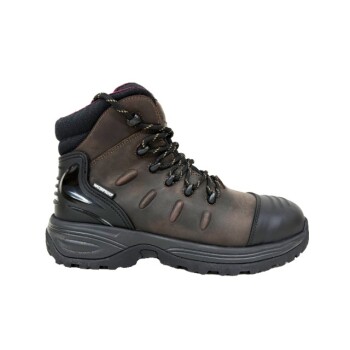
Industrial-grade Safety Shoes reduce ergonomic risks by acting as a stabilizing physical intervention between the worker and uneven agricultural terrain. Through specialized arch support and slip-resistant outsoles, they align the foot to prevent the excessive muscle compensation usually required when walking or bending on irregular ground, thereby significantly reducing lower limb fatigue.
Industrial-grade Safety Shoes are not just protective barriers; they are structural supports. By stabilizing the foot and absorbing ground reaction forces, they directly mitigate the cumulative physical strain inherent in high-intensity outdoor labor.
The Biomechanics of Stability
Correcting Posture on Uneven Ground
In sectors like agriculture and forestry, workers rarely tread on flat surfaces. Irregular terrain forces the foot to roll and shift, causing the muscles in the legs and back to constantly micro-adjust to maintain balance.
The Role of Arch Support
Industrial-grade footwear incorporates specialized arch support that locks the foot into a neutral position. This structural design prevents the collapsing of the arch, ensuring that the skeletal structure, rather than the muscles, bears the majority of the body's weight.
Traction as an Ergonomic Aid
Slipping requires a sudden, violent muscle contraction to regain balance, which is a primary source of acute strain. Slip-resistant outsoles provide necessary traction on wet or loose soil, allowing workers to move confidently without tensing their muscles in anticipation of a fall.
Alleviating Muscle Fatigue
Reducing Strain from Repetitive Movement
Cotton planting and similar tasks involve prolonged walking and bending. Without proper support, this leads to rapid lower limb muscle fatigue. Safety shoes mitigate this by providing a stable platform that reduces the energy cost of every step.
Impact Absorption
High-intensity labor subjects the body to constant impact. As noted in supplementary data, features like shock-absorbing midsoles and cushioned insoles dampen the energy returning from the ground. This protects the joints in the knees and hips from the repetitive shock that occurs over extended shifts.
Understanding the Trade-offs
Weight vs. Protection
While stability is crucial, industrial-grade shoes often feature protective elements like toe caps and puncture-resistant midsoles. These features add weight, which can inadvertently contribute to fatigue if the shoe is not properly balanced or if the worker is covering extreme distances.
Flexibility and Break-in Periods
The rigid construction required for foot stability can initially limit range of motion. A stiff boot may offer excellent support but can be uncomfortable during the break-in period, potentially causing temporary friction or discomfort until the materials mold to the worker's foot.
Making the Right Choice for Your Goal
To maximize the ergonomic benefits for your specific workforce, select footwear based on the primary environmental challenge.
- If your primary focus is terrain stability: Prioritize shoes with aggressive, slip-resistant outsoles and rigid arch structures to prevent ankle rolling on uneven rows.
- If your primary focus is endurance and fatigue reduction: Prioritize models featuring shock-absorbing midsoles and cushioned interiors to minimize the impact on joints during long planting shifts.
By selecting the right structural support, you transform footwear from a simple accessory into a vital tool for long-term musculoskeletal health.
Summary Table:
| Ergonomic Feature | Benefit for Outdoor Labor | Impact on Health |
|---|---|---|
| Specialized Arch Support | Stabilizes foot in neutral position | Prevents skeletal misalignment and back pain |
| Slip-Resistant Outsoles | Provides traction on loose/wet soil | Reduces acute strain from sudden muscle contractions |
| Shock-Absorbing Midsoles | Dampens ground reaction forces | Protects knee and hip joints from repetitive impact |
| Stabilizing Structure | Minimizes micro-adjustments on uneven terrain | Lowers muscle fatigue during long shifts |
Maximize Your Workforce's Endurance with 3515
As a leading large-scale manufacturer serving global distributors and brand owners, 3515 specializes in providing high-performance footwear tailored for high-intensity environments. From our flagship Safety Shoes series to tactical boots and outdoor gear, our products are engineered to reduce physical strain and enhance worker safety.
Our value to you:
- Comprehensive Production: Scalable manufacturing for safety, tactical, outdoor, and formal footwear.
- Ergonomic Innovation: Advanced shock absorption and stability features designed for bulk requirements.
- Global Distribution Support: Reliable supply chains and proven durability for large-scale agricultural and industrial sectors.
Ready to equip your team with the industry's best ergonomic protection? Contact us today to discuss your bulk requirements!
References
- Laksanee Boonkhao, Pongsak Rattanachaikunsopon. Factors Associated with Ergonomic Risk among Informal Workers in the Northeast of Thailand. DOI: 10.13189/ujph.2023.110309
This article is also based on technical information from 3515 Knowledge Base .
Related Products
- Premium Wheat Nubuck Safety Shoes for Bulk Distribution
- Premium Wholesale Waterproof Safety Boots High Performance Protection for Industrial Markets
- Premium Waterproof High-Cut Industrial Safety Boots for Wholesale and Bulk Orders
- Premium Wholesale Tactical Style Safety Shoes Boots with Quick Lacing
- Premium KPU Athletic Safety Shoes for Wholesale
People Also Ask
- What are the primary protective functions of safety shoes with steel toes in the automotive repair industry?
- What type of safety shoe is recommended for workers exposed to heavy machinery? Steel Toe Boots for Ultimate Protection
- What are the main materials used in steel toe safety shoes? A Guide to Protective Footwear Construction
- Why is it mandatory to wear safety shoes with steel toe protection during metal loading? Prevent Crushing Injuries
- What role do steel-toe safety shoes play in high-rise construction? Essential PPE for Vertical Build Security