
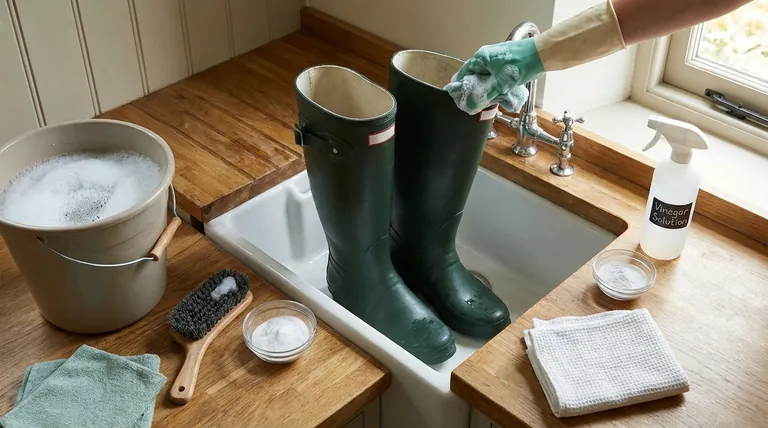
To effectively clean the inside of your rubber boots, you need a simple, two-step process. First, create a cleaning solution by mixing a teaspoon of mild dish soap or heavy-duty laundry detergent with two cups of warm water. Use a cloth to wipe down the entire interior with this solution, then use a second, separate cloth dampened with only warm water to "rinse" away the soap residue.
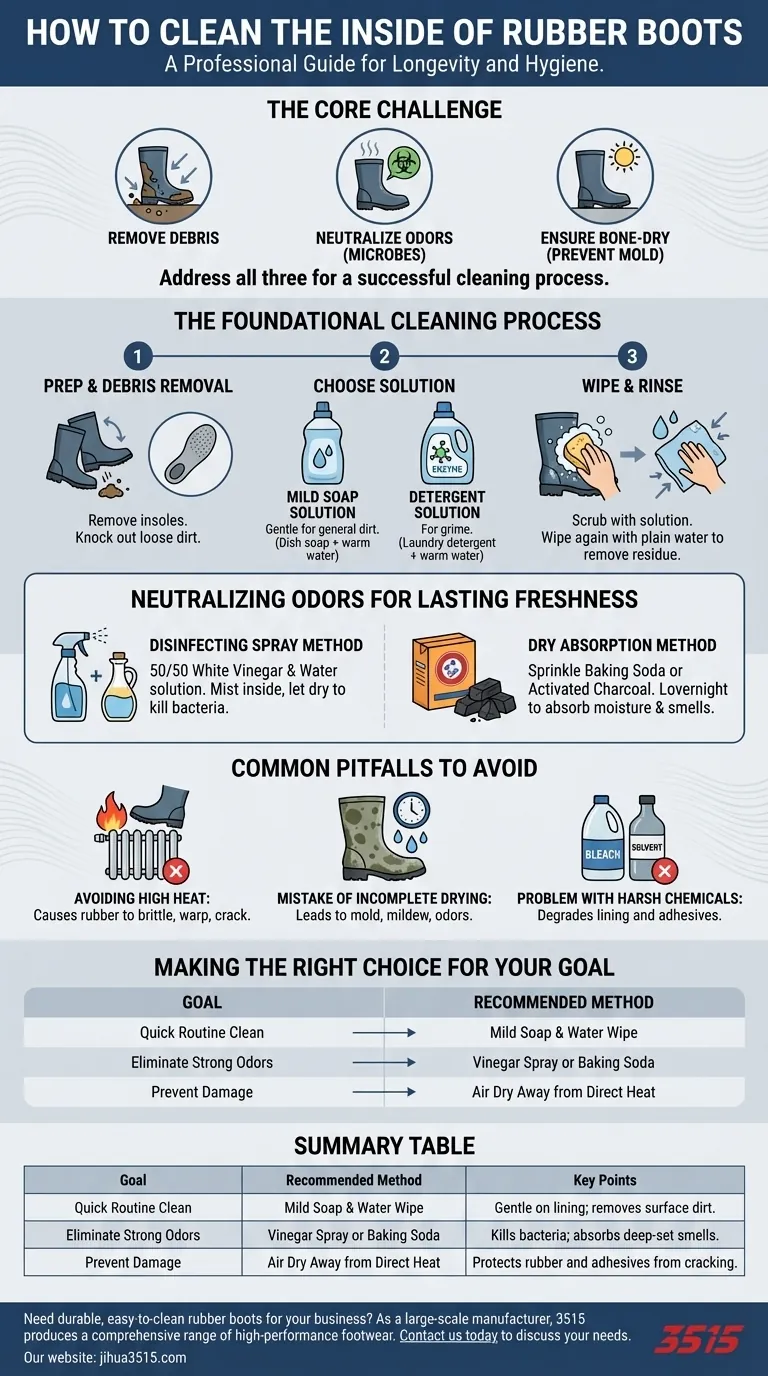
The core challenge isn't just cleaning visible dirt; it's eliminating the trapped moisture and bacteria that cause persistent odors. A successful cleaning process, therefore, must address three distinct goals: removing debris, neutralizing odor-causing microbes, and ensuring the boots are bone-dry before their next use.
The Foundational Cleaning Process
A systematic approach ensures you not only clean the boot's lining but also set the stage for proper drying and deodorizing.
Step 1: Preparation and Debris Removal
Before introducing any moisture, prepare the boots for a more effective cleaning. Remove any insoles to be cleaned and dried separately.
Turn the boots upside down and knock them together to dislodge any loose dirt, pebbles, or other debris.
Step 2: Choosing Your Cleaning Solution
You have two primary, effective options based on what you have on hand.
- Mild Soap Solution: A few drops of standard dish soap mixed with warm water is gentle on the boot's interior lining and effective for general dirt.
- Detergent Solution: For more significant grime, mix one teaspoon of heavy-duty laundry detergent with two cups of warm water. Detergents often contain enzymes that are better at breaking down organic matter.
Step 3: Wiping and Rinsing
The key is to clean without water-logging the interior.
Using a sponge or cloth, apply your chosen cleaning solution to the inside of the boots. Gently scrub the entire interior surface, including the footbed and up the sides.
Next, dampen a clean cloth with plain warm water. Thoroughly wipe the interior again to remove any soap or detergent residue, which can attract dirt if left behind.
Neutralizing Odors for Lasting Freshness
Cleaning removes the dirt, but a separate step is often needed to eliminate the bacteria that cause odors.
The Disinfecting Spray Method
For a powerful antibacterial and deodorizing effect, mix a 50/50 solution of white vinegar and water in a spray bottle.
Lightly mist the inside of the cleaned boots. The vinegar smell will be strong at first but will dissipate completely as it dries, taking the unwanted odors with it.
The Dry Absorption Method
If you need to draw out moisture and odors without adding more liquid, use a dry agent.
Sprinkle a generous amount of baking soda or a small amount of activated charcoal inside the boots. Let them sit overnight; the powder will absorb residual moisture and stubborn smells. Simply shake out the excess powder before wearing.
Common Pitfalls to Avoid
How you treat your boots after cleaning is as important as the cleaning itself. Avoiding these common mistakes will protect your gear and prevent recurring problems.
The Danger of High Heat
Never place rubber boots on a radiator, in front of a direct heat source, or use a high-heat setting on a boot dryer. Intense heat can cause the rubber to become brittle, warp, or crack, and it can weaken the adhesives holding the boot together.
The Mistake of Incomplete Drying
Putting your boots away while they are still damp is the primary cause of mold, mildew, and foul odors. Always ensure they are completely dry before storing them. If you don't have a boot dryer, place them in a well-ventilated area, propped open to allow for maximum airflow.
The Problem with Harsh Chemicals
Avoid using bleach, solvents, or other harsh chemical cleaners on the interior of your boots. These can degrade the lining material and adhesives over time, compromising the boot's integrity and comfort.
Making the Right Choice for Your Goal
Select your method based on the condition of your boots and your primary objective.
- If your primary focus is a quick, routine clean: A simple wipe-down with a mild soap and water solution followed by air drying is sufficient.
- If your primary focus is eliminating strong, persistent odors: Use the vinegar spray method after cleaning to kill bacteria or the baking soda method to absorb deep-set smells.
- If your boots are thoroughly soaked or muddy inside: Always remove the insoles for separate cleaning and use a boot dryer on a low or no-heat setting to guarantee they are completely dry.
A consistent cleaning routine is the simplest way to protect your investment and ensure your boots are comfortable and ready for any task.
Summary Table:
| Goal | Recommended Method | Key Points |
|---|---|---|
| Quick Routine Clean | Mild Soap & Water Wipe | Gentle on lining; removes surface dirt. |
| Eliminate Strong Odors | Vinegar Spray or Baking Soda | Kills bacteria; absorbs deep-set smells. |
| Prevent Damage | Air Dry Away from Direct Heat | Protects rubber and adhesives from cracking. |
Need durable, easy-to-clean rubber boots for your business? As a large-scale manufacturer, 3515 produces a comprehensive range of high-performance footwear for distributors, brand owners, and bulk clients. Our expertise ensures your boots are built to last and simple to maintain. Contact us today to discuss your footwear needs and discover how we can deliver quality and value for your customers.
Visual Guide
Related Products
- Factory Direct Wholesale Rain Boots Durable Waterproof & Fully Customizable
- Durable Rubber Sole Outdoor Shoes Wholesale & Custom Manufacturing
- Wholesale Durable Camouflage Canvas Shoes with High-Traction Cleated Rubber Sole
- Wholesale Durable Leather Work Boots | 8-Inch Goodyear Welt Manufacturer
- Durable Goodyear Welt Leather Work Boots for Wholesale & Private Label
People Also Ask
- What are the characteristics of rain boots? A Guide to Waterproof Footwear for Every Need
- What factors should be considered when choosing rain boots? Find the Perfect Boot for Your Needs
- What are the main differences between rain boots and snow boots? Choose the Right Boot for Your Climate
- How should one decide between PVC and rubber for rain boots? A Guide to Choosing the Right Material
- Why are rain boots more flexible and comfortable than snow boots? The Key Differences Explained















