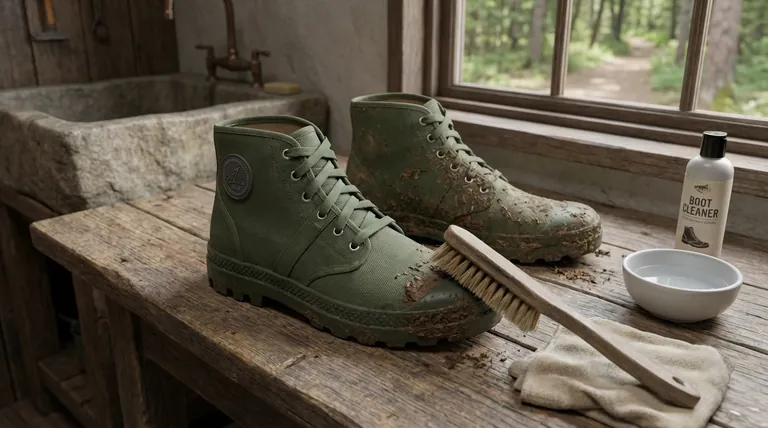
To clean your hiking boot uppers, you should first remove the laces and use a brush to get rid of loose dirt and debris. For a deeper clean, apply a material-specific cleaner with a cloth or sponge and a small amount of water, following the product's instructions precisely. This process is not just about looks; it's critical maintenance that preserves the boot's performance and lifespan.
The core principle of cleaning hiking boots is to remove abrasive dirt and restore breathability without damaging the upper materials. Using the right tools and a cleaner formulated for your specific boot material—be it leather, suede, or synthetic—is the key to effective and safe maintenance.
Why Cleaning Your Boots is Non-Negotiable
Properly cleaning your boot uppers is one of the most important things you can do to protect your investment. It goes far beyond simple aesthetics and directly impacts performance and durability.
It Prevents Material Degradation
Caked-on mud and dirt draw moisture out of leather, causing it to dry, stiffen, and eventually crack. For all boot types, embedded grit acts like sandpaper, slowly abrading the fibers of the upper with every step you take, leading to premature wear and tear.
It Maintains Breathability
Modern hiking boots, especially those with waterproof membranes like GORE-TEX, are designed to be breathable. A layer of dirt and grime clogs these microscopic pores, trapping sweat and moisture inside your boot. A clean boot is a breathable boot, which is essential for foot comfort and health on the trail.
It Restores Performance
Cleaning your boots is the first and most critical step before re-applying any waterproofing treatments. You cannot effectively waterproof a dirty boot, as the treatment won't be able to properly bond to the material.
The Step-by-Step Cleaning Process
Follow this simple, two-stage process after every significant hike. It ensures you remove damaging debris without harming the boot itself.
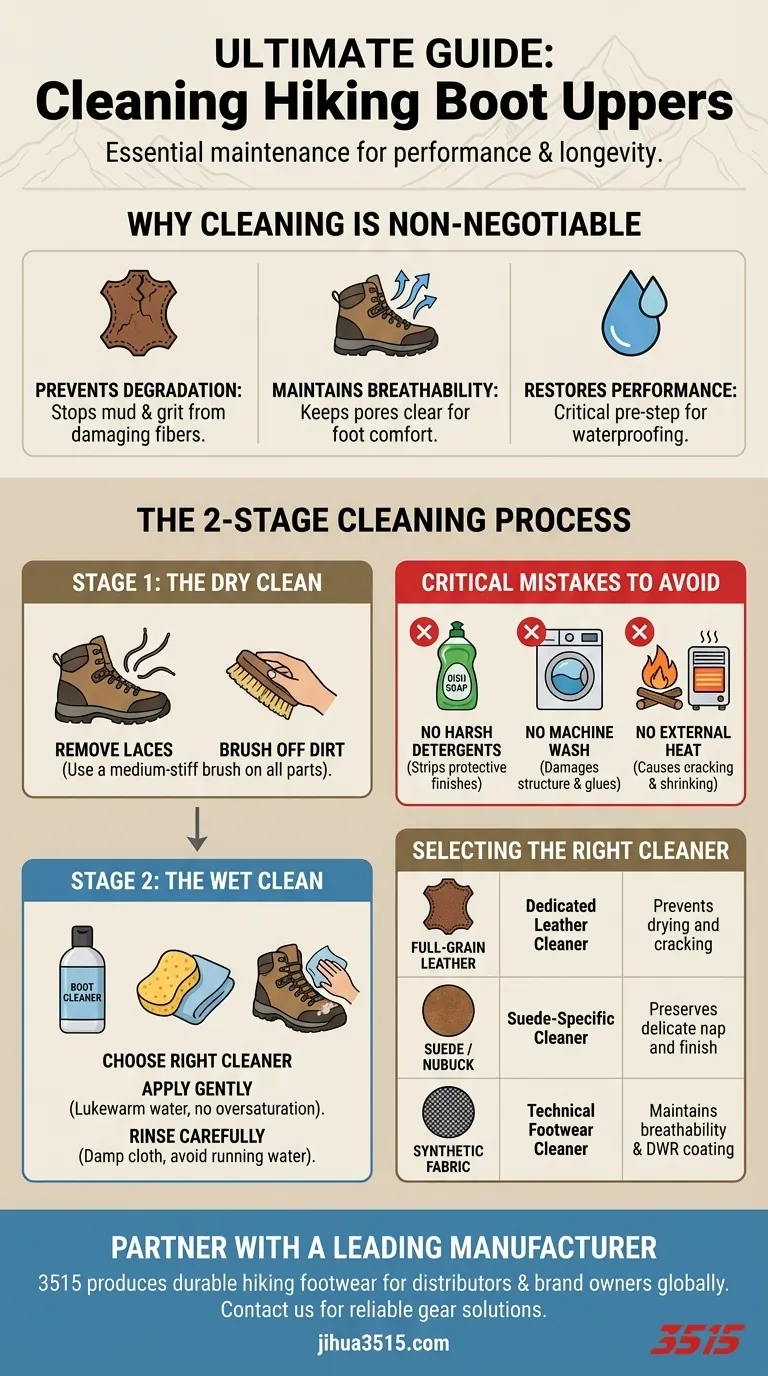
Stage 1: The Dry Clean
First, remove the laces. This allows you to access the entire upper, including the tongue and gussets where dirt loves to hide. You can wash the laces separately with mild soap and water.
Next, brush everything off. Use a medium-stiff boot brush to remove all loose dirt, dust, and mud from the uppers, seams, and eyelets. Be thorough but gentle, especially on more delicate fabric sections.
Stage 2: The Wet Clean
Choose the right cleaner. This is the most critical decision. A generic soap or detergent can strip away the tanning agents in leather or damage factory-applied water-repellent coatings on synthetics. Always use a dedicated boot cleaner.
Apply the cleaner. Using lukewarm water and a sponge or soft cloth, gently scrub the uppers. Avoid oversaturating the boot. Focus on stained or heavily soiled areas, applying the cleaner as directed on its packaging.
Rinse carefully. Use a clean, damp cloth to wipe away all the cleaner and residue. It's best to avoid holding your boots directly under a running faucet, as this can force water deep into the materials.
Critical Mistakes to Avoid
How you clean your boots is as important as if you clean them. Certain common shortcuts can cause irreversible damage.
Never Use Harsh Detergents
Avoid dish soap, laundry detergent, or bar soap. These products contain agents that can be harmful to leather and can strip away the factory-applied Durable Water Repellent (DWR) finish on synthetic boots.
Never Machine Wash Your Boots
A washing machine is far too aggressive for hiking footwear. The tumbling action can damage the boot's structure, break down glues, and compromise the integrity of the materials.
Never Use External Heat to Dry
Do not place your boots near a campfire, radiator, or wood stove to speed up drying. Intense, direct heat can cause leather to crack and shrink, and it can melt the adhesives that hold the boot together. Always let them air dry naturally away from direct heat sources.
Making the Right Choice for Your Boots
The specific cleaner you use is the most important factor in this process. Your boot's material dictates your choice.
- If you have full-grain leather boots: Use a dedicated leather boot cleaner to avoid drying out the material.
- If you have suede or nubuck boots: Use a cleaner specifically formulated for suede, as other products can flatten the delicate nap and ruin the finish.
- If you have synthetic (fabric) boots: Use a cleaner designed for technical footwear or synthetic materials to preserve breathability and DWR coatings.
Properly maintaining your gear is a fundamental skill that ensures it will be ready for your next adventure.
Summary Table:
| Material Type | Recommended Cleaner | Key Benefit |
|---|---|---|
| Full-Grain Leather | Dedicated Leather Cleaner | Prevents drying and cracking |
| Suede/Nubuck | Suede-Specific Cleaner | Preserves delicate nap and finish |
| Synthetic Fabric | Technical Footwear Cleaner | Maintains breathability & DWR coating |
Need high-quality hiking boots that stand the test of time? As a large-scale manufacturer, 3515 produces a comprehensive range of durable footwear for distributors, brand owners, and bulk clients. Our production capabilities encompass all types of hiking boots designed for optimal performance and easy maintenance. Contact us today to discuss your footwear needs and discover how we can help you provide reliable gear for every adventure!
Visual Guide
Related Products
- Wholesale High-Traction Camo Boots - Custom Manufacturer for Brands
- Durable Rubber Sole Outdoor Shoes Wholesale & Custom Manufacturing
- Durable Spiked Camouflage Boots Wholesale & Factory Production
- Wholesale Lightweight Tactical Boots Custom Manufacturer for Desert & Combat Use
- Wholesale Waterproof Tactical Boots Custom Suede & High-Traction Soles
People Also Ask
- What are the key features of the new line of camo boots? Built for Extreme Cold & Rugged Terrain
- Are camo boots necessary for hunting success? Prioritize Performance Over Pattern
- How does the Rank Score Test identify the primary causes of premature failure in tactical and work boots? Key Insights
- What is the technical logic behind using closed-eye testing for tactical boots? Unlocking Peak Footwear Stability
- What shoes to wear for a security job? Durable, Protective Footwear for Long Shifts