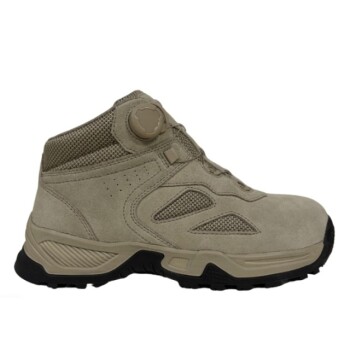
Glycerol functions as a molecular lubricant that fundamentally alters the structural properties of Bacterial Cellulose (BC). By penetrating the dense network of nanofiber chains, it disrupts rigid bonding to transform a naturally brittle material into a flexible, extensible composite suitable for the rigorous demands of safety shoes and tactical boots.
The core function of glycerol in this process is to act as a structural spacer. By inserting itself between cellulose nanofibers, it weakens the intermolecular forces that normally lock the fibers together, thereby maintaining the molecular mobility required for a leather-like feel.
The Physical Mechanism: Creating Space and Mobility
Penetrating the Nanofiber Network
Bacterial Cellulose creates a dense, highly crystalline web of nanofibers. Without treatment, these fibers pack tightly together during drying.
Glycerol acts as a functional consumable, physically penetrating the spaces between these nanofiber chains. This prevents the fibers from collapsing into a dense, rigid solid.
Increasing Free Volume
By occupying space between the chains, glycerol increases the "free volume" within the material.
This additional space allows the cellulose chains to slide past one another under stress. This specific physical change provides the extensibility needed for a boot to flex with a foot without cracking.
Preventing Structural Brittleness
The drying process is the critical failure point for untreated cellulose. As water evaporates, untreated fibers bind together irreversibly, resulting in a brittle sheet.
Glycerol remains within the structure during drying. Its presence physically blocks the formation of a rigid lattice, preserving the material's flexibility permanently.
The Chemical Mechanism: Modulating Forces
Weakening Intermolecular Forces
The primary force holding cellulose chains together is hydrogen bonding. These bonds are strong and rigid.
Glycerol chemically interferes with this network. It competes for these bonding sites, weakening the intermolecular forces between the cellulose chains themselves.
The Lubrication Effect
Because the strong chain-to-chain bonds are replaced by weaker chain-to-glycerol interactions, the internal friction of the material decreases.
Chemically, this creates a system with higher molecular mobility. This mobility is what the user perceives as the "leather-like feel" and suppleness required for comfortable footwear.
Understanding the Trade-offs
The Risk of Leaching
Glycerol creates a physical mixture with cellulose, not a permanent covalent bond.
In wet environments—common for tactical boots—there is a risk of the plasticizer migrating out of the material. If glycerol leaches out, the leather may revert to a brittle state over time.
Hygroscopic Nature
Glycerol is hygroscopic, meaning it attracts water.
While this prevents the leather from drying out, it can also lead to excessive moisture absorption. For safety shoes, this requires a careful balance to ensure the material remains breathable but does not become waterlogged.
Making the Right Choice for Your Goal
How to Apply This to Your Project
To successfully utilize glycerol-treated Bacterial Cellulose for high-performance footwear, you must balance flexibility with durability.
- If your primary focus is Maximum Flexibility: Use a higher concentration of glycerol to maximize molecular mobility and ensure the boot requires no "break-in" period.
- If your primary focus is Weather Resistance: Limit glycerol content or use a secondary hydrophobic coating to prevent the plasticizer from leaching out in wet tactical environments.
The key to a viable vegan leather lies in maintaining just enough glycerol to prevent brittleness without compromising the material's structural integrity.
Summary Table:
| Mechanism Type | Primary Action | Effect on Material |
|---|---|---|
| Physical | Increasing Free Volume | Enhances extensibility and prevents cracking during flex |
| Physical | Structural Spacing | Prevents nanofiber collapse and rigid lattice formation |
| Chemical | Hydrogen Bond Interference | Weakens intermolecular forces to reduce internal friction |
| Chemical | Molecular Lubrication | Increases chain mobility for a soft, leather-like feel |
| Operational | Hygroscopic Balance | Maintains moisture levels but requires leaching control |
Revolutionize Your Footwear Line with Sustainable Innovation
As a premier large-scale manufacturer, 3515 specializes in bridging the gap between advanced material science and high-performance footwear. Whether you are a distributor looking for cutting-edge sustainable options or a brand owner seeking robust production capabilities, we deliver excellence across all categories.
From our flagship Safety Shoes and rugged Tactical Boots to high-performance outdoor shoes, training sneakers, and elegant Dress & Formal footwear, 3515 provides the comprehensive bulk manufacturing expertise you need. We help you integrate innovative materials like flexible vegan leather into market-ready products that don't compromise on durability or comfort.
Ready to scale your production with a trusted industry leader? Contact 3515 today to discuss your bulk requirements
References
- Dheanda Absharina, Csaba Vágvölgyi. Bacterial Cellulose: From Biofabrication to Applications in Sustainable Fashion and Vegan Leather. DOI: 10.3390/fermentation11010023
This article is also based on technical information from 3515 Knowledge Base .
Related Products
- Premium Grain Leather Safety Boots for Bulk Supply
- Premium Suede Sport Safety Shoes for Wholesale & Bulk Orders
- Premium Wholesale Wheat Nubuck Safety Boot with Rapid Lacing System
- Durable Goodyear Welt Leather Work Boots for Wholesale & Private Label
- Wholesale Leather Work Boots with Customizable Wedge Sole for Brands
People Also Ask
- How should safety boots be cleaned to avoid damage? A Gentle Guide to Preserve Your Boots
- What are the consequences of not wearing safety boots? Protect Your Finances and Career
- Which organizations develop safety standards for work boots? Ensure Compliance & Worker Safety
- What are the key features of safety boots? Essential Protection for Hazardous Workplaces
- What makes durable safety boots? The Ultimate Guide to Long-Lasting Work Footwear