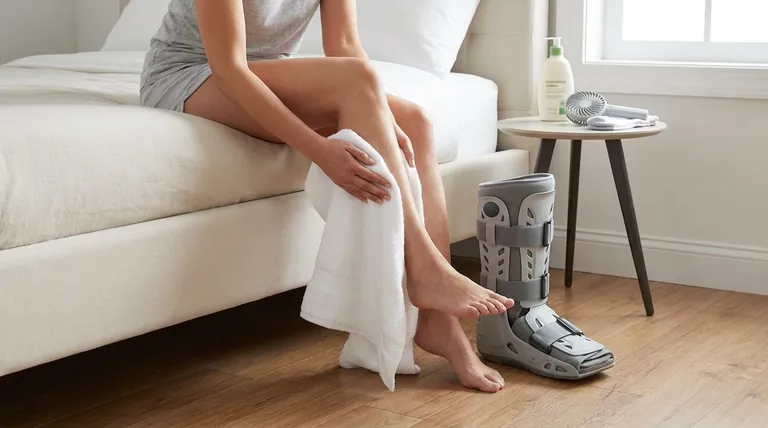
Proper skin care with a removable boot is a straightforward but critical routine. The core principles are to keep the skin completely dry before putting the boot on, check the skin daily for any signs of redness or sores, and ensure the boot is snug but not overly tight to prevent pressure points.
The central challenge is managing the environment created by the boot—one of potential moisture, pressure, and friction. Proactive, daily attention to your skin is not just about comfort; it is the single most effective way to prevent serious complications like pressure sores and infections.
The Foundation: The Daily Skin Inspection
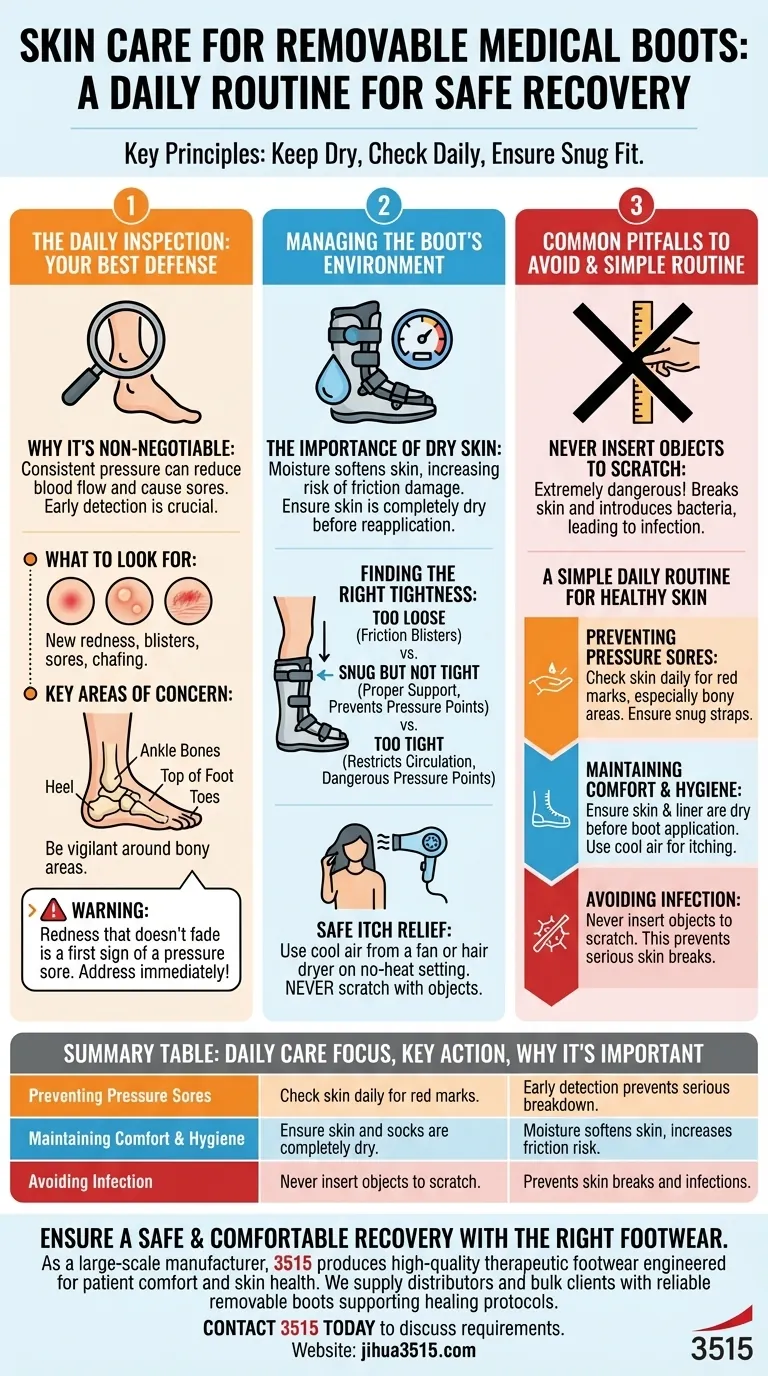
Your most important tool for preventing skin problems is your own observation. A quick but thorough check every day allows you to catch minor issues before they become significant complications.
Why Daily Checks are Non-Negotiable
A medical boot immobilizes your limb but also applies consistent pressure to specific areas. This pressure can reduce blood flow, leading to skin breakdown and the formation of pressure sores if left unchecked.
What to Look For
During your daily check, carefully examine the entire surface of your foot and leg that is covered by the boot. Pay close attention to any new areas of redness, blisters, sores, or chafing.
Key Areas of Concern
While you should check everywhere, be particularly vigilant around bony areas where pressure is most concentrated. This includes your heel, ankle bones, the top of your foot, and the area around your toes.
Managing the Boot's Environment
How you manage moisture, pressure, and irritation inside the boot directly impacts your skin's health.
The Importance of Dry Skin
Moisture is the primary enemy of healthy skin within a boot. It softens the skin's protective outer layer, making it far more susceptible to breakdown from friction and pressure. Always ensure your skin is completely dry before reapplying the boot.
Finding the Right Tightness
Proper fit is a delicate balance. A boot that is too loose can shift and cause friction blisters, while a boot that is too tight can create dangerous pressure points and restrict circulation. The goal is a snug fit that prevents movement without constricting.
How to Safely Manage Itching
Itching is a common and frustrating side effect. To relieve it safely, use cool air from a fan or a hair dryer on a no-heat setting. This can provide relief without damaging the skin.
Common Pitfalls to Avoid
Certain seemingly harmless actions can lead to significant problems. Avoiding these common mistakes is crucial for a smooth recovery.
Never Insert Objects to Scratch
It can be tempting to use a ruler, a coat hanger, or another object to scratch an itch deep inside the boot. This is extremely dangerous, as it can easily break the skin and introduce bacteria, leading to a serious infection.
Ignoring "Minor" Redness
Do not dismiss a small red spot. Redness that doesn't fade after the boot has been off for a short time is the first warning sign of a developing pressure sore. Address it immediately by checking boot tightness and ensuring the area is protected.
A Simple Routine for Healthy Skin
Integrating these steps into a daily habit will protect your skin and support your healing process.
- If your primary focus is preventing pressure sores: Check your skin daily for any red marks, especially over bony areas, and ensure your boot straps are snug but never constricting.
- If your primary focus is maintaining comfort and hygiene: Always ensure your skin and any sock or liner are perfectly dry before reapplying the boot, and use cool air to manage any itching.
- If your primary focus is avoiding infection: Never, under any circumstances, insert an object inside the boot to scratch your skin.
This consistent care routine is your best defense against complications and is key to ensuring a smoother recovery.
Summary Table:
| Daily Care Focus | Key Action | Why It's Important |
|---|---|---|
| Preventing Pressure Sores | Check skin daily for red marks, especially over bony areas. | Early detection prevents serious skin breakdown. |
| Maintaining Comfort & Hygiene | Ensure skin and socks are completely dry before boot application. | Moisture softens skin, increasing risk of friction damage. |
| Avoiding Infection | Never insert objects into the boot to scratch an itch. | Prevents skin breaks that can lead to serious infection. |
Ensure a Safe and Comfortable Recovery with the Right Footwear
Proper skin care is essential when wearing a medical boot, and it starts with a well-designed product. As a large-scale manufacturer, 3515 produces a comprehensive range of high-quality therapeutic and orthopedic footwear for distributors, brand owners, and bulk clients. Our boots are engineered with patient comfort and skin health in mind, focusing on secure yet non-constricting fits and breathable materials.
If you are looking for reliable, bulk supplies of removable boots that support proper healing protocols, our production capabilities can meet your needs.
Contact 3515 today to discuss your footwear requirements and ensure your clients have the best foundation for recovery.
Visual Guide
Related Products
- Wholesale Durable Safety Boots Manufacturer Customizable Steel Toe Work Boots
- Durable Leather Moc Toe Work Boots for Wholesale & Custom Manufacturing
- Durable Military Combat Boots with Water Drainage for Wholesale & OEM
- Durable Leather High-Ankle Tactical Boots for Wholesale & Custom Manufacturing
- Heavy-Duty Goodyear Welted Pull-On Safety Rigger Boot
People Also Ask
- What are the pros and cons of steel toe work boots? A Guide to Maximum Protection vs. Comfort
- What are the different types of steel toe work boots? Choose the Right Boot for Your Job
- What is the history of steel toe work boots? From German Invention to Modern Safety Standard
- How much weight can steel toe work boots withstand? Unpacking the 3,372 lb. Safety Standard
- What are some common myths about steel toe work boots? Debunked for Modern Workers