
Properly cleaning and maintaining wellington boots is a straightforward process focused on gentle washing, careful drying, and periodic conditioning. This approach prevents the natural rubber from degrading, ensuring your boots remain waterproof, flexible, and looking their best for years.
The core principle of wellie care is not just about removing mud, but about actively preventing the natural rubber from drying out. Protecting the material from heat and sunlight is the single most important factor in extending its life.
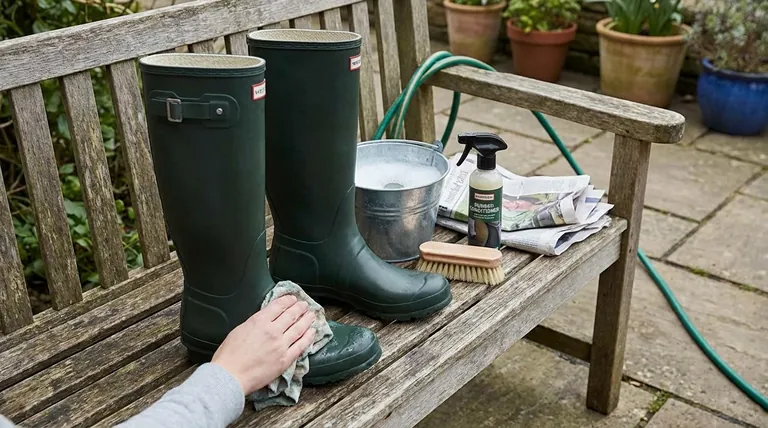
The Essential Cleaning Protocol
A consistent cleaning routine is the foundation of good boot maintenance. It removes abrasive dirt and corrosive substances like salt that can damage the rubber over time.
Step 1: Remove Surface Debris
After use, especially a muddy one, rinse the boots with cool or warm water. Use a soft cloth to wipe away the initial layer of dirt and grime.
Step 2: Perform a Deep Clean
For stubborn dirt, create a solution of mild detergent (like a washing-up liquid) and warm water. Dip a clean cloth in the solution and gently scrub the boot's exterior in small, circular motions.
Step 3: Clean the Treads
The sole and treads often hold the most compacted mud. Use a soft-bristled brush dipped in your soapy solution to scrub these areas clean.
Step 4: Rinse and Prepare for Drying
Thoroughly rinse all soap residue from the boots using a clean cloth and cold water. Wiping away the suds ensures no film is left behind.
The Critical Drying Process
How you dry your wellies is just as important as how you clean them. Improper drying is the leading cause of premature cracking and damage.
Why Direct Heat Is the Enemy
Never place your wellies near a direct heat source like a radiator, fireplace, or in direct sunlight. Intense heat causes the natural rubber to dry out rapidly, become brittle, and develop cracks, compromising its waterproof integrity.
The Correct Air-Drying Method
Always let your boots air-dry naturally in a cool, well-ventilated area. To help them keep their shape and absorb excess moisture from the inside, stuff them loosely with newspaper.
Long-Term Preservation and Storage
Beyond cleaning and drying, periodic conditioning and proper storage are essential for maintaining the material's flexibility and appearance.
Conditioning the Rubber
Over time, you may notice a white, powdery film on your boots. This is known as "bloom," a natural characteristic of high-quality rubber. Regularly treating your boots with a silicone-based spray or a specialized rubber conditioner nourishes the material, restores its luster, and prevents it from drying out.
Proper Storage Techniques
When not in use, store your wellies in a cool, dry, and dark place, like a closet or boot bag. Keep them upright to avoid creasing or folding the rubber, which can create weak points over time.
Common Maintenance Pitfalls to Avoid
Avoiding a few common mistakes can dramatically extend the life of your boots.
Using Harsh Chemicals or Solvents
Stick to mild detergents. Harsh chemical cleaners can strip the natural oils from the rubber, leading to accelerated degradation and brittleness.
Forgetting to Clean the Interior
If your boots develop an odor, you can clean the inside. Use a cloth dampened with a very mild soap solution to wipe down the interior lining, then ensure they are completely air-dried before wearing.
Neglecting Regular Care
Letting mud and dirt sit on your boots for extended periods can wear down the material. A quick rinse after most uses is a simple habit that provides significant long-term benefits.
A Maintenance Schedule for Your Wellies
Adapt your care routine to how you use your boots to achieve the best results with minimal effort.
- After every muddy use: A quick rinse with plain water and a wipe-down is sufficient to remove damaging surface debris.
- For stubborn stains or monthly care: Perform the full deep clean with a mild soap solution to keep the boots in top condition.
- Seasonally or when you notice a white film: Apply a rubber conditioner or silicone spray to nourish the material and restore its flexibility.
Consistent care is the key to ensuring your wellington boots remain a reliable and long-lasting part of your wardrobe.
Summary Table:
| Task | Key Action | What to Avoid |
|---|---|---|
| Cleaning | Use mild soap & warm water; scrub gently. | Harsh chemicals or abrasive brushes. |
| Drying | Air-dry naturally in a cool, ventilated area. | Direct heat sources like radiators or sunlight. |
| Storage | Store upright in a cool, dark, dry place. | Folding or creasing the rubber. |
| Conditioning | Apply silicone-based spray or rubber conditioner seasonally. | Letting a white 'bloom' film build up unchecked. |
Need a reliable source for durable, high-quality wellington boots?
As a large-scale manufacturer, 3515 produces a comprehensive range of footwear for distributors, brand owners, and bulk clients. Our production capabilities encompass all types of durable, easy-to-maintain shoes and boots designed for long-term performance.
Contact us today to discuss your wholesale or bulk order needs and discover how our expertise can benefit your business.
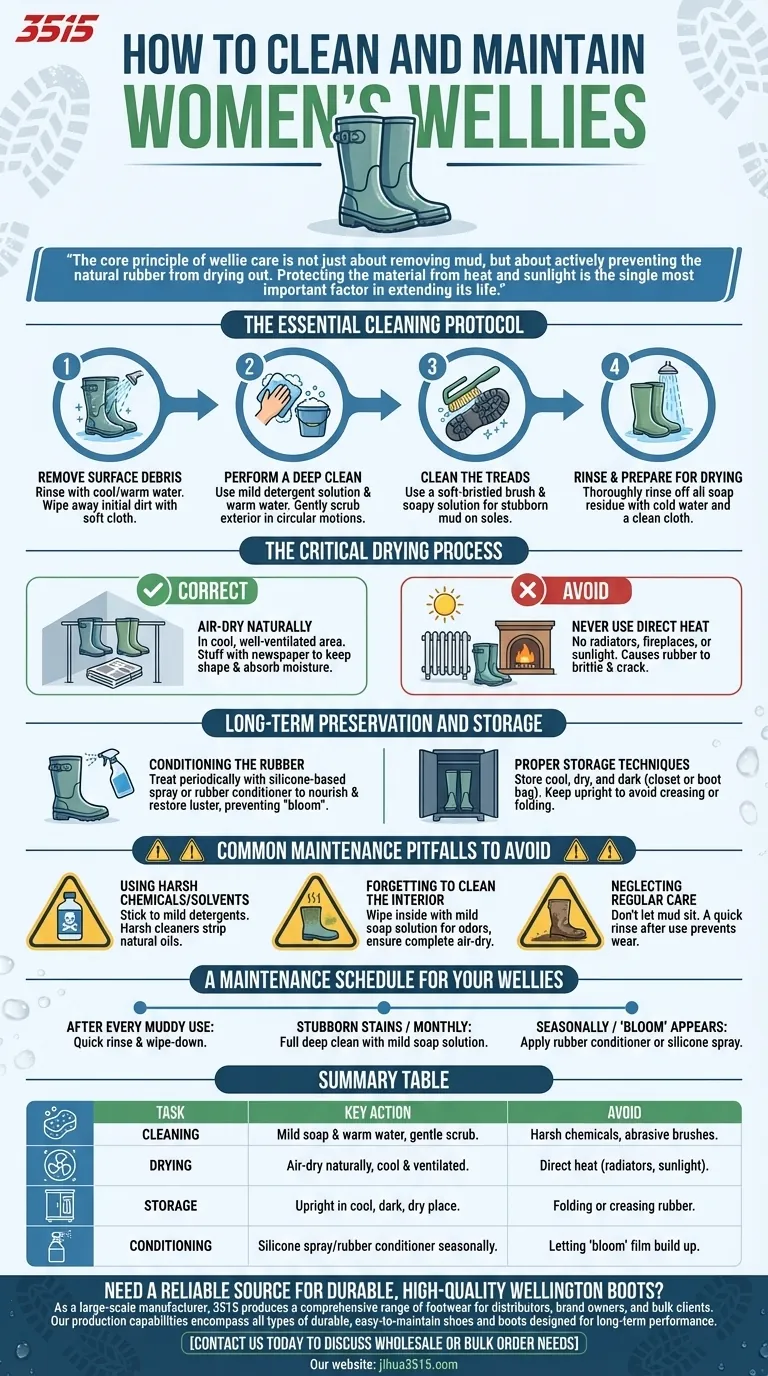
Visual Guide
Related Products
- Durable Waterproof Rain Boots | Custom Manufacturer for Wholesale & Brands
- Wholesale Women's Leather Derby Shoes Custom Factory Production
- Wholesale Classic Leather Lace-Up Ankle Boots for Brand Manufacturing
- Durable Goodyear Welt Leather Work Boots for Wholesale & Private Label
- Durable Moc-Toe Wedge Work Boots | Wholesale Manufacturing for Brands
People Also Ask
- What are the main materials for waterproof rain boots? Choose the Right Material for Durability & Comfort
- What is the overall recommendation for choosing rain boot materials? A Guide to Rubber vs. PVC
- How does boot height affect waterproofing? Choose the Right Height for Ultimate Protection
- Why are rain boots more flexible and comfortable than snow boots? The Key Differences Explained
- What are the best types of shoes for different gardening conditions? Find Your Perfect Match.



















