
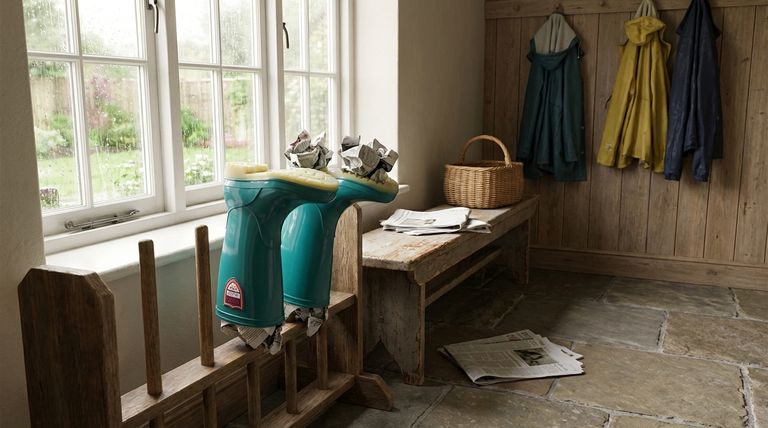
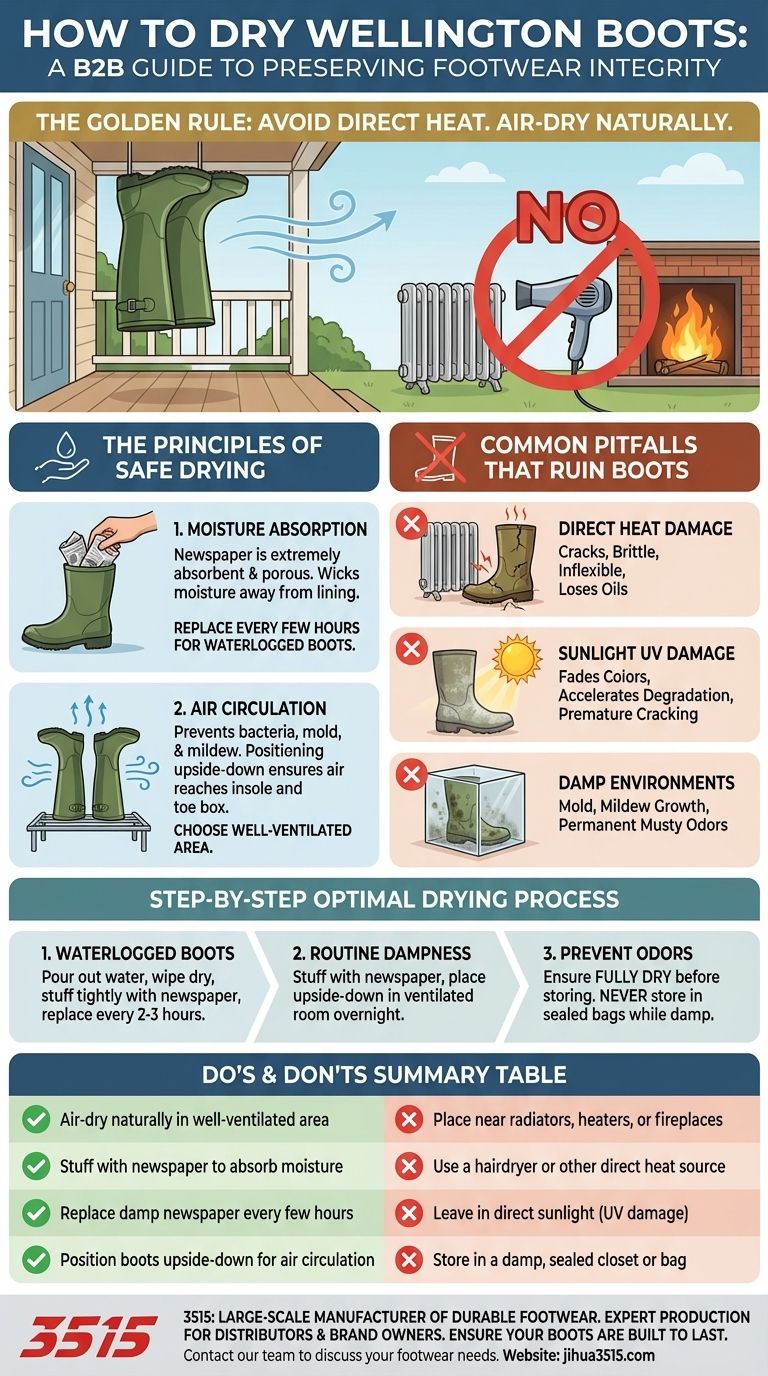
The single most important rule for drying Wellington boots is to avoid direct heat at all costs. The correct method is to let them air-dry naturally in a well-ventilated space, away from sunlight or artificial heat sources. Stuffing them with newspaper will significantly speed up the process by absorbing internal moisture.
The goal is not just to dry your boots, but to do so in a way that preserves the rubber's integrity. Slow, gentle, and indirect drying methods are essential for preventing cracks, fading, and material breakdown, ensuring your boots last for years.
The Principles of Safe Boot Drying
To properly care for your boots, it's crucial to understand why certain methods work and others cause irreversible damage. The process hinges on two key elements: moisture absorption and air circulation.
Why Newspaper Is So Effective
Newspaper is a highly effective tool because it is extremely absorbent and porous.
When stuffed inside the boot, it wicks moisture directly away from the interior lining, drawing it out much faster than air alone.
For very wet boots, you should replace the damp newspaper with a fresh, dry batch every few hours to maintain maximum absorption.
The Importance of Air Circulation
Trapped, damp air is a breeding ground for odor-causing bacteria, mold, and mildew.
Placing your boots in a well-ventilated area, such as a mudroom, garage, or covered porch, allows moist air to escape and be replaced by dry air.
Positioning the boots upside-down is a simple way to ensure air can circulate all the way to the insole and toe box, which are often the last areas to dry.
Common Pitfalls That Ruin Boots
Many common drying shortcuts will dramatically shorten the life of your boots. Understanding these risks is the key to proper maintenance.
The Danger of Direct Heat
Never place your Wellington boots near a radiator, fireplace, heater, or use a hairdryer on them.
Direct heat causes the natural rubber to lose its essential oils and plasticizers. This process makes the material brittle, inflexible, and prone to cracking, completely compromising its waterproof qualities.
The Problem with Sunlight
Leaving your boots to dry in direct sunlight is just as damaging as using artificial heat.
Ultraviolet (UV) radiation from the sun breaks down the chemical bonds in the rubber. This not only causes vibrant colors to fade and develop a chalky appearance but also accelerates the material's degradation, leading to premature cracking.
The Risk of a Damp Environment
Do not attempt to dry your boots in a damp, stagnant environment like a sealed closet or a musty basement corner.
This lack of airflow creates the perfect conditions for mold and mildew to grow on the boot's lining. This can lead to permanent musty odors and can eventually damage the fabric itself.
The Optimal Drying Process: A Step-by-Step Guide
Follow this simple process for the best results, tailored to how wet your boots are.
- If your boots are completely waterlogged: First, pour out any excess water and wipe the exterior dry. Then, stuff them tightly with newspaper and replace it every 2-3 hours until they are merely damp.
- For routine dampness after a rainy day: Stuff the boots with newspaper and place them upside-down in a well-ventilated room or a covered porch overnight.
- To prevent odors and maintain freshness: Always ensure your boots are fully dry before storing them, and never leave them in a sealed bag or box while damp.
Proper drying is the most critical step in maintaining the performance and lifespan of your Wellington boots.
Summary Table:
| Do's | Don'ts |
|---|---|
| Air-dry naturally in a well-ventilated area | Place near radiators, heaters, or fireplaces |
| Stuff with newspaper to absorb moisture | Use a hairdryer or other direct heat source |
| Replace damp newspaper every few hours | Leave in direct sunlight (causes UV damage) |
| Position boots upside-down for better air circulation | Store in a damp, sealed closet or bag |
Ensure your boots are built to last. As a large-scale manufacturer, 3515 produces a comprehensive range of durable footwear for distributors, brand owners, and bulk clients. Our expert production capabilities ensure every pair of Wellington boots is made with quality materials designed for longevity. Contact our team today to discuss your footwear needs and discover how we can provide reliable, long-lasting products for your market.
Visual Guide
Related Products
- Durable Waterproof Rain Boots | Custom Manufacturer for Wholesale & Brands
- Durable Goodyear Welt Leather Work Boots for Wholesale & Private Label
- Wholesale Durable Leather Work Boots | 8-Inch Goodyear Welt Manufacturer
- High-Traction Suede Tactical Boots Wholesale & Custom Manufacturing
- Premium Wholesale Tactical Style Safety Shoes Boots with Quick Lacing
People Also Ask
- What are the main materials for waterproof rain boots? Choose the Right Material for Durability & Comfort
- What is the overall recommendation for choosing rain boot materials? A Guide to Rubber vs. PVC
- How does boot height affect waterproofing? Choose the Right Height for Ultimate Protection
- Why are rain boots more flexible and comfortable than snow boots? The Key Differences Explained
- What are the best types of shoes for different gardening conditions? Find Your Perfect Match.



















