The design of a motorcycle touring boot outsole must prioritize a balance between mechanical vibration damping, oil-resistant grip, and structural rigidity. For long-distance road riding, the outsole serves as the primary interface between the rider and the machine, requiring a specialized rubber compound that absorbs engine harmonics to prevent fatigue while maintaining a secure grip on foot pegs and wet asphalt.
To satisfy the demands of the global touring market, an outsole must offer a dual-purpose architecture: it must be rigid enough to protect the foot and support the arch during hours of riding, yet flexible enough to allow for comfortable walking during stops.
Engineering for Vibration Damping and Long-Haul Comfort
Mitigation of Mechanical Fatigue
Extended hours on the road expose a rider's feet to constant high-frequency engine vibrations transmitted through the foot pegs. Professional-grade outsoles are engineered with specific material densities designed to absorb these micro-shocks, significantly reducing numbness and physical exhaustion.
The Role of Advanced Material Composition
The use of premium, multi-density rubber compounds ensures the sole remains pliable enough to dampen vibrations without sacrificing the durability needed for thousands of miles of travel. This material choice is a hallmark of high-end manufacturing, ensuring the boot performs consistently across varying temperature ranges.
Integrated Arch Support and Internal Shanks
To maintain structural integrity under the weight of the rider, outsoles should incorporate a reinforced internal shank. This component provides the necessary longitudinal rigidity to support the foot's arch, preventing the foot from "wrapping" around the peg during long stints or in the event of an impact.
Maximizing Traction and Safety Standards
Oil-Resistant and Anti-Slip Properties
Road surfaces, particularly at intersections and rest stops, are frequently contaminated with oil, coolant, and fuel. High-performance touring outsoles must meet international certification standards for slip resistance to ensure the rider remains stable when planting their feet on slick or uneven ground.
Multi-Surface Tread Architecture
The tread pattern must be strategically designed to offer "mechanical keying" into motorcycle foot pegs for precise control. Simultaneously, it requires a sufficient contact patch and water-evacuation channels to maintain traction on wet asphalt and during walking maneuvers.
Durability for the Professional Supply Chain
For distributors and wholesalers, the longevity of the outsole is a key selling point. Utilizing state-of-the-art injection and vulcanization equipment ensures that the bond between the outsole and the upper remains intact under the heavy stress of long-distance touring.
Manufacturing Excellence and Enterprise Reliability
Heritage and Technical Expertise Since 1951
Drawing on a legacy of footwear manufacturing dating back to 1951 provides a depth of technical "know-how" that newer facilities cannot replicate. This heritage ensures that every outsole design is rooted in decades of empirical data regarding wear patterns and rider ergonomics.
Large-Scale OEM/ODM Capabilities
Modern enterprise-level production requires the ability to deliver consistent quality at massive scales. State-of-the-art manufacturing facilities allow for the precision molding of complex outsole designs, ensuring that every unit in a large-volume order meets the same rigorous international certifications.
Robust Supply Chain Stability
A reliable manufacturing partner provides more than just a product; they provide a stable supply chain. For brand owners and B2B resellers, this translates to consistent delivery schedules and a product that adheres to the highest global safety and quality standards.
Understanding the Trade-offs
Grip vs. Longevity
There is a natural tension between a compound's "stickiness" and its wear rate. Softer compounds offer superior grip on foot pegs and oily roads but will degrade faster under heavy use; conversely, harder compounds offer extreme longevity but may feel less secure on wet surfaces.
Rigidity vs. Walking Comfort
A sole designed purely for riding would be as stiff as a plank to maximize protection and support. However, touring riders require enough forefoot flex to walk comfortably at destinations, necessitating "tuned" flex zones that do not compromise the boot’s protective shell.
Weight vs. Protection
Reinforced shanks and thick, high-density outsoles provide the best protection and vibration damping but add weight to the boot. Managing this weight through advanced material science is essential to prevent leg fatigue during long days in the saddle.
Applying These Standards to Your Product Line
Making the Right Choice for Your Goal
- If your primary focus is maximum rider safety: Prioritize outsoles featuring integrated composite shanks and high-density impact zones that meet the strictest CE certification levels.
- If your primary focus is high-volume market distribution: Select standardized, oil-resistant rubber compounds that offer a balanced "middle-ground" of durability and grip to appeal to the widest range of touring riders.
- If your primary focus is premium all-weather performance: Choose outsoles with deep-water evacuation channels and multi-density mid-soles designed specifically for vibration attenuation.
By integrating these technical requirements with large-scale manufacturing precision, brand owners can deliver a touring boot that meets the rigorous demands of the modern long-distance rider.
Summary Table:
| Key Feature | Functional Design | Benefit for Riders & Distributors |
|---|---|---|
| Multi-density Rubber | Absorbs engine harmonics | Reduces physical fatigue and foot numbness |
| Integrated Shank | Longitudinal arch support | Ensures structural integrity and impact safety |
| Oil-Resistant Tread | High-performance grip | Prevents slips on oily or wet road surfaces |
| Dual-Purpose Flex | Tuned forefoot flexibility | Balances riding protection with walking comfort |
Scale Your Brand with 3515's Manufacturing Excellence
As a large-scale manufacturer serving distributors and brand owners since 1951, 3515 offers the technical expertise and massive production scale needed to dominate the professional footwear market. Anchored by our flagship Safety Shoes series, our comprehensive production capabilities cover all footwear types—including tactical boots, outdoor shoes, training shoes, and sneakers—to meet your diverse bulk requirements.
Why Partner with 3515?
- OEM/ODM Mastery: Leverage our state-of-the-art equipment for custom, high-performance designs.
- Certified Reliability: We adhere to rigorous international standards, ensuring consistent quality for B2B resellers.
- Supply Chain Stability: Benefit from decades of heritage and a robust infrastructure capable of consistent, large-volume delivery.
Ready to elevate your product line with a stable, heritage-backed manufacturing partner?
Contact our expert team today to discuss your project!
Related Products
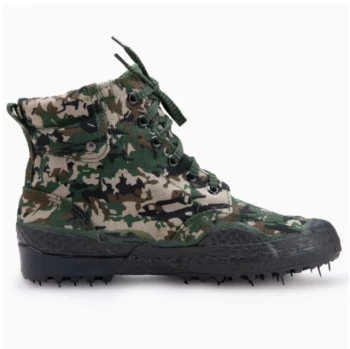
- Durable Spiked Camouflage Boots Wholesale & Factory Production
- Wholesale Waterproof Tactical Boots Custom Suede & High-Traction Soles
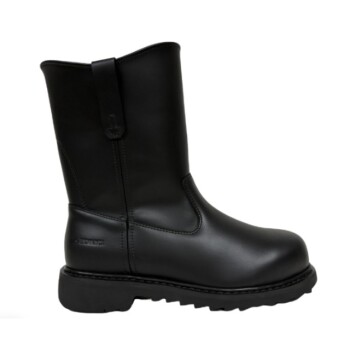
- Heavy-Duty Goodyear Welted Pull-On Safety Rigger Boot
- Wholesale Tactical Boots High-Traction & Reflective for Bulk & Brand Orders
People Also Ask
- How does boot height affect waterproofing? Choose the Right Height for Ultimate Protection
- What are the best types of shoes for different gardening conditions? Find Your Perfect Match.
- What role does camouflage play in hunting boots? It's More Than Just a Pattern
- What should you look for to ensure boots are fully waterproof? The Essential 2-Part System
- How does boot construction affect waterproofing? The Science Behind Truly Dry Feet