
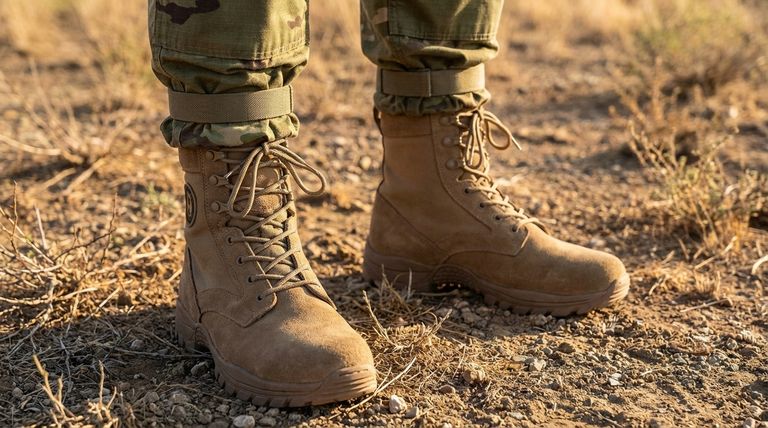
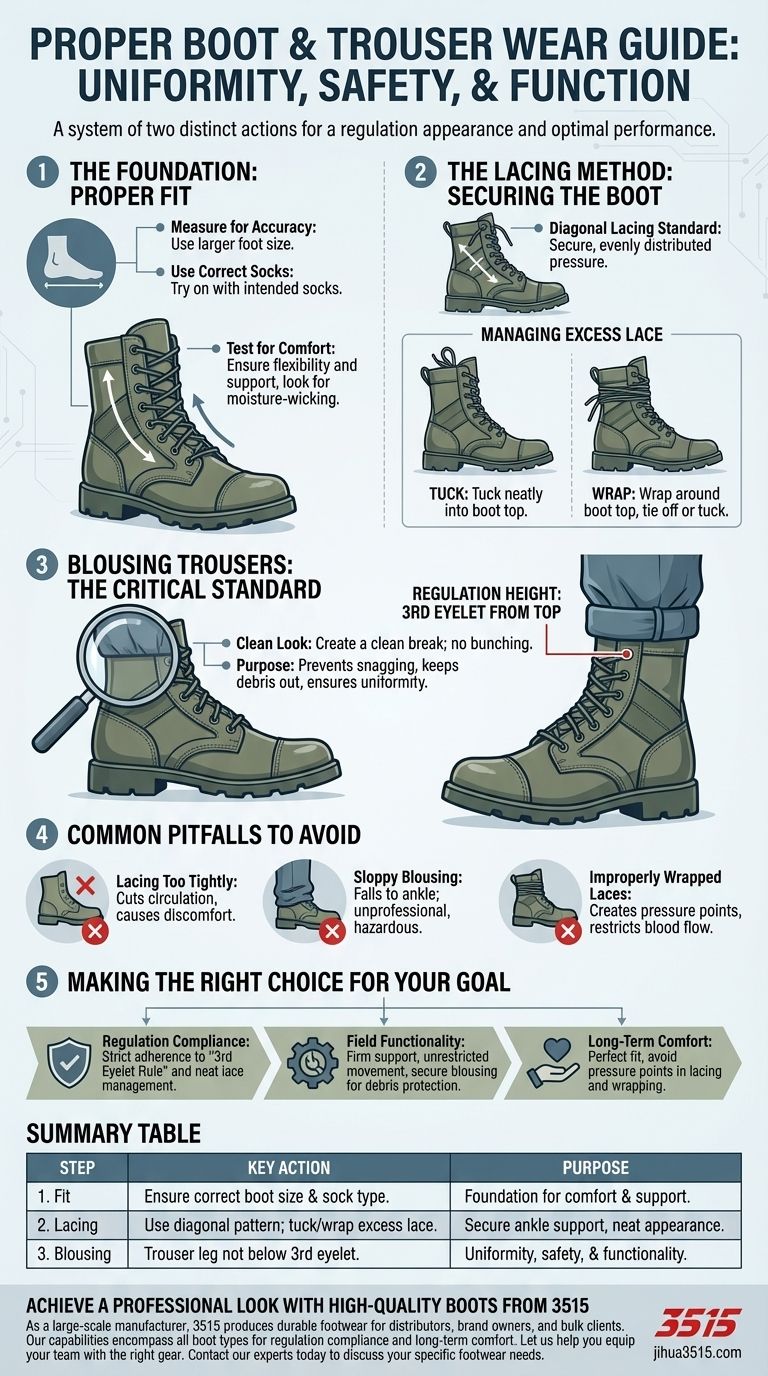
The standard for wearing boots and trousers is a system of two distinct actions: lacing the boot correctly and blousing the trousers to a specific height. Boots should be laced diagonally, with any excess lace either tucked into the top of the boot or wrapped neatly around it. Trousers are then "bloused" so they do not extend below the third eyelet from the top of the boot.
The proper wear of boots and trousers is not merely a matter of style; it's a system designed for uniformity, safety, and function. The key is securing the boot for ankle support while ensuring the trousers are bloused at a precise height for a clean, regulation appearance.
The Foundation: Starting with a Proper Fit
Before lacing and blousing, you must ensure your boots fit correctly. An improper fit undermines all subsequent steps, leading to discomfort and poor performance.
Measure for Accuracy
Always measure both of your feet, as they often differ slightly in size. Base your boot size on the larger foot to avoid unnecessary pressure and blistering.
Use the Correct Socks
Try on boots while wearing the exact type of socks you plan to use with them. The thickness of your socks significantly impacts the overall fit and feel inside the boot.
Test for Comfort and Function
Walk around in the boots to test their flexibility and how they feel around your ankles. A well-designed boot should provide support without severely restricting natural movement. Look for features like cushioned, moisture-wicking footbeds.
The Lacing Method: Securing the Boot
Proper lacing ensures the boot is secure, provides adequate support, and maintains a professional appearance.
The Diagonal Lacing Standard
Boots should be laced using a diagonal (or criss-cross) pattern. This method provides a secure and evenly distributed pressure across the top of your foot.
Managing Excess Lace
Once the boot is tied, the excess lace must be managed to prevent snagging. You have two primary options:
- Tuck: Neatly tuck the excess lace down into the top of the boot, under the bloused trousers.
- Wrap: Wrap the excess lace around the top of the boot before tying it off or tucking the ends.
Blousing Trousers: The Critical Standard
"Blousing" is the technique of creating a neat, folded cuff that hangs over the top of the boot.
Defining the Regulation Height
The most critical rule is the height. The bottom of the bloused trouser leg must not extend below the third eyelet from the top of the boot.
Achieving a Clean Look
The goal is to create a clean break between the boot and the trouser leg. The trouser should not be bunched up near the ankle or hanging loosely.
The Purpose of Blousing
This standard serves multiple functions: it prevents the trouser leg from dragging, keeps dirt and debris out of the boots, and ensures a sharp, uniform appearance.
Common Pitfalls to Avoid
Achieving the correct look means understanding what not to do. These common mistakes can compromise your appearance, comfort, and safety.
Lacing Too Tightly
While a secure fit is important, overtightening your laces can cut off circulation and cause significant discomfort over time.
Sloppy Blousing
Allowing your trousers to fall to the ankle area is incorrect. This looks unprofessional and defeats the functional purpose of keeping the cuff clear of the ground.
Improperly Wrapped Laces
If you choose to wrap excess lace, be careful not to wrap it so tightly that it creates a pressure point or restricts blood flow. The wrap should be firm but not constricting.
Making the Right Choice for Your Goal
Your specific objective will determine which details to prioritize.
- If your primary focus is regulation compliance: Adhere strictly to the "third eyelet" rule for blousing and ensure all excess lace is neatly tucked or wrapped out of sight.
- If your primary focus is field functionality: Ensure your lacing provides firm ankle support without restricting movement, and confirm your blousing is secure enough to keep out debris.
- If your primary focus is long-term comfort: Begin with a perfectly fitted boot and pay close attention to avoiding pressure points when lacing or wrapping.
Mastering these details transforms a simple uniform into a statement of professionalism and readiness.
Summary Table:
| Step | Key Action | Purpose |
|---|---|---|
| 1. Fit | Ensure correct boot size and sock type. | Foundation for comfort and support. |
| 2. Lacing | Use diagonal pattern; tuck or wrap excess lace. | Secure ankle support, neat appearance. |
| 3. Blousing | Trouser leg should not extend below the 3rd eyelet. | Uniformity, safety, and functionality. |
Achieve a Professional Look with High-Quality Boots from 3515
As a large-scale manufacturer, 3515 produces a comprehensive range of durable footwear for distributors, brand owners, and bulk clients. Our production capabilities encompass all types of boots designed for both regulation compliance and long-term comfort.
Let us help you equip your team with the right gear. Contact our experts today to discuss your specific footwear needs and discover how we can support your requirements with reliable, high-performance boots.
Visual Guide
Related Products
- Durable Leather Tactical Boots Wholesale & Custom Manufacturing for Brands
- High-Traction Suede Tactical Boots Wholesale & Custom Manufacturing
- Durable Leather High-Ankle Tactical Boots for Wholesale & Custom Manufacturing
- Durable Mid-Cut Tactical Boots for Wholesale & Private Label
- Wholesale Waterproof Tactical Boots Custom Suede & High-Traction Soles
People Also Ask
- What specialized protections do tactical boots offer? Maximize Endurance with High-Performance Footwear
- What features should law enforcement officers look for in tactical boots? Essential Guide for Safety & Performance
- Importance of Professional Tactical Boots in Loess Gully Regions: Ensure Safety and Precision for Field Monitoring
- What is rucking, and why are tactical boots suitable for it? Discover the Ultimate Footwear for Heavy Loads
- What makes the traction of tactical boots superior? Unlock the Science of Unbeatable Grip















