
In essence, caring for synthetic riding boots is a straightforward process focused on regular, gentle cleaning and proper drying. Unlike leather, synthetic materials do not require conditioning but benefit greatly from consistent removal of dirt, sweat, and grime to preserve their appearance and structural integrity.
The core principle of synthetic boot care is simple: clean often, use gentle methods, and dry thoroughly. Avoid harsh chemicals and high heat, which can degrade the materials and shorten the lifespan of your boots.
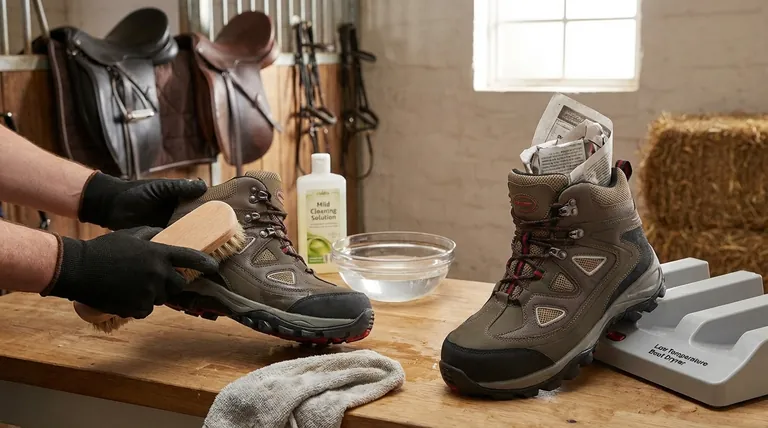
The 'Why' Behind Synthetic Boot Care
Synthetic materials, like synthetic leather, nylon, and textiles with waterproof membranes (e.g., GORE-TEX), are designed for durability and low maintenance. However, they are not indestructible. Understanding the goal of cleaning helps create an effective routine.
Removing Abrasive Materials
Dirt, mud, sand, and grit act like fine-grit sandpaper. As you walk or ride, these particles create friction that wears down stitching, scuffs surfaces, and degrades the boot's material over time. Regular cleaning is the first line of defense against this abrasive wear.
Preventing Material Breakdown
Sweat and environmental grime contain salts and acids. If left on the boot, these substances can slowly break down the synthetic polymers and textiles, causing them to become brittle or discolored. Wiping down your boots after each ride is a crucial preventative step.
Maintaining Performance Features
Many modern boots include technical features like breathable, waterproof membranes. These membranes have microscopic pores that allow water vapor (sweat) to escape but block larger water droplets from entering. Clogging these pores with fine dirt or oils compromises the boot's breathability, making them feel clammy and uncomfortable.
A Step-by-Step Cleaning Guide
Follow this process for both routine wipe-downs and occasional deep cleans. The key difference is the level of detail and scrubbing involved.
Step 1: Initial Dry Cleaning
Before using any water, remove loose dirt. Knock the soles of the boots together to dislodge caked-on mud. Use a soft-bristled brush to gently sweep away any remaining dry dust and debris from the surfaces and seams.
Step 2: Gentle Washing
Mix a small amount of mild detergent or dish soap with warm water. Harsh chemical cleaners or solvents must be avoided, as they can permanently damage synthetic materials. Dip a soft cloth or sponge in the soapy water and wipe down the entire boot.
Step 3: Rinsing Thoroughly
Using a separate, clean cloth dampened with only water, wipe the boots again to remove any soap residue. Leaving soap on the material can attract more dirt and potentially degrade the surface over time.
Step 4: Proper Drying
Drying is a critical step. Never use direct, high heat like a radiator, campfire, or hairdryer, as this can warp the materials, melt adhesives, and cause the boot to become stiff.
Instead, let the boots air dry in a well-ventilated area away from direct sunlight. To speed up the process, you can stuff them with newspaper or use a dedicated low-temperature boot dryer.
Understanding the Trade-offs
While synthetic boots are easier to care for than traditional leather, they have their own set of vulnerabilities that your maintenance routine must address.
Vulnerability to Harsh Chemicals
Synthetic polymers are sensitive to solvents and aggressive cleaning agents. Using the wrong product can cause the material to dry out, crack, or even dissolve. Always stick to mild, pH-neutral soaps.
Heat Sensitivity
Unlike leather, which can be carefully warmed, many synthetics can be permanently damaged by high heat. This is why proper, slow drying is non-negotiable for preserving the boot's shape and the integrity of its seams and glues.
Membrane Care
If your boots have a waterproof/breathable membrane, using cleaning or waterproofing products containing silicone is not recommended. Silicone can clog the membrane's pores, effectively destroying its ability to breathe and regulate temperature. Always check product labels for compatibility with technical fabrics.
Making the Right Choice for Your Goal
Your maintenance routine can be adapted based on how you use your boots and what you want to achieve.
- If your primary focus is daily maintenance and appearance: A quick wipe-down with a damp cloth after every ride is sufficient to remove sweat and dust.
- If your primary focus is longevity after heavy use: Perform a deep clean using mild soap and a soft brush whenever the boots are visibly soiled with mud or grime.
- If your primary focus is preserving water resistance: After the boots are completely clean and dry, apply a waterproofing spray specifically designed for synthetic materials to refresh the factory coating.
Ultimately, consistent and gentle care is the most effective strategy for extending the life and performance of your synthetic riding boots.
Summary Table:
| Care Step | Key Action | Why It Matters |
|---|---|---|
| Dry Cleaning | Brush off loose dirt and debris. | Prevents abrasive wear on materials. |
| Gentle Washing | Use mild soap and warm water. | Avoids damage from harsh chemicals. |
| Thorough Rinsing | Wipe with clean water to remove soap. | Stops residue from attracting more dirt. |
| Proper Drying | Air dry away from direct heat. | Prevents warping and material damage. |
Need a reliable source for high-quality equestrian footwear?
As a large-scale manufacturer, 3515 produces a comprehensive range of durable riding boots for distributors, brand owners, and bulk clients. Our production capabilities encompass all types of synthetic and leather boots, designed to meet the demands of serious riders.
Contact us today to discuss your footwear needs and discover how we can support your business with consistent quality and reliable supply.
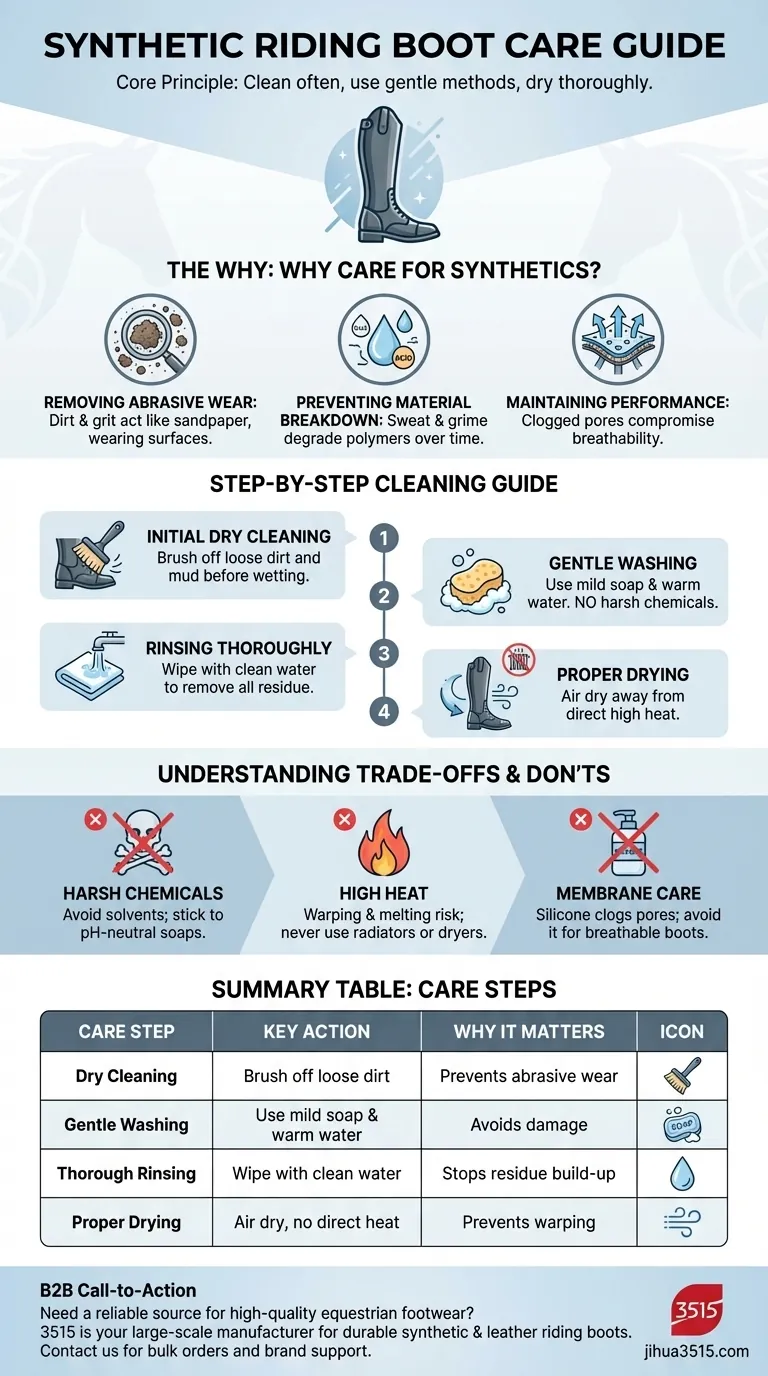
Visual Guide
Related Products
- Wholesale Lightweight Tactical Boots Custom Manufacturer for Desert & Combat Use
- Wholesale Lightweight Tactical Boots with Dial Closure OEM & Bulk Orders
- Durable High-Ankle Tactical Boots Wholesale Manufacturer for Custom & Bulk Orders
- Wholesale Waterproof Tactical Boots Custom Suede & High-Traction Soles
- Wholesale Tactical Boots High-Traction & Reflective for Bulk & Brand Orders
People Also Ask
- What are the common types of combat boots? Find the Right Boot for Your Mission
- What specialized protections do tactical boots offer? Maximize Endurance with High-Performance Footwear
- How does additive manufacturing equipment reduce environmental risks? Sustainable Tactics for Modern Footwear Production
- What are the main construction similarities between tactical boots and tactical sneakers? Built for Performance & Durability
- How is the compatibility of polymer materials demonstrated in smart footwear? Enhancing Tactical & Training Performance



















