
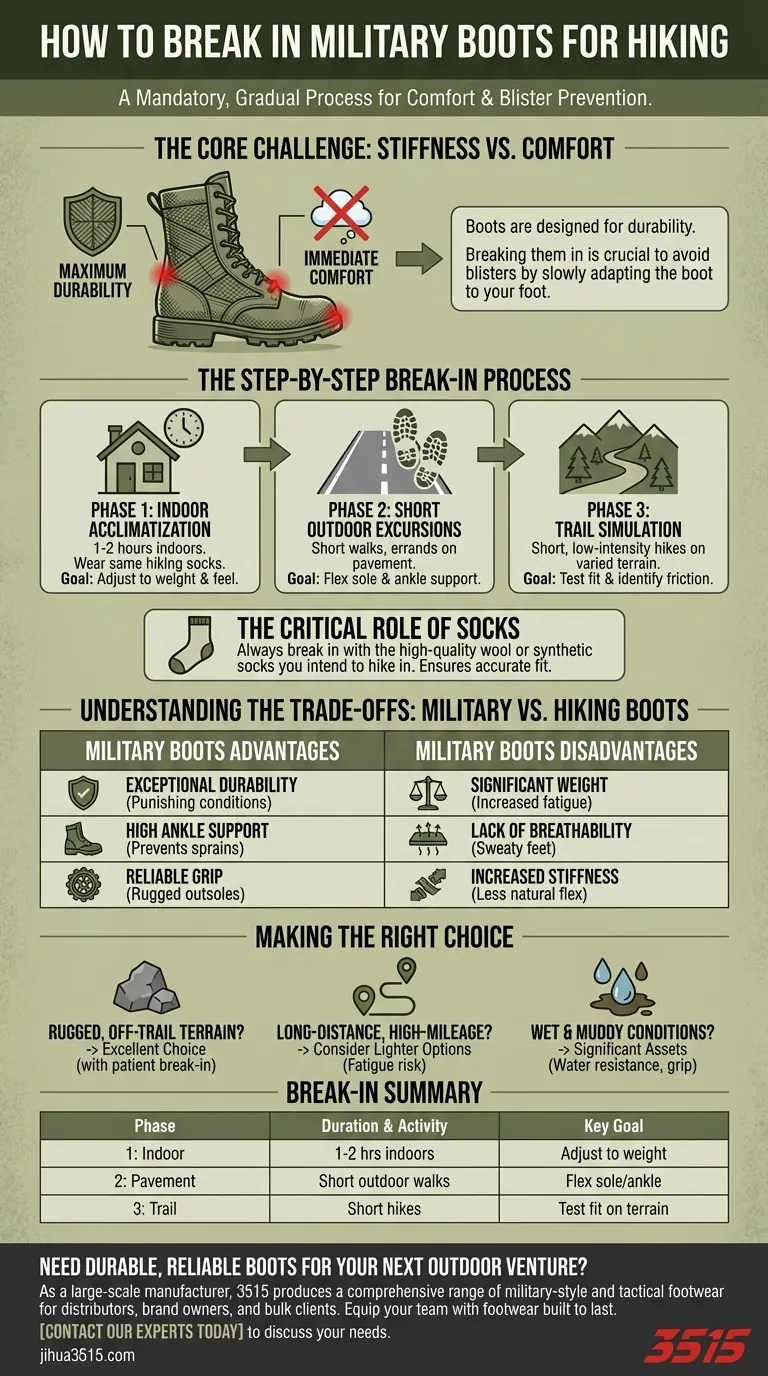
To break in military boots before hiking, you must wear them gradually over time to allow the stiff materials to soften and conform to the unique shape of your feet. Start by wearing them around the house for short periods, then progress to short walks on pavement, and finally to shorter hikes on terrain similar to your intended trek. This progressive adaptation is the only reliable way to prevent debilitating blisters and ensure comfort.
The core challenge with military boots is that they were designed for maximum durability, not immediate comfort. Successfully breaking them in is a mandatory process of slowly adapting both the boot to your foot and your foot to the boot, a step that cannot be rushed or bypassed.
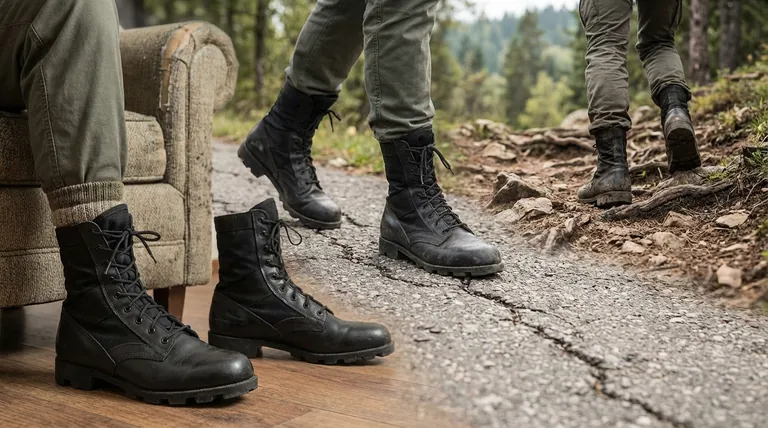
Why a Break-In Period is Non-Negotiable
Military-style boots are fundamentally different from modern hiking boots. Understanding their construction reveals why a dedicated break-in period is absolutely essential for any hiker.
The Material Challenge: Stiffness
Military boots are constructed from thick leather and other rugged materials designed to withstand extreme conditions. This inherent stiffness provides excellent protection and support but also creates significant friction points until the material flexes and molds.
The Fit Factor: Conforming to Your Foot
Unlike a flexible sneaker, a new military boot does not immediately conform to the contours of your foot. The gradual process of walking in them generates heat and pressure, which slowly shapes the footbed and upper materials to your specific anatomy.
Preventing Blisters and Hot Spots
A "hot spot" is a precursor to a blister, caused by persistent rubbing. The break-in period allows you to identify these potential problem areas under controlled, low-stakes conditions rather than miles into a hike.
The Step-by-Step Break-In Process
Patience is the most critical tool in this process. Rushing will only lead to discomfort and potential injury.
Phase 1: Indoor Acclimatization
Begin by wearing the boots inside your home for 1-2 hours at a time. Wear the exact same socks you plan to hike in. This initial phase lets your feet adjust to the boot's weight and general feel without any significant stress.
Phase 2: Short Outdoor Excursions
Once comfortable indoors, start wearing the boots for short walks around your neighborhood or while running errands. This introduces the dynamics of walking on harder surfaces and begins to flex the sole and ankle support more realistically.
Phase 3: Trail Simulation
The final phase involves wearing the boots on short, low-intensity hikes. Choose varied terrain with some gentle inclines and declines. This is the ultimate test to ensure the boots have molded properly and to reveal any lingering friction points.
The Critical Role of Socks
Your socks are an integral part of the footwear system. Always break in your boots with the high-quality wool or synthetic hiking socks you intend to use. This ensures the fit is accurate and allows you to confirm the sock-and-boot combination works together to prevent blisters.
Understanding the Trade-offs: Military vs. Hiking Boots
Choosing military boots for hiking involves a distinct set of compromises. Being aware of them allows you to make an informed decision.
The Advantages: Durability and Support
Military boots offer exceptional durability for punishing, off-trail conditions. Their high ankle support is excellent for preventing sprains on uneven or rocky ground, and their rugged outsoles provide a reliable grip on a wide variety of surfaces.
The Disadvantages: Weight and Breathability
The primary drawback is weight. Military boots are significantly heavier than their modern hiking counterparts, which can lead to increased fatigue over long distances. They also tend to lack breathability, which can cause sweaty, uncomfortable feet in hotter climates.
The Stiffness Factor
The very stiffness that provides support can also reduce comfort on long, repetitive treks. While a modern hiking boot is designed to flex with your foot's natural stride, a military boot can feel more restrictive.
Making the Right Choice for Your Hike
Your decision should be guided by your specific hiking environment and personal needs.
- If your primary focus is rugged, off-trail terrain: Military boots can be an excellent choice, provided you dedicate ample time to breaking them in properly.
- If your primary focus is long-distance, high-mileage trekking: The significant weight will likely become a major source of fatigue, and a lighter, modern hiking boot is a more practical option.
- If your primary focus is hiking in wet and muddy conditions: The water resistance and robust grip of a military boot are significant assets.
Ultimately, successful hiking in military boots depends entirely on methodical and patient preparation.
Summary Table:
| Break-In Phase | Duration & Activity | Key Goal |
|---|---|---|
| Phase 1: Indoor | 1-2 hours indoors | Adjust to weight and feel |
| Phase 2: Pavement | Short walks outside | Flex soles and ankle support |
| Phase 3: Trail | Short, low-intensity hikes | Test fit on varied terrain |
Need durable, reliable boots for your next outdoor venture? As a large-scale manufacturer, 3515 produces a comprehensive range of military-style and tactical footwear for distributors, brand owners, and bulk clients. Our production capabilities encompass all types of durable boots designed for rugged conditions. Let us help you equip your customers or team with footwear built to last. Contact our experts today to discuss your specific needs and volume requirements.
Visual Guide
Related Products
- Durable Military Combat Boots with Water Drainage for Wholesale & OEM
- High-Traction Suede Tactical Boots Wholesale & Custom Manufacturing
- Durable High-Ankle Tactical Boots for Wholesale & Custom Manufacturing
- Durable Mid-Cut Tactical Boots for Wholesale & Private Label
- Wholesale Waterproof Tactical Boots Custom Suede & High-Traction Soles
People Also Ask
- Why must gait validation for military applications be conducted in combat boots? Ensure Data Accuracy for Soldiers
- What are the common types of combat boots? Find the Right Boot for Your Mission
- What factors should be considered when choosing military boots for hiking? Durability vs. Weight for Your Terrain
- What are the key considerations when choosing military boots? Prioritize Compliance, Environment & Fit
- How should the midfoot and heel fit in military boots? Achieve a Snug, Secure Fit for Blister Prevention


















