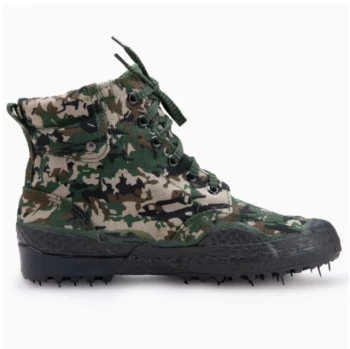
To protect against adverse weather, military camouflage boots are engineered with a dual-focus system of water resistance to keep feet dry and thermal insulation to maintain warmth. These features work together to prevent cold-weather injuries and maintain the wearer's operational effectiveness in challenging climates.
The core principle behind a military boot's weather protection is environmental control. By creating a barrier against external moisture while managing internal temperature, the boot ensures the wearer's feet remain dry, warm, and functional, regardless of the conditions.
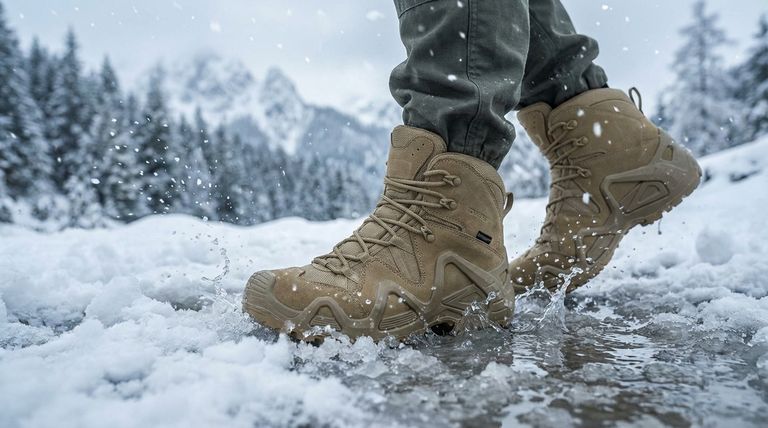
The Two Pillars of Weather Protection
A boot's ability to shield the wearer from the elements is not a single feature but a system of complementary technologies. It primarily relies on keeping water out and keeping heat in.
Achieving Water Resistance
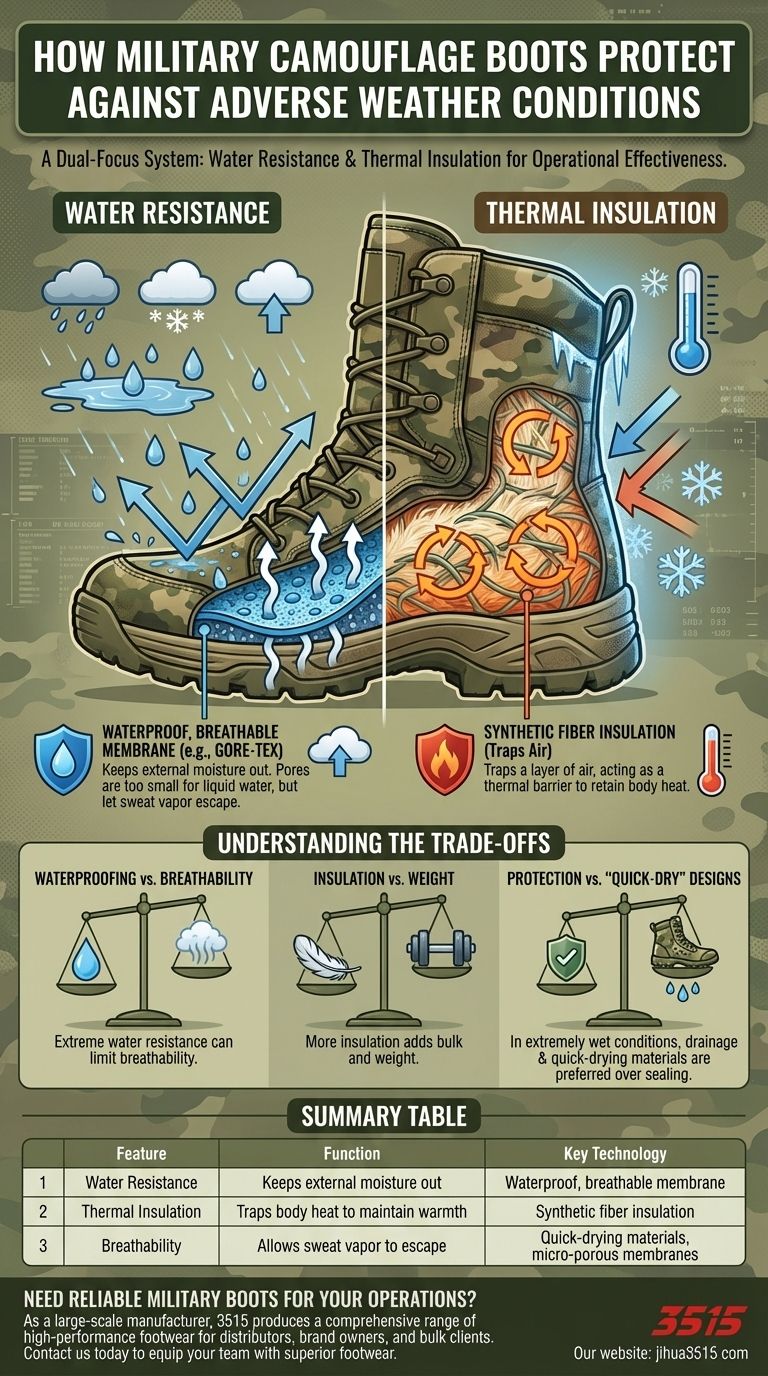
The first line of defense is preventing moisture from snow, rain, or puddles from penetrating the boot. This is achieved through a multi-layered approach.
Many modern military boots incorporate a waterproof, breathable membrane liner, such as a GORE-TEX bootie, positioned between the outer material and the inner lining.
This membrane contains microscopic pores large enough for water vapor (sweat) to escape but too small for liquid water droplets to enter, keeping the foot dry from both inside and out.
Providing Thermal Insulation
In cold climates, preventing heat loss is critical. This is the role of insulation.
Insulation materials, often synthetic fibers, work by trapping a layer of air within the boot's construction. This trapped air acts as a thermal barrier, slowing the transfer of heat from the foot to the cold exterior.
The level of insulation is often measured in grams, with higher values indicating a boot designed for more extreme cold.
The Critical Role of Breathability
A completely sealed boot would trap sweat, leaving the foot damp and prone to blisters and cold injuries.
Therefore, breathability is essential. Features like quick-drying materials and the microscopic pores in waterproof membranes allow sweat to evaporate and escape, which is crucial for keeping feet dry and comfortable during strenuous activity.
Understanding the Trade-offs
No single boot is perfect for all conditions. The design choices made to optimize for one environment often create compromises in another.
Waterproofing vs. Breathability
While advanced membranes are both waterproof and breathable, there is an inherent trade-off. A boot built for extreme water resistance may be less breathable than one designed for a hot, arid climate, potentially leading to sweat buildup on warm days.
Insulation vs. Weight
Heavily insulated boots provide excellent warmth but are also heavier and bulkier. This added weight can increase fatigue over long distances. The choice of insulation level must be balanced against the mission's requirements for mobility and the expected temperature.
Protection vs. "Quick-Dry" Designs
In extremely wet or tropical environments, keeping water out completely is often impossible. Here, the design philosophy shifts from water resistance to water management.
Jungle boots, for example, often feature drainage vents and non-absorbent, quick-drying materials. The goal is to let water drain out and allow the boot to dry as quickly as possible, rather than trying to seal it off.
Making the Right Choice for Your Environment
Selecting the appropriate boot requires a clear understanding of the most likely weather conditions you will face.
- If your primary focus is cold and snowy conditions: Prioritize boots with a high level of thermal insulation (e.g., 400g or more) and a reliable waterproof membrane.
- If your primary focus is wet, temperate conditions: A waterproof and highly breathable boot is ideal to manage both rain and internal sweat.
- If your primary focus is hot and humid environments: Look for boots with excellent drainage, quick-drying materials, and maximum breathability, even at the expense of waterproofing.
Ultimately, effective weather protection comes from matching the boot's specific features to the demands of your environment.
Summary Table:
| Feature | Function | Key Technology |
|---|---|---|
| Water Resistance | Keeps external moisture out | Waterproof, breathable membrane (e.g., GORE-TEX) |
| Thermal Insulation | Traps body heat to maintain warmth | Synthetic fiber insulation (measured in grams) |
| Breathability | Allows sweat vapor to escape | Quick-drying materials, micro-porous membranes |
Need reliable military boots for your operations?
As a large-scale manufacturer, 3515 produces a comprehensive range of high-performance footwear for distributors, brand owners, and bulk clients. Our production capabilities encompass all types of durable and weather-protective boots, designed to meet the specific demands of any environment.
Contact us today to discuss your requirements and discover how we can equip your team with superior footwear.
Visual Guide
Related Products
- Durable Spiked Camouflage Boots Wholesale & Factory Production
- Wholesale High-Traction Camo Boots - Custom Manufacturer for Brands
- Durable Military Combat Boots with Water Drainage for Wholesale & OEM
- High-Traction Suede Tactical Boots Wholesale & Custom Manufacturing
- Wholesale Durable Camouflage Canvas Shoes with High-Traction Cleated Rubber Sole
People Also Ask
- How does boot height affect waterproofing? Choose the Right Height for Ultimate Protection
- What are the best types of shoes for different gardening conditions? Find Your Perfect Match.
- What role does camouflage play in hunting boots? It's More Than Just a Pattern
- What should you look for to ensure boots are fully waterproof? The Essential 2-Part System
- How does boot construction affect waterproofing? The Science Behind Truly Dry Feet