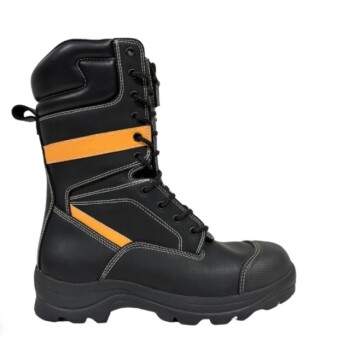
To properly clean fire boots, you must regularly remove all surface dirt, ash, and debris using only a soft brush or a damp cloth with cold water. It is critical to avoid harsh chemicals, solvents, and artificial heat sources during drying, as these can permanently damage the boot's protective materials and shorten its operational life.
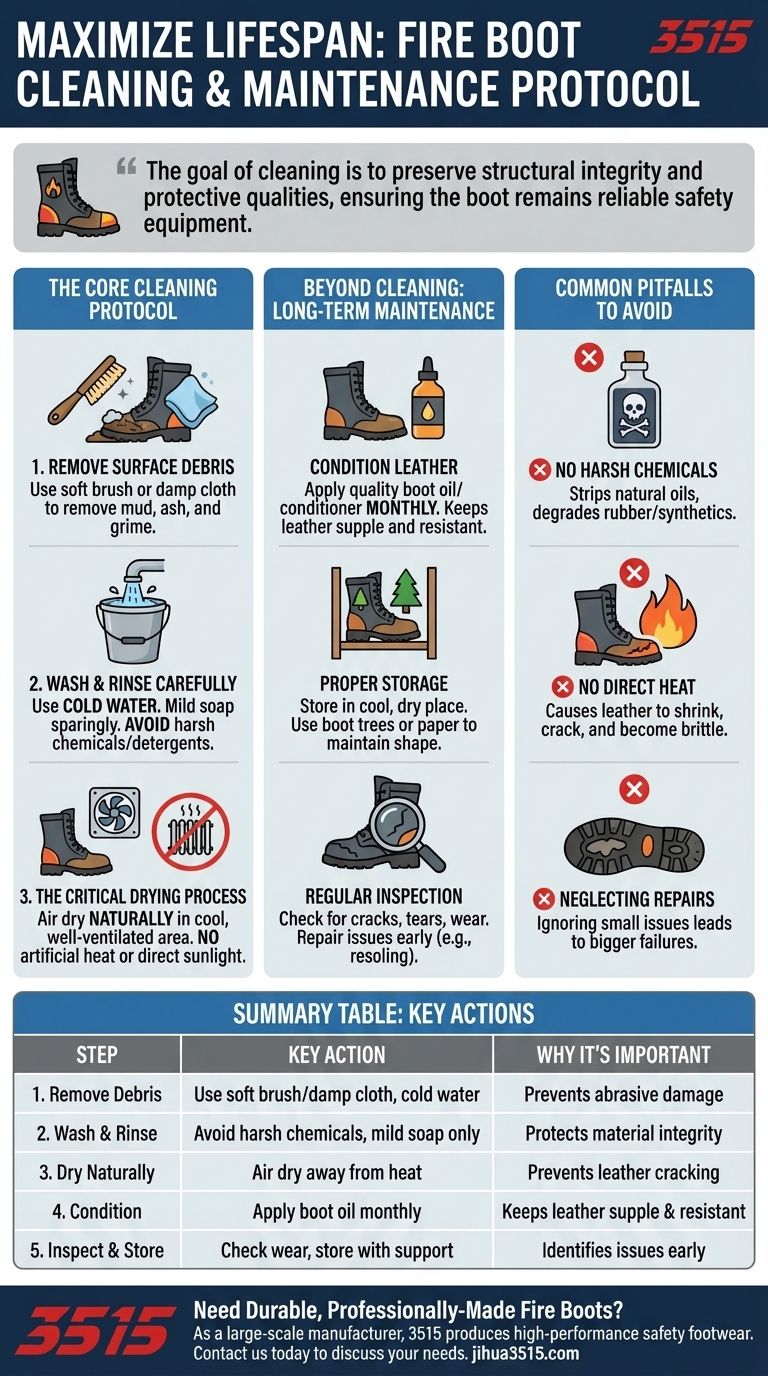
The goal of cleaning fire boots is not cosmetic. It is a critical maintenance procedure designed to preserve the structural integrity and protective qualities of the materials, ensuring the boot remains a reliable piece of safety equipment.
The Core Cleaning Protocol
A consistent cleaning routine is the foundation of boot longevity. This process should be followed after any significant exposure to dirt, soot, or moisture.
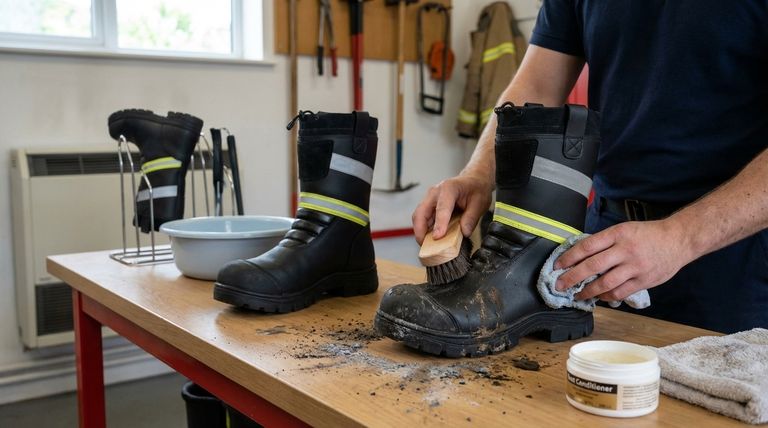
Step 1: Remove Surface Debris
The first step is to dislodge and remove all loose contaminants from the boot's surface.
Use a soft brush to gently scrub away dried mud, dirt, and ash. For more persistent grime, a damp cloth can be used to wipe the boot clean.
Step 2: Wash and Rinse Carefully
Washing should be done with care to avoid saturating the materials or introducing harmful substances.
Always use cold water. Soaps can be used sparingly if they are mild, but aggressive detergents or chemical solvents must be avoided as they can strip protective oils from leather and degrade rubber.
Step 3: The Critical Drying Process
How you dry your boots is as important as how you clean them. Improper drying is a primary cause of material failure.
Boots must be left to dry naturally in a cool, well-ventilated area. Never place them near direct sunlight, a fire, a heater, or any other artificial heat source, which will make leather brittle and cause it to crack.
Beyond Cleaning: Essential Long-Term Maintenance
Cleaning removes contaminants, but a full maintenance schedule preserves the materials for the long term.
Conditioning the Leather
Leather requires moisture to remain flexible and durable. Regular conditioning is non-negotiable for preventing cracks.
For leather boots, especially those used in wildland firefighting, apply a quality boot oil or conditioner monthly. This keeps the leather supple and enhances its resistance to heat and water.
Proper Storage
Storing boots correctly prevents distortion and material degradation between uses.
Keep them in a cool, dry place away from temperature extremes. Using boot trees or stuffing the shafts with paper helps maintain their shape and prevents creasing.
Regular Inspection
Proactive inspection allows you to identify potential failure points before they become critical.
Routinely check for cracks, tears, and excessive wear on the leather and soles. Inspect laces and insoles, replacing them as needed to maintain proper fit and support.
Common Pitfalls to Avoid
Mistakes in boot care often stem from attempts to speed up the process, which invariably leads to damage.
The Danger of Harsh Chemicals
Never use solvents, degreasers, or other aggressive chemicals. These substances can strip away the leather's natural oils and break down the chemical composition of rubber and synthetic components, compromising their protective ratings.
The Problem with Direct Heat
Applying direct heat is the fastest way to destroy a pair of boots. Heat forces moisture out of the leather too quickly, causing it to shrink, harden, and crack. This makes the boot uncomfortable and, more importantly, unsafe.
Neglecting Timely Repairs
Ignoring small issues leads to bigger failures. Worn-down soles reduce traction and support, while small tears can quickly expand, compromising the boot's waterproof and fire-resistant barriers. Addressing these issues early, such as by resoling, can significantly extend a boot's life.
How to Apply This to Your Goal
Your maintenance strategy should align with your primary operational needs.
- If your primary focus is maximizing lifespan: Make the complete "clean, dry, condition" cycle a consistent habit after every demanding use.
- If your primary focus is ensuring peak safety: Prioritize daily inspection for any signs of material fatigue, cracks, or sole separation.
- If you are a wildland firefighter: Be particularly diligent with monthly oiling and conditioning to combat the intense, dry heat that rapidly damages leather.
Ultimately, treating your boot maintenance as a crucial safety protocol, not a chore, ensures your equipment will protect you when you need it most.
Summary Table:
| Step | Key Action | Why It's Important |
|---|---|---|
| 1. Remove Debris | Use a soft brush or damp cloth with cold water. | Prevents abrasive damage and removes contaminants. |
| 2. Wash & Rinse | Avoid harsh chemicals; use mild soap if needed. | Protects the leather's natural oils and material integrity. |
| 3. Dry Naturally | Air dry in a cool, well-ventilated area away from heat. | Prevents leather from becoming brittle and cracking. |
| 4. Condition | Apply boot oil or conditioner monthly (especially for leather). | Keeps leather supple and enhances heat/water resistance. |
| 5. Inspect & Store | Check for wear; store in a cool, dry place with support. | Identifies issues early and maintains boot shape. |
Need Durable, Professionally-Made Fire Boots?
As a large-scale manufacturer, 3515 produces a comprehensive range of high-performance safety footwear for distributors, brand owners, and bulk clients. Our production capabilities encompass all types of durable fire boots built to withstand the toughest conditions.
Let us help you equip your team with reliable safety gear.
Contact 3515 today to discuss your specific needs and discover how our manufacturing expertise can provide you with long-lasting, quality footwear.
Visual Guide
Related Products
- High Performance Fire-Retardant Waterproof Safety Boots
- Premium Flame-Retardant Waterproof Safety Boots and Shoes
- Wholesale Lightweight Tactical Boots Custom Manufacturer for Desert & Combat Use
- High-Traction Suede Tactical Boots Wholesale & Custom Manufacturing
- Wholesale Waterproof Tactical Boots Custom Suede & High-Traction Soles
People Also Ask
- Why are waterproof safety boots recommended for certain work environments? Essential Protection for Wet & Hazardous Jobs
- What roles do 3D vision systems and industrial robots play in the manufacturing of fire safety boots? Smart Automation
- What is a drawback of waterproof boots? The Hidden Cost of Trapped Sweat and Heat
- What is the advantage of one-piece construction in waterproof boots? Unbeatable Seamless Protection
- What is the difference between waterproof and water-resistant boots? Choose the Right Footwear for Any Condition