
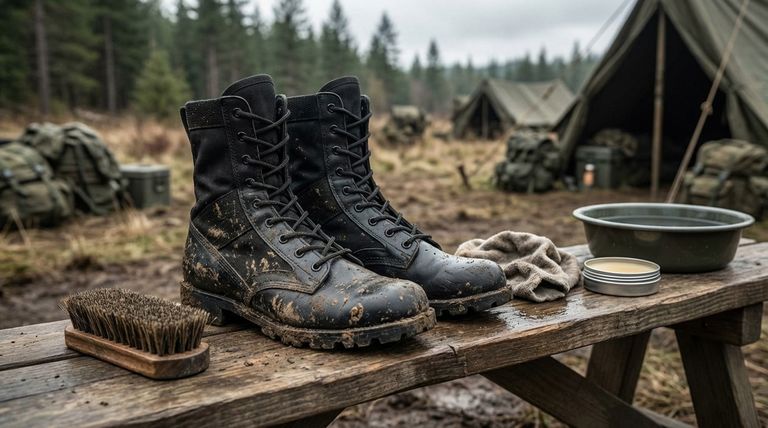
For optimal performance and longevity, military boots should be cleaned after every significant use, especially following exposure to mud, water, or other harsh field conditions. A quick daily brush-off is sufficient for light use, but a more thorough cleaning is necessary to prevent material degradation and maintain the boot's structural integrity.
The goal of boot maintenance is not just cosmetic cleanliness, but the preservation of materials. Consistent, gentle cleaning is far more effective and less damaging than infrequent, aggressive scrubbing.
Why Consistent Cleaning is Non-Negotiable
Proper boot care is a critical aspect of gear maintenance. It extends far beyond simple aesthetics and directly impacts performance, durability, and even foot health.
Protecting Your Investment
Military and tactical boots are made from advanced materials designed for specific functions. Dirt, mud, and salt can be abrasive and chemically break down leather, fabrics, and stitching over time, leading to premature failure.
Ensuring Peak Performance
Caked-on mud and grime can stiffen leather and clog the pores of breathable fabrics. This reduces flexibility and compromises the boot's ability to vent moisture, leading to discomfort and an increased risk of blisters.
Maintaining Structural Integrity
Moisture from sweat or external conditions can weaken adhesives and damage the boot's inner structure. Regular drying and cleaning prevent the buildup of bacteria and mold that can degrade these materials from the inside out.
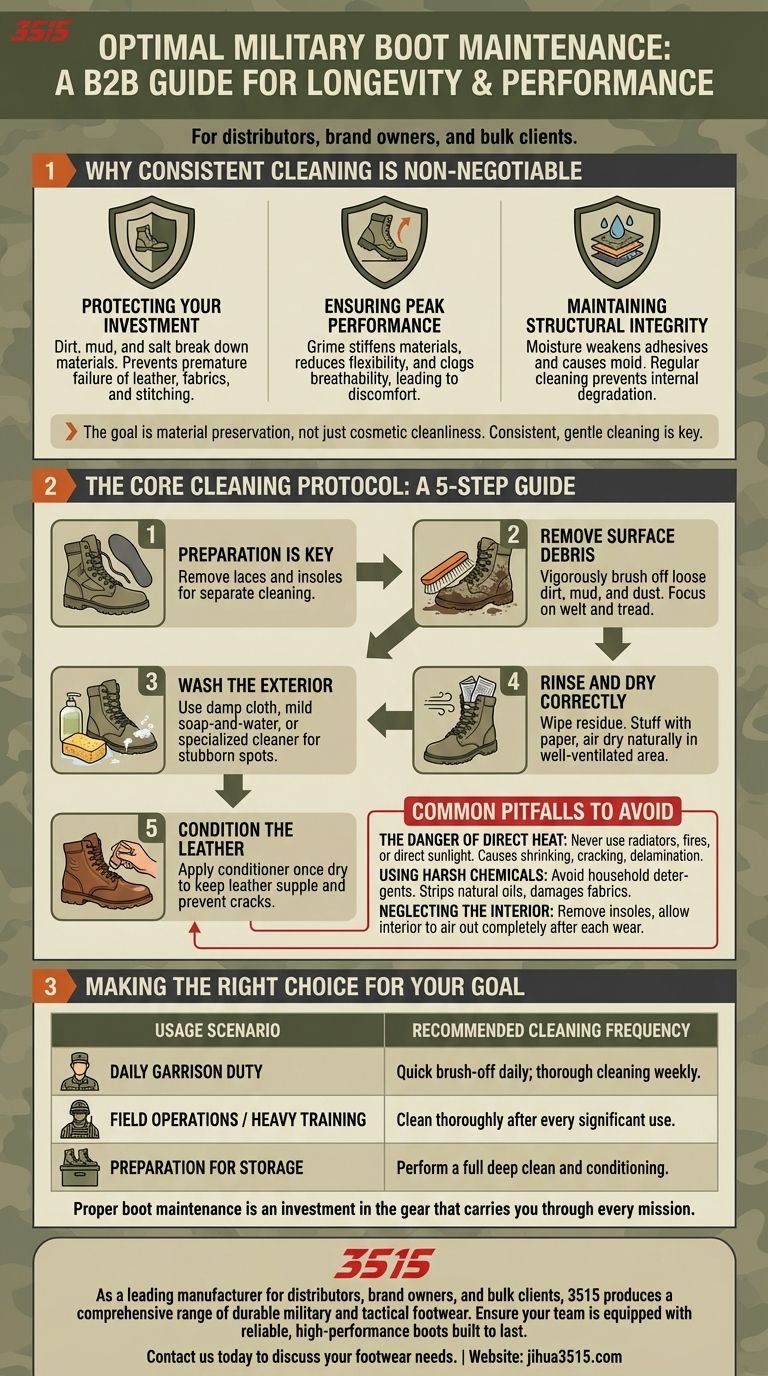
The Core Cleaning Protocol: A Step-by-Step Guide
Follow this fundamental process for most leather and combination-fabric tactical boots. The key is to be thorough but gentle.
Step 1: Preparation is Key
First, remove the laces and insoles. This allows you to clean them separately and ensures you can access all parts of the boot, including the tongue and interior.
Step 2: Remove Surface Debris
Using a stiff-bristled brush, vigorously brush off all loose dirt, mud, and dust. Pay special attention to the welt (where the upper meets the sole) and the tread on the outsole, as this is where debris accumulates.
Step 3: Wash the Exterior
Use a damp cloth and a mild soap-and-water solution to wipe down the exterior surfaces. For stubborn spots on leather, a saddle soap or specialized boot cleaner is ideal. Avoid oversaturating the boot with water.
Step 4: Rinse and Dry Correctly
Wipe away any soap residue with a clean, damp cloth. To dry, stuff the boots with newspaper or paper towels to absorb internal moisture and help them hold their shape. Place them in a well-ventilated area to air dry naturally.
Step 5: Condition the Leather
Once the boots are completely dry, apply a leather conditioner if applicable. This step is crucial for keeping the leather supple, preventing cracks, and restoring protective oils that may have been stripped during cleaning.
Common Pitfalls to Avoid
How you clean your boots is as important as how often. Avoiding these common mistakes will prevent you from accidentally damaging your gear.
The Danger of Direct Heat
Never dry your boots near a direct heat source like a radiator, fire, or in direct sunlight. Excessive heat can cause leather to shrink and crack, and it can melt the glues that bond the sole to the upper, leading to delamination.
Using Harsh Chemicals
Avoid household detergents, solvents, or harsh soaps. These products can strip the natural oils from leather, causing it to become dry and brittle, and can damage the protective coatings on synthetic fabrics.
Neglecting the Interior
Sweat is acidic and contains salts that can degrade the boot's inner lining over time. Even if the outside is clean, always remove the insoles and allow the inside to air out completely after each wear.
Making the Right Choice for Your Goal
Your cleaning frequency should adapt to your environment and usage level.
- If your primary focus is daily duty in a garrison environment: A quick brush-off at the end of the day and a more thorough cleaning once a week is generally sufficient.
- If your primary focus is field operations or heavy training: Clean your boots as soon as possible after every use, especially after exposure to mud, water, or extreme grime.
- If you are preparing boots for long-term storage: Perform a full, deep clean, ensure they are thoroughly conditioned, and store them in a cool, dry place away from direct light.
Proper boot maintenance is not a chore; it's an investment in the gear that carries you through every mission.
Summary Table:
| Usage Scenario | Recommended Cleaning Frequency |
|---|---|
| Daily Garrison Duty | Quick brush-off daily; thorough cleaning weekly. |
| Field Operations / Heavy Training | Clean thoroughly after every significant use. |
| Preparation for Storage | Perform a full deep clean and conditioning. |
As a leading manufacturer for distributors, brand owners, and bulk clients, 3515 produces a comprehensive range of durable military and tactical footwear.
Ensure your team is equipped with reliable, high-performance boots built to last. Our expertise in manufacturing all types of boots, combined with proper maintenance, guarantees optimal performance in the field.
Contact us today to discuss your footwear needs and discover how we can support your operations with quality gear.
Visual Guide
Related Products
- Durable Military Combat Boots with Water Drainage for Wholesale & OEM
- High-Traction Suede Tactical Boots Wholesale & Custom Manufacturing
- Durable High-Ankle Tactical Boots for Wholesale & Custom Manufacturing
- Durable Mid-Cut Tactical Boots for Wholesale & Private Label
- Wholesale Waterproof Tactical Boots Custom Suede & High-Traction Soles
People Also Ask
- Why must gait validation for military applications be conducted in combat boots? Ensure Data Accuracy for Soldiers
- What are the common types of combat boots? Find the Right Boot for Your Mission
- What factors should be considered when choosing military boots for hiking? Durability vs. Weight for Your Terrain
- What are the key considerations when choosing military boots? Prioritize Compliance, Environment & Fit
- How should the midfoot and heel fit in military boots? Achieve a Snug, Secure Fit for Blister Prevention


















