
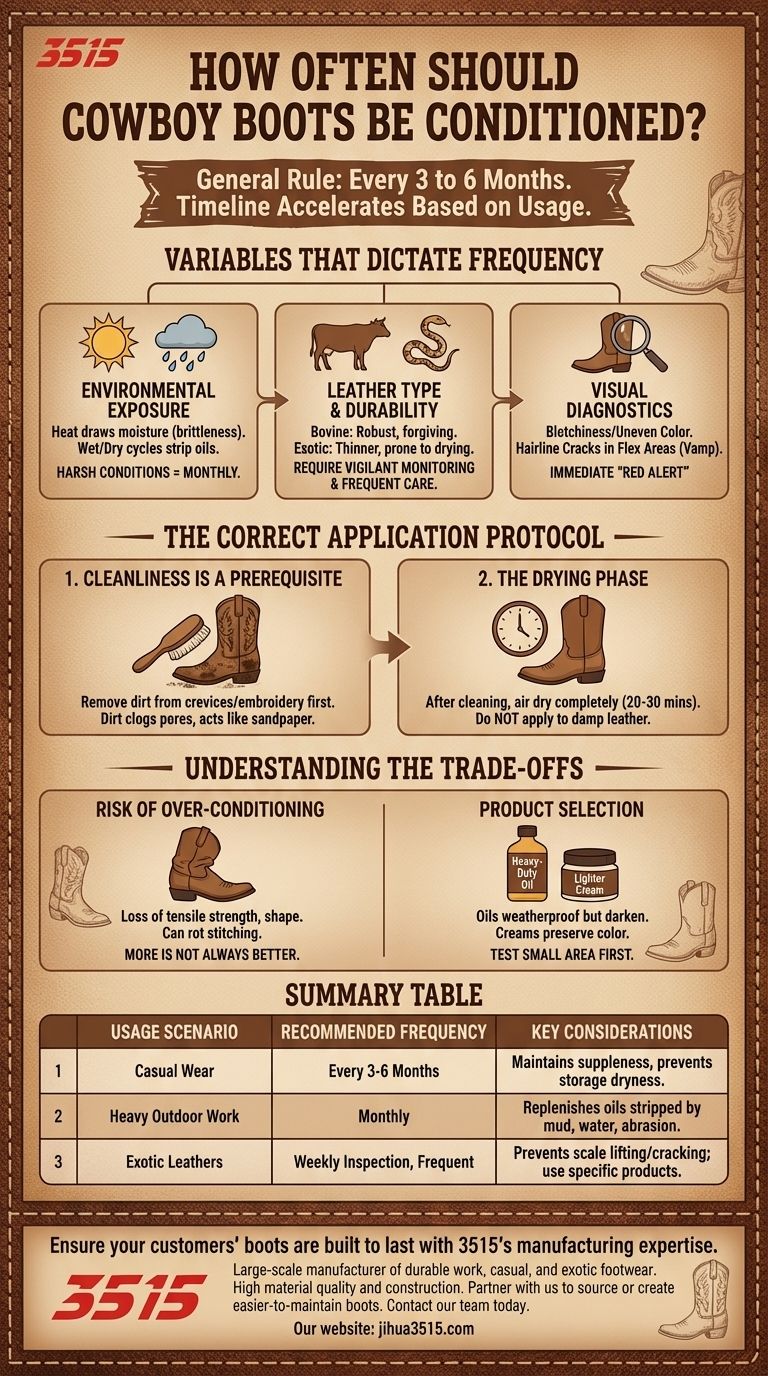
As a general rule, cowboy boots should be conditioned every three to six months to maintain their structural integrity. However, this timeline accelerates significantly based on usage: heavy-duty work boots exposed to mud, heat, or rain require monthly attention, while delicate exotic leathers generally demand more frequent care than standard cowhide.
Leather is effectively a skin that no longer has a body to replenish its moisture. Conditioning is not merely cosmetic; it is a critical maintenance step required to restore natural oils, prevent permanent cracking, and ensure the leather remains pliable and water-resistant.
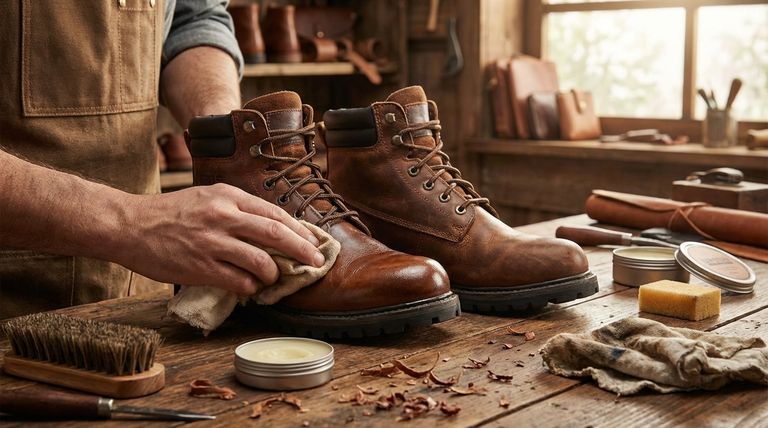
The Variables That Dictate Frequency
While the "three to six months" rule applies to the average user, relying strictly on a calendar is often insufficient. You must adjust your schedule based on the specific stresses placed on the leather.
Environmental Exposure
The environment is the primary enemy of leather longevity. Exposure to heat draws moisture out of the hide, leading to brittleness.
Conversely, distinct cycles of wetting and drying—common with mud or rain—strip natural oils rapidly. If your boots face these harsh conditions, a monthly conditioning routine is necessary.
Leather Type and Durability
Not all leathers react to dryness at the same rate. Standard full-grain bovine leather is robust and forgiving.
Exotic leathers, such as snake or lizard, are often thinner and prone to drying out much faster. These require vigilant monitoring and more frequent conditioning to prevent the scales from lifting or cracking.
Visual Diagnostics
Your boots will often signal when they need attention before the calendar does.
Inspect the leather for blotchiness or uneven color, which indicates uneven drying. Fine hairline cracks in high-flex areas, such as the vamp (where the foot bends), are an immediate "red alert" that the fibers are dehydrated.
The Correct Application Protocol
Applying conditioner to dirty boots is a critical error that can do more harm than good.
Cleanliness is a Prerequisite
Conditioner is designed to penetrate the pores of the leather. If these pores are clogged with dirt, the conditioner cannot absorb.
Worse, applying conditioner over debris traps grit against the leather, which acts like sandpaper and degrades the finish. Always use a soft brush or cloth to remove dirt from crevices and embroidery first.
The Drying Phase
After using a leather-specific cleaner, patience is required.
Allow the boots to air dry completely—typically for 20 to 30 minutes—before applying conditioner. Applying product to damp leather can inhibit absorption and potentially trap moisture where it shouldn't be.
Understanding the Trade-offs
More conditioning is not always better. It is possible to over-maintain your boots, leading to diminished performance.
The Risk of Over-Conditioning
While dryness causes cracking, excessive oil saturation can cause the leather to become too soft.
If leather loses its tensile strength, the boot loses its shape and support. Over-conditioning can also rot the stitching in the welt, leading to costly repairs.
Product Selection
Universal conditioners may not work for every pair.
Heavy-duty work oils are excellent for weatherproofing but may darken the leather significantly. Lighter creams are better for dress boots where maintaining the original color is a priority. Always test a small, inconspicuous area first.
Making the Right Choice for Your Goals
To ensure your boots last for decades rather than years, align your maintenance schedule with your usage patterns.
- If your primary focus is casual wear: Condition every 3 to 6 months to maintain suppleness and prevent dryness from storage.
- If your primary focus is heavy outdoor work: Condition monthly to replenish oils stripped by mud, water, and abrasion.
- If your primary focus is preserving exotic leather: Inspect weekly for dryness and condition frequently using products specifically formulated for reptile or exotic hides.
The goal of conditioning is to keep the leather functioning as a protective barrier, ensuring the upper outlasts the sole.
Summary Table:
| Usage Scenario | Recommended Conditioning Frequency | Key Considerations |
|---|---|---|
| Casual Wear | Every 3-6 Months | Maintains suppleness, prevents storage dryness |
| Heavy Outdoor Work | Monthly | Replenishes oils stripped by mud, water, and abrasion |
| Exotic Leathers (Snake, Lizard) | Weekly Inspection, Frequent Conditioning | Prevents scale lifting/cracking; use specific products |
Ensure your customers' boots are built to last with 3515's manufacturing expertise.
As a large-scale manufacturer, 3515 produces a comprehensive range of durable footwear for distributors, brand owners, and bulk clients. Our production capabilities encompass all types of work boots, casual boots, and exotic leather footwear, ensuring the highest standards of material quality and construction.
Partner with us to source or create boots that are easier to maintain and built for longevity. Contact our team today to discuss your production needs and how we can add value to your supply chain.
Visual Guide
Related Products
- Wholesale High-Traction Camo Boots - Custom Manufacturer for Brands
- High-Traction Suede Tactical Boots Wholesale & Custom Manufacturing
- Wholesale Lightweight Tactical Boots Custom Manufacturer for Desert & Combat Use
- Durable Leather Tactical Boots Wholesale & Custom Manufacturing for Brands
- Wholesale Durable Mid-Cut Tactical Boots for Custom & Private Label Brands
People Also Ask
- What are the key features of the new line of camo boots? Built for Extreme Cold & Rugged Terrain
- Are camo boots necessary for hunting success? Prioritize Performance Over Pattern
- How does the Rank Score Test identify the primary causes of premature failure in tactical and work boots? Key Insights
- What is the technical logic behind using closed-eye testing for tactical boots? Unlocking Peak Footwear Stability
- What shoes to wear for a security job? Durable, Protective Footwear for Long Shifts

















