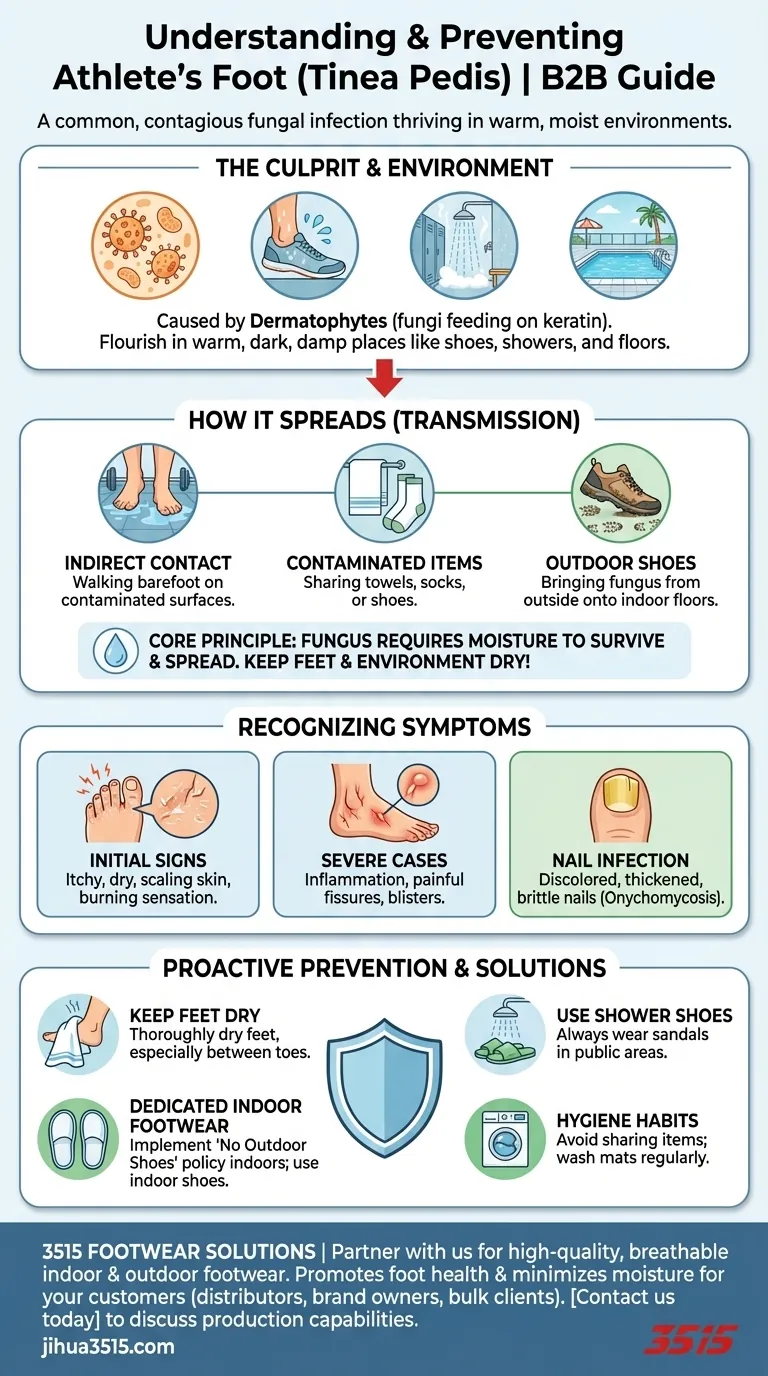
Athlete's foot, medically known as tinea pedis, is a common and contagious fungal infection that affects the skin on the feet. It is caused by a type of fungus that thrives in warm, moist environments. The infection spreads primarily through contact with contaminated surfaces, such as floors, towels, and the inside of shoes.
The core principle to understand is that the fungus behind athlete's foot requires moisture to survive and spread. Therefore, effective prevention and management hinge on keeping your feet and your immediate environment clean and, most importantly, dry.
Understanding the Fungal Infection
What Causes Athlete's Foot?
The condition is caused by a group of fungi called dermatophytes. These microscopic organisms feed on keratin, a protein found in your hair, nails, and the outer layer of your skin.
They are naturally present in our environment but only become an issue when they find the right conditions to multiply rapidly.
The Ideal Environment for Growth
Fungi flourish in warm, dark, and damp places. This makes the inside of a shoe the perfect breeding ground, especially when feet sweat.
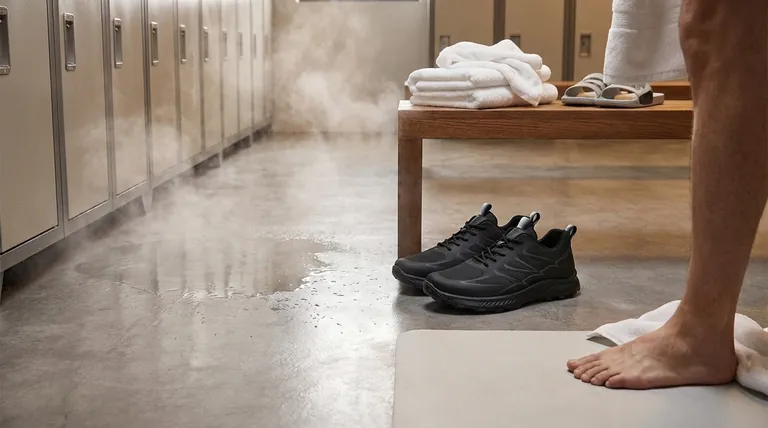
Public areas like locker room floors, showers, and the decks of swimming pools are also common hotspots for the fungus.
How Athlete's Foot Spreads
Indirect Contact with Surfaces
This is the most common method of transmission. Walking barefoot on a contaminated surface, like a gym shower floor, can easily transfer the fungus to your feet.
As the references note, outdoor shoes can pick up the fungus and introduce it into your home, contaminating floors and carpets.
Contaminated Personal Items
The fungus can live on fabrics. Sharing towels, socks, or shoes with an infected person is a direct way to contract athlete's foot.
From Your Feet to Other Body Parts
If you scratch your infected foot and then touch another part of your body, you can spread the fungus. This can lead to related fungal infections like jock itch (tinea cruris) or infection of the hands (tinea manuum).
Recognizing the Symptoms
Common Initial Signs
The most frequent symptoms include itchy, dry, and scaling skin, often starting between the toes. You might also notice a burning or stinging sensation.
Progression to Severe Cases
If left untreated, the infection can worsen. This may lead to inflammation, painful cracks in the skin (fissures), and blisters.
When It Spreads to Nails
The fungus can also infect the toenails, a condition called onychomycosis. This causes the nails to become discolored (yellow or brown), thickened, and brittle.
Common Pitfalls and Prevention Strategy
The Myth of Poor Hygiene
While cleanliness helps, athlete's foot is not strictly a sign of poor hygiene. Anyone can contract it simply by being exposed to the fungus when conditions are right. It is an infection of opportunity.
The Problem with Outdoor Shoes Indoors
Your outdoor shoes walk across countless surfaces, potentially collecting fungi. Wearing them inside contaminates your home floors.
Using dedicated indoor shoes or slippers creates a barrier, effectively quarantining potential contaminants at the door and keeping your indoor walking surfaces clean.
Ignoring Minor Symptoms
A small, itchy patch can seem insignificant, but ignoring it allows the fungus to establish itself. This can lead to a more severe, chronic infection that is harder to treat and can spread to family members.
Making the Right Choice for Your Goal
Protecting yourself and your home involves a few simple, proactive habits focused on hygiene and moisture control.
- If your primary focus is personal prevention: Always wear sandals or shower shoes in public locker rooms, pools, and showers, and dry your feet thoroughly after bathing, especially between the toes.
- If your primary focus is stopping the spread in your household: Avoid sharing towels, socks, and shoes, and regularly wash bath mats. Implement a "no outdoor shoes" policy inside your home.
- If you suspect you have an infection: See a healthcare provider for a proper diagnosis and treatment plan, and be diligent about washing your hands after touching your feet.
Ultimately, by controlling moisture and minimizing contact with potentially contaminated surfaces, you can effectively manage your risk and maintain healthy feet.
Summary Table:
| Aspect | Key Information |
|---|---|
| Cause | Fungus (dermatophytes) that thrives in warm, moist environments. |
| Main Spread Method | Indirect contact with contaminated surfaces (floors, shoes, towels). |
| Primary Prevention | Keep feet dry; wear sandals in public showers; avoid wearing outdoor shoes indoors. |
| Common Symptoms | Itching, scaling, burning skin between toes; can spread to nails. |
Protect your feet and your environment with the right footwear. As a large-scale manufacturer, 3515 produces a comprehensive range of high-quality, breathable indoor and outdoor footwear for distributors, brand owners, and bulk clients. Our shoes are designed to promote foot health by minimizing moisture buildup. Whether you need durable shower sandals for gyms or comfortable indoor slippers for homes, we have the production capabilities to meet your needs. Contact us today to discuss how our footwear solutions can help your customers prevent athlete's foot and maintain healthy feet.
Visual Guide