
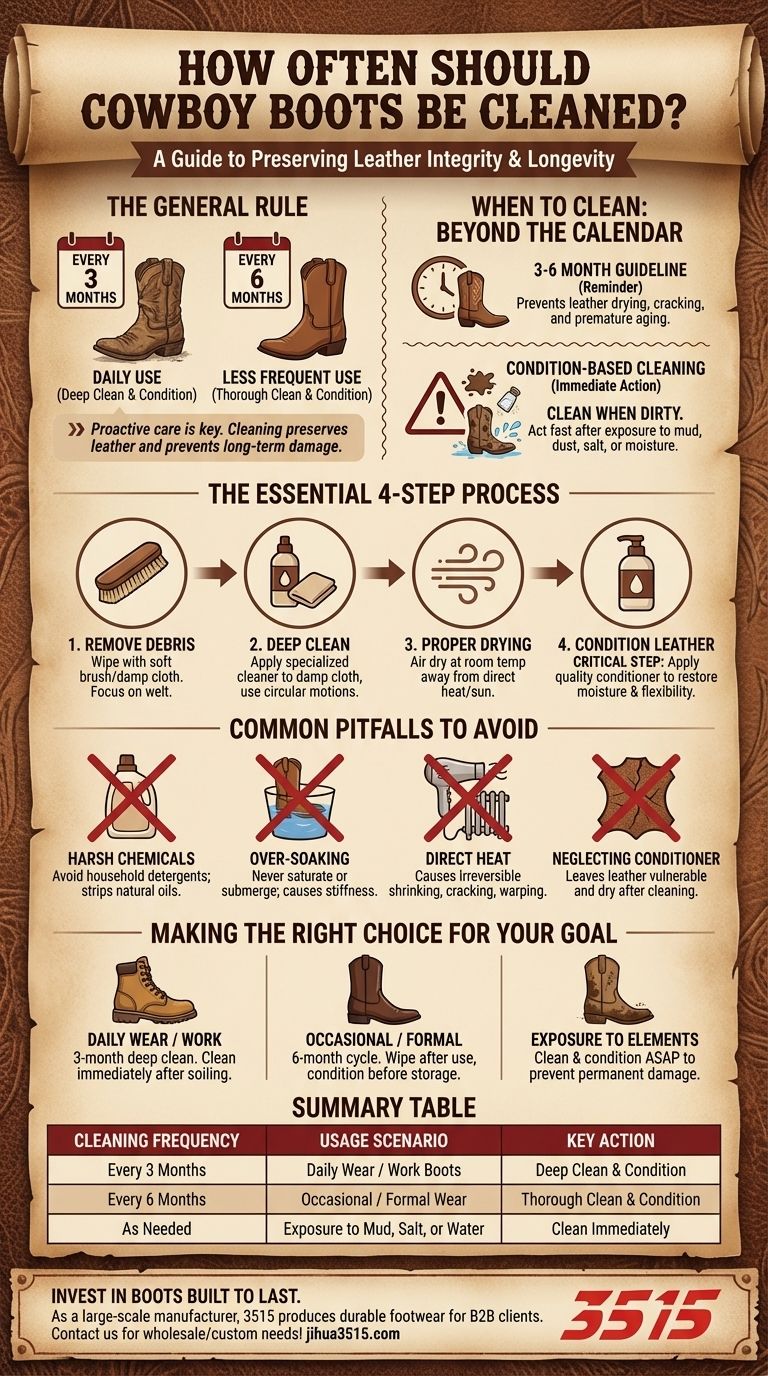
As a general rule, cowboy boots intended for daily use should be cleaned at least every three months. For boots worn less frequently, a thorough cleaning every six months is a sufficient baseline to maintain the leather's integrity.
While a fixed schedule provides a good starting point, the true key to longevity is proactive care. Proper cleaning is not just about appearance; it's a critical maintenance step that preserves the leather and prevents long-term damage.
When to Clean: Beyond the Calendar
A rigid schedule is less important than responding to your boots' actual condition. While timeframes are helpful, the environment and frequency of use are the ultimate guides.
The 3-6 Month Guideline
This schedule serves as a reminder to perform a deep clean and conditioning. It ensures the leather doesn't dry out from neglect, which is the primary cause of cracking and premature aging.
Condition-Based Cleaning
The most important rule is to clean your boots when they are dirty. If your boots are exposed to significant mud, dust, salt, or moisture, you must clean them as soon as possible, regardless of when they were last maintained.
The Essential Cleaning and Conditioning Process
Properly cleaning leather is a multi-step process. The goal is to remove contaminants without stripping the leather of its essential oils, then to replenish that moisture with a conditioner.
Step 1: Remove Surface Debris
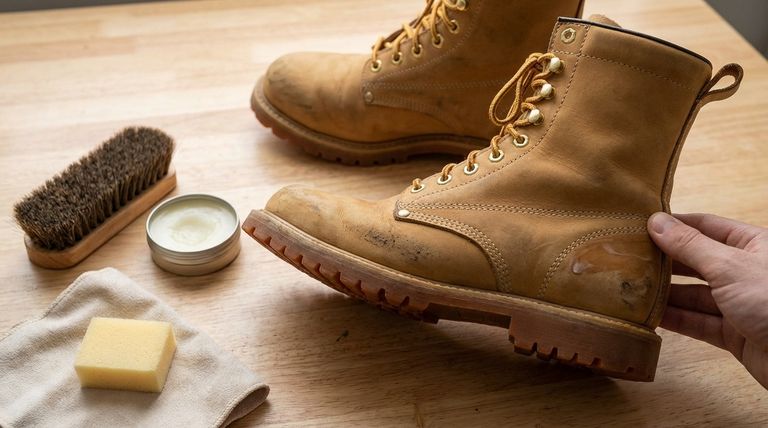
Use a soft horsehair brush or a damp cloth to wipe away all loose dirt, dust, and grime. For caked-on mud, a slightly stiffer brush may be necessary. Pay attention to the welt, where the sole meets the boot upper.
Step 2: Perform a Deep Clean
Apply a specialized leather cleaner to a clean, damp cloth. Work the cleaner into the leather using small, circular motions. Do not apply cleaner directly to the boot.
Step 3: Allow for Proper Drying
Wipe away any excess cleaner with a separate damp cloth. Allow the boots to air dry completely at room temperature, away from direct sunlight or heat sources like vents and radiators.
Step 4: Condition the Leather
Once the boots are fully dry, apply a quality leather conditioner. This is the most critical step, as it restores moisture and flexibility to the leather, preventing cracks. Apply a small amount with a clean cloth or your fingers and work it into the material.
Common Pitfalls to Avoid
Mistakes in the cleaning process can cause more damage than neglect. Avoiding these common errors is essential for preserving your boots.
Using Harsh Chemicals
Never use household detergents, saddle soap, or all-purpose cleaners. These products are too alkaline and will strip the leather's natural oils, leaving it brittle and prone to damage.
Over-Soaking the Leather
While you will use a damp cloth, the boots should never be saturated or submerged in water. Excessive water can alter the leather's structure and lead to permanent water spots and stiffness once dry.
Applying Direct Heat to Dry
Force-drying boots with a hairdryer, radiator, or direct sunlight is the fastest way to destroy them. This rapid moisture loss will cause the leather to shrink, crack, and warp irreversibly.
Neglecting the Conditioning Step
Cleaning without conditioning is a recipe for disaster. The cleaning process removes old, dirty oils, but it also strips some of the good ones. Failing to replenish them with a conditioner leaves the leather vulnerable and dry.
Making the Right Choice for Your Goal
Your cleaning frequency and focus should match how you use your boots.
- If your boots are for daily wear or work: Adhere to the three-month deep clean schedule and clean them immediately after any significant soiling to prevent grime from setting in.
- If your boots are for occasional or formal wear: A six-month cycle is adequate, but always wipe them down after each use and ensure they are conditioned before long-term storage.
- If your boots have just been exposed to mud, salt, or water: Clean and condition them as soon as possible. Letting these elements sit on the leather will cause permanent damage.
Consistent care transforms your boots from a simple purchase into a lasting investment.
Summary Table:
| Cleaning Frequency | Usage Scenario | Key Action |
|---|---|---|
| Every 3 Months | Daily Wear / Work Boots | Deep Clean & Condition |
| Every 6 Months | Occasional / Formal Wear | Thorough Clean & Condition |
| As Needed | Exposure to Mud, Salt, or Water | Clean Immediately |
Invest in boots built to last. As a large-scale manufacturer, 3515 produces a comprehensive range of durable footwear for distributors, brand owners, and bulk clients. Our production capabilities encompass all types of work, casual, and western boots designed for longevity and performance.
Ensure your customers get the quality they deserve. Contact us today to discuss your wholesale or custom footwear needs!
Visual Guide
Related Products
- High-Traction Suede Tactical Boots Wholesale & Custom Manufacturing
- Wholesale High-Traction Camo Boots - Custom Manufacturer for Brands
- Wholesale Lightweight Tactical Boots Custom Manufacturer for Desert & Combat Use
- Durable Leather Tactical Boots Wholesale & Custom Manufacturing for Brands
- Wholesale Durable Mid-Cut Tactical Boots for Custom & Private Label Brands
People Also Ask
- Why is sequential analysis utilized to evaluate tactical boots? Master Dynamic Boot Development and Ergonomic Performance
- How does the material of tactical boots affect their performance? Choose the Right Material for Your Mission
- How do tactical boots differ from regular boots? Performance, Durability & Design Explained
- How do military uniforms and tactical boots impact the prediction of thermal risk? Essential Safety Insights
- What are the benefits of integrating FES and sEMG into tactical boots? Safety, Reliability & Field-Ready Performance


















