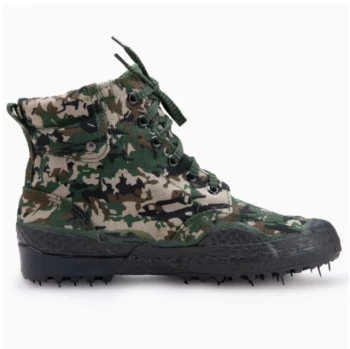
Dynamic Geometric Environment (DGE) technology is a predictive simulation tool designed to model the interaction between footwear outsoles and complex terrain before physical manufacturing begins. By digitally simulating gravity, normal pressure, and friction vectors, it allows engineers to evaluate how a boot's tread will perform on varying slopes and soft surfaces.
Core Insight: DGE bridges the gap between theoretical physics and practical design. It converts abstract mathematical formulas regarding friction and force into dynamic visual representations, enabling designers to optimize traction and slip resistance without the time and cost associated with multiple rounds of physical prototyping.
The Mechanics of Digital Traction Analysis
Simulating Forces on Inclines
At its core, DGE acts as a virtual testing ground for gravity and pressure.
It simulates how these forces interact with the outsole when a boot is placed on a slope. This allows researchers to isolate and analyze the distribution of friction vectors, which determine whether a boot grips or slips.
Visualizing Abstract Physics
Footwear design involves complex physical formulas that can be difficult to conceptualize on paper.
DGE technology translates these abstract calculations into dynamic external representations. Designers can observe the dynamic changes in force in real-time as the simulated outsole interacts with the digital terrain.
Optimizing Performance Before Production
Predicting Slip Resistance
The primary utility of DGE is its ability to forecast performance on difficult ground.
It is specifically utilized to predict slip-resistance on complex terrains, such as steep slopes or soft ground. This insight is critical for tactical and outdoor boots, where stability is often a matter of safety.
Prototyping Efficiency
Traditionally, evaluating grip required building a physical boot and testing it in the field.
DGE shifts this evaluation to the design phase. By allowing for design optimization before physical prototypes are created, manufacturers can refine tread structures earlier, saving significant time and material resources.
Understanding the Limitations of Simulation
The "Model vs. Reality" Gap
While DGE is a powerful tool for prediction, it remains a simulation based on mathematical inputs.
It excels at modeling defined physical interactions like gravity and pressure, but it may not fully capture the unpredictability of real-world environments. Factors such as sudden debris shifts or extreme material degradation may still require physical field testing to verify.
Dependence on Data Inputs
The output of a DGE simulation is only as accurate as the physical formulas it converts.
If the parameters regarding the terrain surface or the rubber compound properties are not defined precisely, the visualization of the friction vectors may diverge from actual performance.
Making the Right Choice for Your Goal
When incorporating DGE technology into your development cycle, consider your specific objectives:
- If your primary focus is Safety and Stability: Use DGE to rigorously analyze friction vector distribution on high-degree slopes to ensure the tread structure prevents slippage under load.
- If your primary focus is Cost and Speed: Leverage the technology to iterate on tread patterns rapidly during the concept phase, minimizing the need for expensive physical samples.
By moving traction testing from the physical lab to the digital environment, DGE technology empowers designers to create safer, more efficient tactical footwear with greater precision.
Summary Table:
| Feature | Physical Prototyping | DGE Simulation Technology |
|---|---|---|
| Primary Methodology | Field testing & physical samples | Digital force & friction modeling |
| Key Parameters | Real-world wear and tear | Gravity, normal pressure, friction vectors |
| Development Speed | Slow (multiple physical iterations) | Fast (real-time design optimization) |
| Cost Efficiency | High (material & labor intensive) | Low (virtual testing before production) |
| Best Used For | Final validation & durability | Predictive slip-resistance & tread design |
Partner with a Leader in Advanced Footwear Engineering
As a large-scale manufacturer serving distributors and brand owners worldwide, 3515 leverages cutting-edge technology and decades of expertise to deliver superior performance. Our comprehensive production capabilities cover all footwear types, ensuring that every product—from our flagship Safety Shoes series to our specialized tactical boots, outdoor shoes, training shoes, and sneakers—meets the highest standards of stability and grip.
Whether you need robust work boots or elegant Dress & Formal shoes for bulk requirements, we provide the technical precision your brand deserves. Enhance your product lineup with footwear engineered for excellence.
Contact 3515 Today to Discuss Your Bulk Requirements
References
- Thomas Lingefjärd. From friction to air resistance. DOI: 10.29333/mathsciteacher/12211
This article is also based on technical information from 3515 Knowledge Base .
Related Products
- Wholesale Waterproof Tactical Boots Custom Suede & High-Traction Soles
- Durable Leather Tactical Boots Wholesale & Custom Manufacturing for Brands
- Durable Mid-Cut Tactical Boots for Wholesale & Private Label
- Wholesale Lightweight Tactical Boots Custom Manufacturer for Desert & Combat Use
- High-Traction Suede Tactical Boots Wholesale & Custom Manufacturing
People Also Ask
- What waterproof technology is used in tactical boots? Unlock All-Weather Performance & Protection
- What are the advantages and disadvantages of waterproof tactical boots? A Guide to the Key Trade-Offs
- What is the significance of waterproof functionality in tactical boots? Essential for Health & Performance
- What is the role of professional 3D medical imaging software in optimizing tactical boot design and performance?
- What features enhance breathability and comfort in tactical boots? A Guide to Superior Footwear Performance