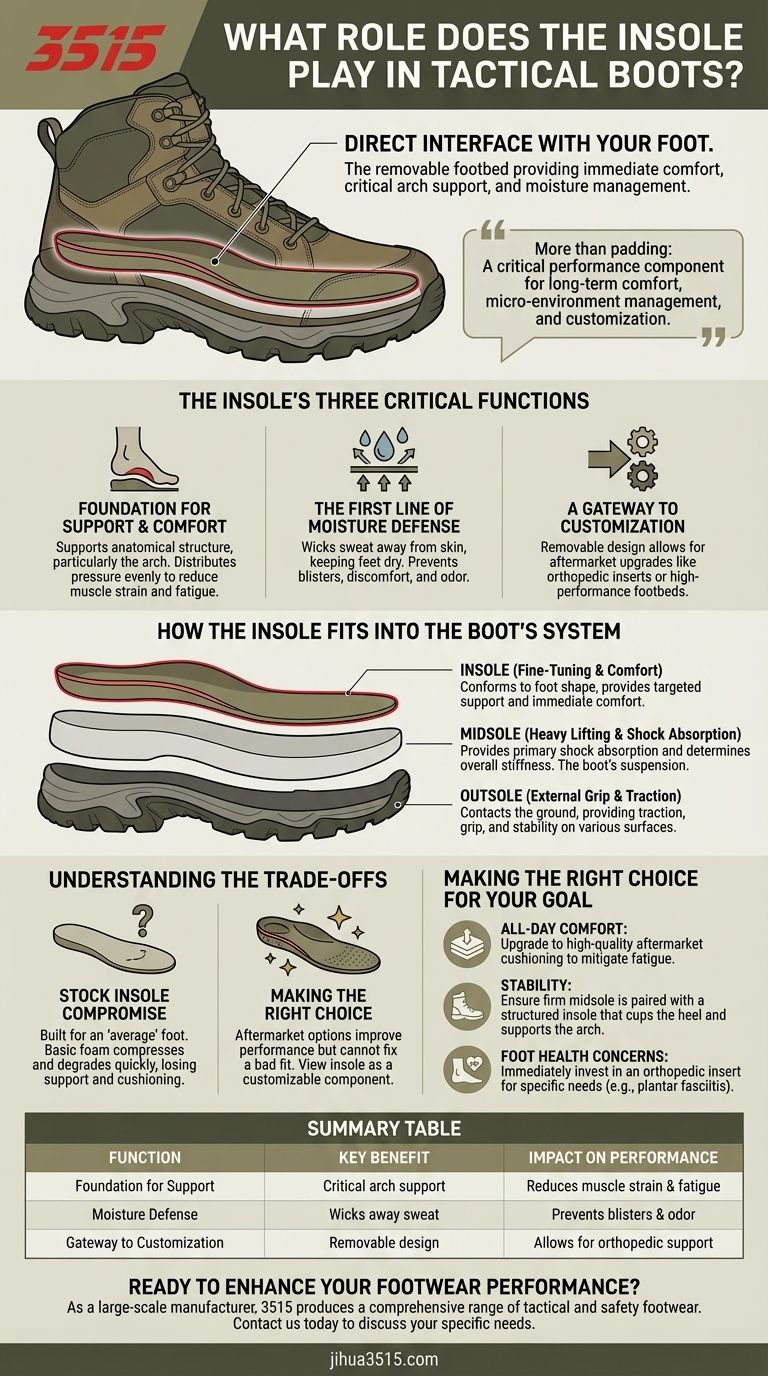
At its core, the insole is the tactical boot's direct interface with your foot. It is the removable footbed that provides immediate comfort, critical arch support, and manages moisture. While other parts of the boot handle major impacts and grip, the insole is responsible for fine-tuning the fit and ensuring your foot remains healthy and stable inside the boot.
The insole is far more than a simple layer of padding. It is a critical performance component that dictates long-term comfort, manages the micro-environment of your foot, and offers a vital opportunity for customization.
The Insole's Three Critical Functions
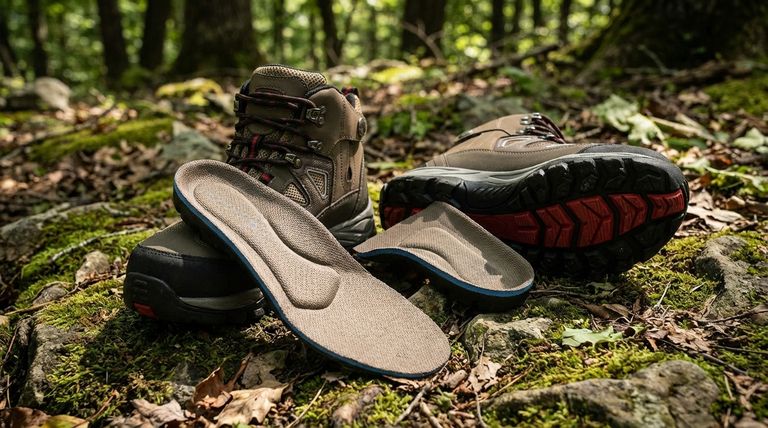
To understand its importance, we must look beyond simple cushioning. The insole serves three distinct and vital roles that directly impact your effectiveness and well-being during use.
Foundation for Support and Comfort
The primary role of the insole is to support the anatomical structure of your foot, particularly the arch.
Proper arch support distributes pressure evenly across your foot, which is essential for reducing muscle strain and fatigue during long hours of standing or moving.
The First Line of Moisture Defense
The bottom of a boot's sole is typically made of non-breathable rubber. Therefore, the insole plays a crucial role in managing heat and perspiration.
A quality insole will have moisture-wicking properties, drawing sweat away from your skin. This helps keep your feet dry, which is the single most important factor in preventing blisters, discomfort, and odor.
A Gateway to Customization
Most tactical boots are designed with removable insoles. This is not an afterthought; it is a critical feature.
This allows you to replace a worn-out stock insole or, more importantly, to insert a specialized aftermarket insole. This could be an orthopedic insert for a specific foot condition or a high-performance footbed for enhanced cushioning or support.
How the Insole Fits into the Boot's System
A tactical boot is a system of components working together. Understanding how the insole interacts with the midsole and outsole clarifies its specific purpose.
Insole vs. Midsole: Fine-Tuning vs. Heavy Lifting
The midsole is the thick layer between the insole and the outsole. Its job is to provide primary shock absorption and determine the boot's overall stiffness. Think of it as the boot's suspension system.
The insole, in contrast, is the custom seat. It conforms to the unique shape of your foot, providing targeted support and immediate comfort, while the midsole absorbs the major impacts from walking or running.
Insole vs. Outsole: Internal Climate vs. External Grip
The outsole is the durable rubber layer that contacts the ground. Its entire purpose is to provide traction, grip, and stability on various surfaces.
The insole has an internal focus. While the outsole grips the terrain, the insole ensures your foot is secure and stable inside the boot, preventing the internal slippage that can cause blisters and loss of control.
Understanding the Trade-offs
While crucial, the standard-issue insole is often an area where manufacturers compromise to manage costs. Recognizing its limitations is key to maximizing your boot's performance.
The Stock Insole Compromise
Manufacturer-provided insoles are built for an "average" foot. They may not provide adequate support for individuals with high arches or flat feet, often leading to discomfort over time.
Material Degradation
Basic foam insoles, common in many boots, compress and degrade relatively quickly. As they wear down, they lose both their cushioning and supportive properties, diminishing the boot's overall comfort and performance.
An Insole Cannot Fix a Bad Fit
A high-quality aftermarket insole can dramatically improve a boot's feel, but it cannot fix a fundamentally poor fit. If the boot is the wrong size, too narrow, or too wide, an insole is merely a temporary patch, not a solution.
Making the Right Choice for Your Goal
Treating the insole as a deliberate gear choice, rather than a fixed feature, will significantly enhance your boot's performance.
- If your primary focus is all-day comfort on patrols: Plan to upgrade to a high-quality aftermarket cushioning insole to mitigate the fatigue from long hours on your feet.
- If your primary focus is stability on uneven terrain: Ensure your boot's firm midsole is paired with a structured insole that cups the heel and supports the arch, preventing your foot from rolling.
- If you have specific foot health concerns (e.g., plantar fasciitis): View the stock insole as a placeholder and immediately invest in an orthopedic insert designed for your specific needs.
Ultimately, viewing the insole as a customizable component is the key to unlocking your tactical boot's full potential for performance and health.
Summary Table:
| Function | Key Benefit | Impact on Performance |
|---|---|---|
| Foundation for Support | Provides critical arch support | Reduces muscle strain and fatigue during long hours |
| Moisture Defense | Wicks away sweat, keeps feet dry | Prevents blisters, discomfort, and odor |
| Gateway to Customization | Removable design for aftermarket insoles | Allows for orthopedic support or enhanced cushioning |
Ready to Enhance Your Footwear Performance?
As a large-scale manufacturer, 3515 produces a comprehensive range of tactical and safety footwear for distributors, brand owners, and bulk clients. Our production capabilities encompass all types of boots, including those designed with superior insole technology for maximum comfort and support.
Let us help you deliver the perfect fit and performance for your customers. Contact us today to discuss your specific needs and discover how our manufacturing expertise can benefit your business.
Visual Guide
Related Products
- Wholesale Waterproof Tactical Boots Custom Suede & High-Traction Soles
- Durable Leather Tactical Boots Wholesale & Custom Manufacturing for Brands
- Durable Leather High-Ankle Tactical Boots for Wholesale & Custom Manufacturing
- High-Traction Suede Tactical Boots Wholesale & Custom Manufacturing
- Durable High-Ankle Tactical Boots Wholesale Manufacturer for Custom & Bulk Orders
People Also Ask
- What waterproof technology is used in tactical boots? Unlock All-Weather Performance & Protection
- What are the advantages and disadvantages of waterproof tactical boots? A Guide to the Key Trade-Offs
- What is the significance of waterproof functionality in tactical boots? Essential for Health & Performance
- What is the role of professional 3D medical imaging software in optimizing tactical boot design and performance?
- What features enhance breathability and comfort in tactical boots? A Guide to Superior Footwear Performance