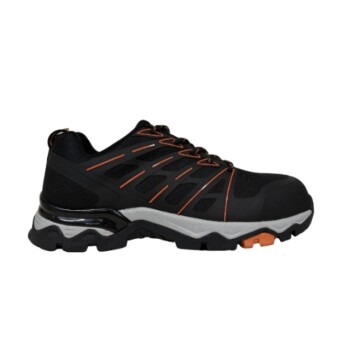
The implementation of a wide toe box is a critical mechanical intervention that directly counteracts the forces responsible for Hallux Valgus. By providing sufficient lateral space for the first metatarsophalangeal joint, this ergonomic design eliminates the compressive pressure inherent in pointed footwear, effectively halting the external forces that drive deformity progression.
Core Insight: Narrow footwear acts as a catalyst for bunions by forcing the toes into an unnatural angle. A wide toe box neutralizes this threat, creating a "zero-compression" environment that is essential for both preventing deformity and supporting active rehabilitation therapies like Platelet-Rich Plasma (PRP).
The Mechanics of Deformity Prevention
Eliminating Compressive Forces
The primary driver of bunions in standard footwear is the lack of space, which forces the big toe inward. Safety and formal shoes designed with a wide toe box remove this constraint entirely.
Protecting the Metatarsal Head
This ergonomic engineering specifically targets the first metatarsal head. By removing abnormal pressure from this critical juncture, the shoe prevents the inflammation and structural deviation typical of Hallux Valgus.
Establishing a Physical Barrier
The structure of these shoes acts as a barrier against progression. Rather than simply accommodating the foot, the design actively prevents the toes from drifting into the valgus position caused by narrower shoes.
Role in Conservative Treatment
Supporting Clinical Therapies
For patients undergoing treatments such as Platelet-Rich Plasma (PRP) therapy, footwear choice is not merely an accessory; it is part of the prescription.
Facilitating Rehabilitation
Recovery requires a stable environment free from irritation. A wide toe box provides the necessary mechanical support to protect the foot structure, ensuring that rehabilitation efforts are not undone by daily walking pressures.
Understanding the Trade-offs
Prevention vs. Correction
It is vital to understand the distinction between halting progression and reversing it. While a wide toe box effectively prevents the condition from worsening, it does not surgically realign a bone that has already shifted significantly.
Fit and Stability
A shoe that is wide in the toe must still be secure in the heel and midfoot. If the entire shoe is too loose, it can cause instability or sliding, which introduces new friction points and potential foot fatigue.
Making the Right Choice for Your Goal
To effectively utilize footwear as a therapeutic tool, consider your specific stage of care:
- If your primary focus is Prevention: Prioritize safety or formal shoes that explicitly advertise an ergonomic or "anatomical" toe box to eliminate daily compressive stress.
- If your primary focus is Active Treatment (e.g., PRP): Ensure your footwear provides maximum lateral space to avoid any contact with the inflamed area during the sensitive recovery phase.
The right footwear transforms your daily activity from a source of damage into a component of your cure.
Summary Table:
| Feature | Impact on Hallux Valgus (Bunions) | Benefit for User |
|---|---|---|
| Lateral Space | Eliminates compressive force on the first metatarsophalangeal joint | Stops deformity progression and reduces pain |
| Ergonomic Width | Protects the first metatarsal head from inflammation | Prevents structural deviation and joint irritation |
| Zero-Compression | Creates a stable environment for PRP and physical therapy | Facilitates faster and more effective rehabilitation |
| Anatomical Fit | Maintains natural toe alignment during daily activity | Acts as a physical barrier against valgus drift |
Partner with 3515 for Ergonomic Footwear Solutions
As a large-scale manufacturer serving distributors and brand owners worldwide, 3515 offers comprehensive production capabilities for all footwear types, anchored by our flagship Safety Shoes series. We specialize in engineering wide toe box designs that combine medical-grade ergonomics with professional aesthetics.
Our extensive portfolio covers work and tactical boots, outdoor shoes, training shoes, and sneakers, as well as Dress & Formal shoes to meet your diverse bulk requirements. Whether you are looking to expand your health-conscious footwear line or source high-performance safety gear, we provide the scale and expertise to bring your vision to life.
Ready to elevate your inventory with footwear that prioritizes foot health and performance?
Contact us today to discuss your bulk manufacturing needs
References
- Abdullah Ahmed Mohammad, Safwat Abbas Ali Askar. Effectiveness of platelet rich plasma (PRP) as a pain management method in Bunion Hallux Valgus; A Case Series. DOI: 10.22317/imj.v6i3.1195
This article is also based on technical information from 3515 Knowledge Base .
Related Products
- Premium Suede Sport Safety Shoes for Wholesale & Bulk Orders
- Premium Lightweight Safety Shoes for Wholesale & Bulk Orders
- Wholesale Anti-Smash & Puncture-Proof Safety Shoes Custom Manufacturing for Brands
- Premium KPU Injection Athletic Style Safety Shoes
- Premium Safety Shoes with Rotating Buckle Safety Sneakers
People Also Ask
- What industries have specific OSHA footwear requirements? Ensure Compliance & Protect Your Workforce
- What are the primary functions of professional safety shoes? Maximize Safety in Water Supply Confined Spaces
- What role do specialized safety shoes play in preventing falls? Engineering Stability in Industrial Environments
- What are the technical advantages of integrating sensors into safety shoes? Achieve Superior Motion Capture Precision
- How do gait analysis algorithms ensure accuracy in footwear? Master Step Length Precision for Boots & Sneakers