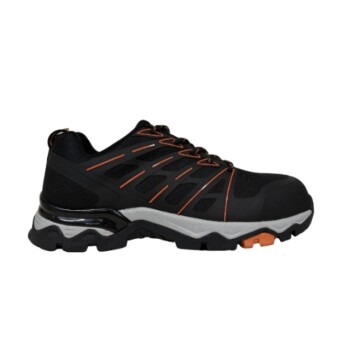
Bioelectrical Impedance Analysis (BIA) assists in evaluating readiness by measuring tissue resistance to micro-currents, accurately distinguishing between fat and functional muscle mass. Unlike simple weight metrics, BIA confirms that personnel possess the specific muscle density required to support the significant physical load of tactical gear and heavy Safety Shoes, which often exceeds 20kg.
Core Takeaway Relying on total body weight or BMI is insufficient for personnel carrying heavy defensive equipment. BIA provides a critical safety assessment by verifying that an individual has the necessary lean muscle mass to effectively support the weight of specialized tactical footwear and operational gear.
Precision in Physical Assessment
Measuring Tissue Impedance
A BIA device operates by passing micro-currents through the body's tissues. It measures the impedance (resistance) the current encounters as it travels. This data allows the device to accurately differentiate between body fat percentage and lean muscle mass.
The Limitation of BMI
Traditional Body Mass Index (BMI) calculations usually rely solely on height and weight. This approach fails to account for body composition. BIA offers a more precise assessment than BMI by revealing the actual muscular infrastructure available to do work.
Equipment Load and Muscle Requirements
The Weight of Protection
Operational personnel, such as firefighters, frequently carry combined loads totaling over 20kg. This aggregate weight includes protective clothing, tactical tools, and heavy specialized footwear.
Assessing Support for Safety Shoes
Tactical boots and Safety Shoes add significant weight to the extremities. BIA ensures the wearer has the necessary muscle mass to support this specific burden. By confirming adequate muscle presence, the device validates the user's physical load capacity for demanding operations.
Understanding the Trade-offs
Static Measurement vs. Dynamic Ability
While BIA effectively quantifies muscle mass, it remains a measurement of body composition rather than performance. It confirms the presence of muscle required to carry heavy boots but does not measure the cardiovascular endurance needed to move them over time.
Dependency on Accuracy
The value of BIA lies entirely in its ability to distinguish tissues accurately. If the device is not calibrated correctly, the distinction between fat and muscle may be skewed, leading to incorrect assumptions about a user's ability to safely carry their gear.
Making the Right Choice for Your Team
To ensure personnel are physically prepared for the demands of their equipment:
- If your primary focus is operational safety: Use BIA to verify that every team member meets the minimum muscle mass threshold required to carry 20kg+ loads to prevent strain injuries.
- If your primary focus is health monitoring: Replace BMI with BIA metrics to differentiate between weight gain caused by fat versus weight gain caused by the muscle building necessary for the job.
Accurate composition analysis ensures that heavy protective gear remains a safety asset rather than becoming a physical liability.
Summary Table:
| Metric | BIA Analysis | Traditional BMI | Operational Impact |
|---|---|---|---|
| Measurement Focus | Tissue impedance & muscle density | Total weight vs. height | Distinguishes load-bearing capacity |
| Gear Suitability | High: Validates support for heavy boots | Low: Ignores muscle infrastructure | Prevents strain from tactical loads |
| Accuracy | High (measures body composition) | Low (ignores fat/muscle ratio) | Ensures physical readiness for duty |
| Load Capacity | Assesses ability to carry >20kg | N/A | Essential for heavy safety equipment |
Maximize Operational Readiness with 3515
Equipping your team with high-performance footwear is only half the battle; ensuring they have the physical capacity to perform is the other. As a large-scale manufacturer serving distributors and brand owners, 3515 offers comprehensive production capabilities for all footwear types, anchored by our flagship Safety Shoes series.
Our extensive portfolio covers work and tactical boots, outdoor shoes, training shoes, and sneakers, as well as Dress & Formal shoes designed to meet diverse bulk requirements. We understand the physical demands placed on personnel, which is why we build our products to provide maximum protection with optimized weight distribution.
Partner with 3515 today to secure premium, durable footwear for your large-scale needs. Contact our team now to discuss your bulk requirements and discover how our manufacturing expertise can benefit your brand.
References
- Robert G. Lockie, Tomas J. Ruvalcaba. Body Composition and Fitness Characteristics of Firefighters Participating in a Health and Wellness Program: Relationships and Descriptive Data. DOI: 10.3390/ijerph192315758
This article is also based on technical information from 3515 Knowledge Base .
Related Products
- Premium Suede Sport Safety Shoes for Wholesale & Bulk Orders
- Premium Lightweight Safety Shoes for Wholesale & Bulk Orders
- Wholesale Anti-Smash & Puncture-Proof Safety Shoes Custom Manufacturing for Brands
- Premium KPU Injection Athletic Style Safety Shoes
- Premium Safety Shoes with Rotating Buckle Safety Sneakers
People Also Ask
- What are the primary functions of professional safety shoes? Maximize Safety in Water Supply Confined Spaces
- What industries have specific OSHA footwear requirements? Ensure Compliance & Protect Your Workforce
- What role do specialized safety shoes play in preventing falls? Engineering Stability in Industrial Environments
- What are the main safety features of S1-S5 shoes? The 3 Essential Protections Explained
- Why must safety training be synchronized with the provision of physical safety shoes? Achieve Optimal Workplace Protection