Okay, here's how I'm approaching this: The user needs a clear understanding of the Panama sole's capabilities and limitations across different terrains. My job is to provide that, acting as a trusted advisor, not a salesperson. I've got to cut through the noise and provide solid, actionable advice. The references are thin, so I'll be relying on my experience and knowledge of footwear design, specifically how the Panama sole works.
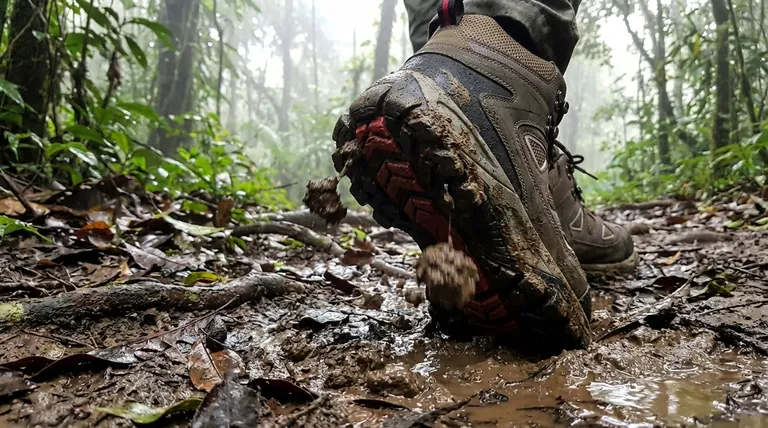
The Panama sole's design prioritizes shedding mud above all else. Its deep, wide lugs provide exceptional grip in soft terrain like mud and jungle floors but become a liability on hard, smooth surfaces where they reduce traction.
The Core Design Philosophy: A Self-Cleaning System
Born from the Jungle
The Panama sole's origins are rooted in the specific challenges of jungle warfare, particularly the need to maintain traction in thick mud. The U.S. military in Vietnam faced a huge problem with mud clogging up the lugs of their boots, rendering them useless.
How the Angled Lugs Work
The key is in the design itself. The wide, deep, and angled lugs are engineered to be self-cleaning. As the sole flexes during each step, the mud is pushed out of the channels, preventing build-up and maintaining contact with the ground.
The Tractor Tire Analogy
Think of it like a tractor tire: designed for maximum grip in soft ground and mud. It wouldn't be effective on pavement, and in fact, it would be downright dangerous. The Panama sole has the same principle applied to footwear.
Terrain Performance: Where It Excels
Unmatched in Mud and Soft Soil
This is where the Panama sole shines. Its design allows it to bite deep into soft ground, providing superior grip and shedding mud with ease.
Reliable on Grass and Loose Ground
On grass, especially wet grass, the deep lugs provide a solid anchor. On loose gravel or sand, the large surface area of each lug offers stability.
Adequate on Dry, Rocky Trails
While not its primary strength, the Panama sole can function on dry, rocky trails. However, it's not the ideal choice compared to more general hiking soles.
Understanding the Trade-offs: Critical Limitations
This is where things get interesting and where the user needs the most clarification. The Panama sole's strengths come with significant trade-offs.
Poor Grip on Hard, Wet Surfaces
This is the biggest drawback. The large, widely spaced lugs reduce the rubber's contact area, leading to poor grip on hard, wet surfaces like concrete, wet rock, or even polished floors.
Hazardous on Ice and Packed Snow
Absolutely not recommended for icy conditions. The lack of micro-traction on the lugs makes it extremely hazardous.
Reduced Comfort on Pavement
The aggressive lug pattern can make walking on pavement feel less comfortable and even make a slapping sound.
Making the Right Choice for Your Environment
It's about choosing the right tool for the job.
- If your primary focus is jungle trekking, farming, or work in consistently muddy conditions: The Panama sole is one of the most effective designs available.
- If your primary focus is general hiking across varied terrain (rock, forest floor, occasional mud): A more modern, multi-directional lug pattern will provide better all-around performance.
- If your primary focus is urban or winter use on hard, slick surfaces: You must avoid the Panama sole, as it will be dangerously slippery.
Choosing footwear with a Panama sole means selecting a specialist tool highly optimized for soft ground at the expense of hard-surface grip. The Panama sole is a purpose-built tool, not an all-terrain solution. Originally designed for the U.S. military during the Vietnam War, its performance is exceptional in its intended environment—muddy, soft ground. While it is functional on grass and dry dirt, its effectiveness decreases significantly on hard, smooth surfaces where its specialized design becomes a liability.
The Panama sole's design prioritizes shedding mud above all else. Its deep, wide lugs provide outstanding grip in soft terrain like mud and jungle floors but become a critical weakness on hard, smooth surfaces where they reduce traction.
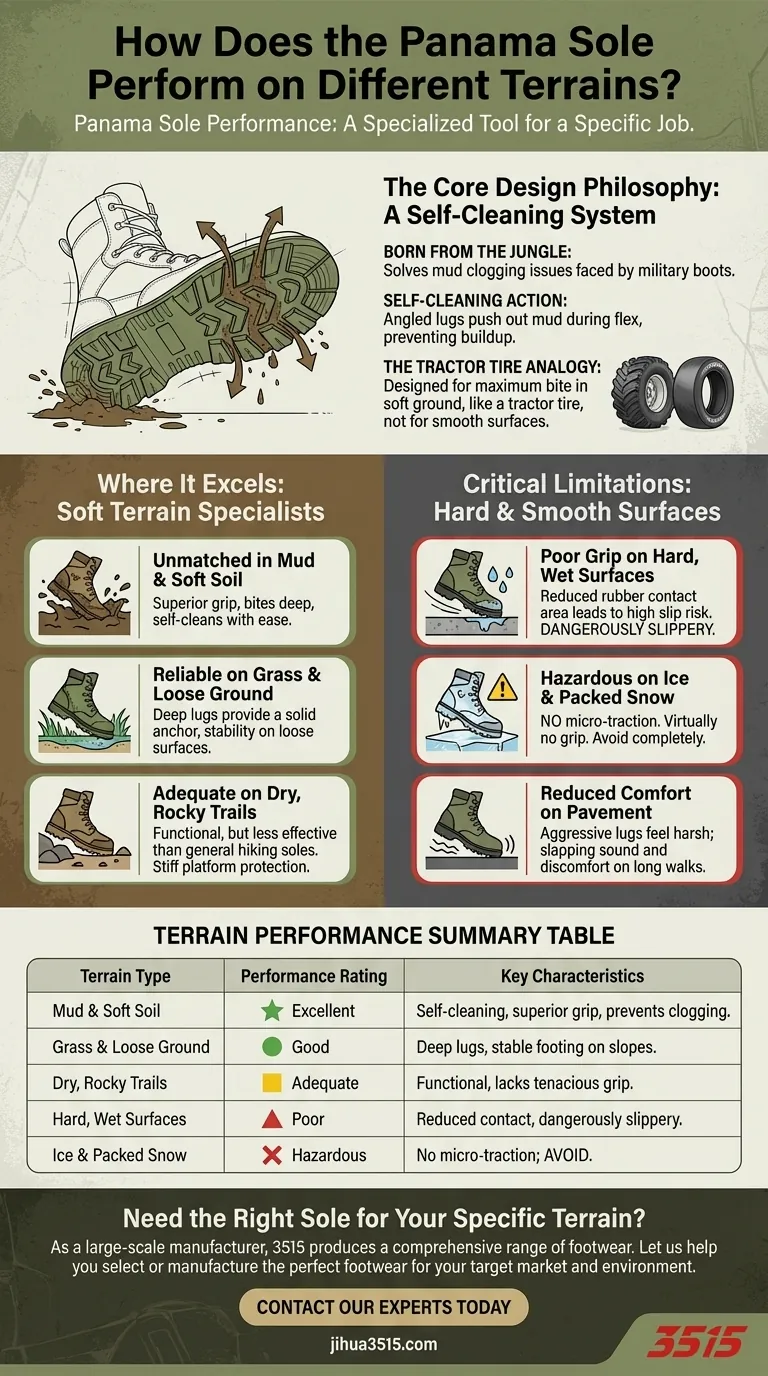
The Core Design Philosophy: A Self-Cleaning System
The key to understanding the Panama sole is to recognize it was engineered to solve a single, critical problem: mud.
Born from the Jungle
Older boot designs, like the Vibram ripple sole, had lugs that would cake with thick mud, effectively turning the boot into a heavy, useless slick. The Panama sole was the solution.
How the Angled Lugs Work
The design features large, deep lugs that are widely spaced and angled. As you walk and your foot flexes, the sole's movement actively pushes mud and debris out from the channels. This self-cleaning action ensures the lugs remain clear to dig into the ground.
The Tractor Tire Analogy
Think of a Panama sole like a tractor tire. It's designed to bite deep into soft earth and clear itself with every rotation. A racing tire, by contrast, is smooth to maximize rubber contact on pavement. The Panama sole is the tractor tire of footwear.
Terrain Performance: Where It Excels
In the right conditions, the Panama sole's performance is superior to more conventional patterns.
Unmatched in Mud and Soft Soil
This is the sole's native environment. Whether in deep mud, wet clay, or soft farmland, its ability to maintain traction by constantly shedding debris is unparalleled.
Reliable on Grass and Loose Ground
The deep lugs provide a solid bite on grassy hillsides, sand, and loose gravel, offering stable footing where a shallower tread might slip.
Adequate on Dry, Rocky Trails
On dry, uneven, or rocky terrain, the sole is functional. The stiff platform provides protection, but the grip is not as tenacious as modern hiking soles with stickier rubber compounds.
Understanding the Trade-offs: Critical Limitations
The specialization that makes the Panama sole so effective in mud creates significant disadvantages on other surfaces. This is not a flaw, but a deliberate design trade-off.
Poor Grip on Hard, Wet Surfaces
On smooth, hard surfaces like wet rock, concrete, or tile floors, the Panama sole performs poorly. The large, blocky lugs reduce the surface area of rubber in contact with the ground, leading to a much higher risk of slipping.
Hazardous on Ice and Packed Snow
The design has no features for micro-traction, such as small sipes or a sticky rubber compound. On ice or hard-packed snow, it offers virtually no grip and can be extremely dangerous.
Reduced Comfort on Pavement
The deep, stiff lugs do not provide a smooth ride on hard, flat surfaces like asphalt or concrete. Long-distance walking on pavement can feel harsh and uncomfortable.
Making the Right Choice for Your Environment
To determine if the Panama sole is right for you, you must match its strengths to your primary terrain.
- If your primary focus is jungle trekking, farming, or work in consistently muddy conditions: The Panama sole is one of the most effective designs available for maintaining traction.
- If your primary focus is general hiking across varied terrain (rock, forest floor, occasional mud): A more modern boot with a multi-directional lug pattern will provide better all-around performance and grip.
- If your primary focus is urban or winter use on hard, slick surfaces: You must avoid the Panama sole, as it is not designed for these conditions and will be dangerously slippery.
Choosing footwear with a Panama sole means selecting a specialist tool highly optimized for soft ground at the expense of hard-surface grip.
Summary Table:
| Terrain Type | Performance Rating | Key Characteristics |
|---|---|---|
| Mud & Soft Soil | Excellent | Self-cleaning lugs provide superior grip and prevent clogging. |
| Grass & Loose Ground | Good | Deep lugs offer stable footing on slopes and loose surfaces. |
| Dry, Rocky Trails | Adequate | Functional but lacks the tenacious grip of modern hiking soles. |
| Hard, Wet Surfaces | Poor | Reduced rubber contact area makes it dangerously slippery. |
| Ice & Packed Snow | Hazardous | Offers virtually no micro-traction; avoid completely. |
Need the Right Sole for Your Specific Terrain?
As a large-scale manufacturer, 3515 produces a comprehensive range of footwear for distributors, brand owners, and bulk clients. Our production capabilities encompass all types of shoes and boots, from rugged outdoor specialists to versatile all-terrain models.
Let us help you select or manufacture the perfect footwear for your target market and environment.
Contact our experts today to discuss your specific needs and leverage our manufacturing expertise.
Visual Guide
Related Products
- Durable Rubber Sole Outdoor Shoes Wholesale & Custom Manufacturing
- Wholesale Durable Camouflage Canvas Shoes with High-Traction Cleated Rubber Sole
- Wholesale Modern Perforated Leather Derby Shoes with Chunky Sole for Custom Branding
- Wholesale Waterproof Tactical Boots Custom Suede & High-Traction Soles
- Wholesale Durable Camo Canvas Shoes with High-Traction Rubber Soles
People Also Ask
- What is the function of the sole in outdoor shoes? Find the Perfect Grip and Support
- What role do outdoor shoes and sneakers play in navigating external terrains? Engineered Stability for Every Surface
- How is AI utilized in the design of outdoor and safety footwear? Harnessing Big Data for Market-Driven Shoe Innovation
- Why is durability important when selecting outdoor shoes? A Guide to Safety & Long-Term Value
- What are the key components of outdoor shoes that affect comfort and sturdiness? A Guide to Durable, High-Performance Footwear