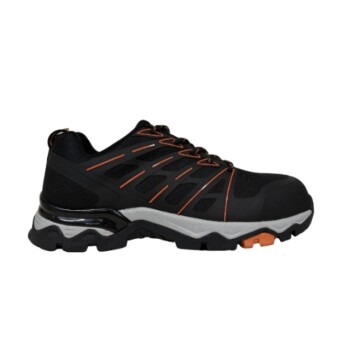
The mechanism of Negativity Bias in safety footwear functions as a comparative stress test for brand value. It evaluates how professional buyers weigh scenarios of high commitment—such as advanced sustainability or safety features—against scenarios involving explicit deficits, like safety certification failures. This mechanism operates on the premise that buyers react significantly more strongly to negative information than they do to positive enhancements.
Core Takeaway While positive innovations add value, the presence of negative information disproportionately destroys it. In the context of tactical and safety footwear, maintaining baseline safety and environmental standards is the primary driver for preserving market attractiveness and capital value.
The Mechanics of Buyer Evaluation
Comparative Scenario Testing
The application of Negativity Bias involves a direct comparison of opposing scenarios.
Evaluators present professional buyers with two distinct profiles: one demonstrating high commitment to safety or sustainability, and another characterized by explicit deficits.
The Asymmetry of Reaction
The core of this mechanism is the measurement of buyer reaction intensity.
The evaluation seeks to prove that negative inputs, such as a safety certification failure, trigger a much stronger psychological and commercial response than positive attributes.
The "bias" is that a flaw is penalized more heavily than a feature is rewarded.
Strategic Implications for Brand Value
The Foundation of Market Attractiveness
For brands specializing in tactical boots and safety shoes, market appeal is not built solely on innovation.
It is fundamentally rooted in the maintenance of baseline standards.
Ensuring compliance is not merely a legal hurdle; it is the prerequisite for market entry and acceptance.
Preserving Capital Value
The mechanism reveals a direct link between compliance and the financial worth of a brand.
If Negativity Bias dictates buyer behavior, then a brand's capital value is most vulnerable to deficits in safety and environmental standards.
Protecting the baseline is the most effective strategy for protecting the asset.
Understanding the Strategic Trade-offs
The Limits of Positive Enhancement
There is a diminishing return on "high commitment" strategies if the basics are neglected.
Investing heavily in advanced sustainability or novel safety features cannot offset the reputational damage of a fundamental deficit.
Positive enhancements do not neutralize negative bias.
The "One-Strike" Volatility
Because buyers react more strongly to negative information, the margin for error is razor-thin.
A single instance of explicit deficit can unravel the goodwill generated by years of high commitment.
Stability in this market requires a defensive strategy that prioritizes error avoidance over aggressive feature expansion.
Securing Brand Reputation
To leverage the mechanism of Negativity Bias effectively, organizations must prioritize their resources based on how buyers actually process information.
- If your primary focus is Risk Management: Prioritize the rigorous maintenance of baseline safety and environmental standards above all else to prevent the disproportionate damage caused by deficits.
- If your primary focus is Brand Growth: Ensure you have achieved flawless compliance before marketing "high commitment" features, as innovation cannot mask certification failures.
Success in the safety footwear market is defined less by how high you climb, and more by ensuring you never fall below the standard.
Summary Table:
| Factor | Positive Commitment (Innovation) | Negative Deficit (Compliance Failure) |
|---|---|---|
| Buyer Reaction | Moderate / Incremental Appreciation | Disproportionately Intense Rejection |
| Impact on Value | Slow Value Accumulation | Rapid Capital Value Destruction |
| Market Effect | Enhances Competitive Edge | Risk of Total Market Exclusion |
| Strategic Focus | Growth & Differentiation | Risk Management & Asset Protection |
Secure Your Brand Reputation with Flawless Manufacturing Standards
In the high-stakes footwear market, a single compliance failure can outweigh years of innovation. As a leading large-scale manufacturer serving global distributors and brand owners, 3515 specializes in neutralizing the risks of Negativity Bias by delivering uncompromising quality across our entire portfolio.
Partner with us to leverage our comprehensive production capabilities, including our flagship Safety Shoes series, rugged tactical boots, outdoor and training shoes, and refined Dress & Formal footwear. We ensure your brand remains resilient by maintaining the highest baseline safety and environmental standards in every bulk order.
Protect your market attractiveness and grow your portfolio with a partner you can trust.
Contact 3515 Today for a Production Consultation
References
- Volker Lingnau, Florian Beham. The link between corporate sustainability and willingness to invest: new evidence from the field of ethical investments. DOI: 10.1007/s00187-022-00340-z
This article is also based on technical information from 3515 Knowledge Base .
Related Products
- Premium Suede Sport Safety Shoes for Wholesale & Bulk Orders
- Premium Lightweight Safety Shoes for Wholesale & Bulk Orders
- Wholesale Anti-Smash & Puncture-Proof Safety Shoes Custom Manufacturing for Brands
- Premium KPU Injection Athletic Style Safety Shoes
- Premium Safety Shoes with Rotating Buckle Safety Sneakers
People Also Ask
- What industries have specific OSHA footwear requirements? Ensure Compliance & Protect Your Workforce
- What are the primary functions of professional safety shoes? Maximize Safety in Water Supply Confined Spaces
- What role do specialized safety shoes play in preventing falls? Engineering Stability in Industrial Environments
- How do the 3R principles influence green footwear design? Master Sustainable Safety Shoe Manufacturing
- What are the technical advantages of integrating sensors into safety shoes? Achieve Superior Motion Capture Precision