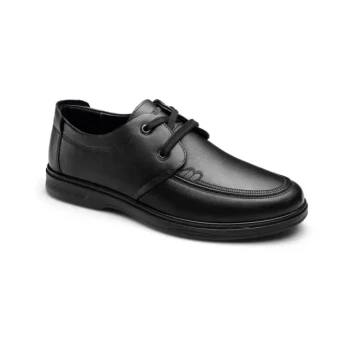
Automated footwear production lines revolutionize manufacturing by systematically replacing low-efficiency manual processes with high-precision mechanization. By utilizing advanced path control and pressure management, these systems standardize critical operations such as cutting, sewing, and bottoming. This transition ensures that even in large-scale batches, every product maintains consistent structural integrity and aesthetic detail, effectively solving the challenge of balancing speed with quality.
The core value of automation lies in its ability to decouple production volume from quality degradation. By removing human variability from high-intensity tasks, manufacturers can achieve a level of uniform structural strength and visual consistency that manual processes cannot sustain at scale.
The Mechanics of Standardization
To understand how automation achieves consistency, one must look at the specific control mechanisms employed during production.
Precise Path Control
In traditional manufacturing, cutting and sewing rely on the steady hand of an operator. Automated lines replace this with precise path control.
Machines execute preset mechanical instructions to guide cutting tools and needles along exact geometries. This ensures that every component is identical to the millimeter, eliminating the slight variations inherent in manual work.
Pressure Management Systems
Structural integrity in footwear often depends on the bottoming process, where the sole is attached to the upper. Automation utilizes sophisticated pressure management to apply exact force during this stage.
This standardization ensures uniform adhesion and durability. Unlike manual application, where pressure might vary due to operator leverage or fatigue, the machine delivers calculated consistency for every unit.
Enhancing Efficiency and Output
The shift to automation addresses the deep need for high-volume capabilities without the traditional bottlenecks of manual labor.
Replacing Low-Efficiency Processes
Manual footwear production is inherently limited by human speed and dexterity. Industrial-grade production lines utilize mechanization to bypass these physiological limits.
By automating the cutting, sewing, and bottoming phases, manufacturers significantly increase the throughput of the line. This allows for the rapid fulfillment of market demands for high-quality products.
Scaling Aesthetic Consistency
In large-scale manufacturing, maintaining the "look" of a shoe is as important as its structure. Automated systems ensure that aesthetic details remain constant across thousands of units.
Whether it is the alignment of a logo or the spacing of stitching, automation guarantees that the first shoe in a batch looks exactly like the ten-thousandth.
The Human Factor in Quality Control
While the primary reference focuses on mechanics, it is critical to understand how reducing human strain directly correlates to product quality.
Mitigating Process Deviations
Human fatigue is a major variable in manufacturing errors. Automated lines take over high-intensity repetitive tasks, such as precision stitching or injection molding.
By removing the operator from these physically demanding loops, the system effectively lowers the incidence of process deviations. A machine does not tire, ensuring that the quality of work at the end of a shift matches the beginning.
Reducing Physical Strain
Automation significantly reduces human exposure to extreme ranges of motion. This lowers the risk of symptoms related to the neuromuscular and skeletal systems.
A healthier workforce results in fewer disruptions and more consistent oversight of the automated systems, further stabilizing the production line.
Understanding the Trade-offs
While automation offers undeniable benefits for large-scale production, it introduces specific rigidities that must be managed.
High-Volume Rigidity
Automated lines excel at executing preset instructions for large batches. However, this creates a dependency on standardized inputs.
If the raw materials vary slightly in thickness or texture, the machine—unlike a human—may not instinctively adjust, potentially leading to batch-wide errors if not monitored.
The Setup Burden
The efficiency of these systems relies entirely on the accuracy of the "precise path control" programming.
Transitioning between different shoe models requires significant reconfiguration of mechanical instructions. This makes automation less agile than manual labor for small, custom, or highly variable production runs.
Making the Right Choice for Your Production
To leverage automated footwear production effectively, you must align the technology with your specific manufacturing goals.
- If your primary focus is Structural Consistency: Prioritize systems with advanced pressure management to ensure uniform bottoming and durability across all units.
- If your primary focus is Workforce Stability: Implement automation for high-intensity, repetitive tasks like stitching to minimize operator fatigue and associated process deviations.
Automation is not merely a tool for speed; it is the strategic foundation for guaranteeing quality in a high-demand market.
Summary Table:
| Feature | Manual Production | Automated Production | Benefit for Scaling |
|---|---|---|---|
| Path Control | Variable (Human Hand) | Precise (Mechanical) | Millimeter-level accuracy across batches |
| Pressure Management | Inconsistent (Fatigue) | Standardized (Calculated) | Uniform adhesion and structural durability |
| Throughput Speed | Limited by dexterity | High-speed mechanization | Rapid fulfillment of large-volume orders |
| Aesthetic Detail | Subject to deviation | Programmed consistency | Identical branding and stitching on every unit |
| Workforce Strain | High (Repetitive tasks) | Low (Machine-led) | Reduced errors and stabilized production line |
Scale Your Brand with Precision Manufacturing
As a large-scale manufacturer serving distributors and brand owners worldwide, 3515 leverages advanced automated production lines to deliver unparalleled efficiency and standardization. Our flagship Safety Shoes series, alongside our extensive portfolio of tactical boots, outdoor footwear, sneakers, and formal dress shoes, is built on the foundation of high-precision path control and rigorous pressure management.
Partner with 3515 to eliminate quality variability and meet your bulk requirements with consistent, market-ready excellence. Contact us today to explore our manufacturing capabilities and secure your supply chain!
References
- Ogbonnaya Ukeh Oteh, Emmanuel Onyedikachi Ahaiwe. Celebrity endorsement in African context: TEARS model approach. DOI: 10.1108/rege-07-2021-0110
This article is also based on technical information from 3515 Knowledge Base .
Related Products
- Wholesale Breathable & Cushioned Training Shoes Custom Factory Production
- Wholesale Smart Casual Sneakers with Dial Closure | Factory Direct Manufacturing
- Lightweight Breathable Training Shoes for Wholesale & Custom OEM Manufacturing
- Wholesale Lightweight Cushioned Athletic Sneakers for Custom Bulk Production
- Wholesale Training Shoes with Dial Lacing System Custom OEM Manufacturing
People Also Ask
- Why is the integration of advanced cushioning in training shoes necessary for athletes? Boost Recovery and Performance
- Why is the use of flat-soled or professional training shoes essential for WBV? Maximize Vibration Energy Transfer
- Why is it necessary for participants to wear professional training shoes? Ensuring Data Accuracy & Patient Safety
- What is the primary role of specialized training or orthopedic shoes? Enhance Safety in Elderly Balance Training
- Why are professional-grade training shoes essential for physical therapy? Ensure Patient Safety and Gait Stability