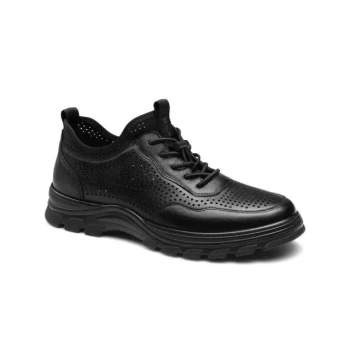
The design of training shoes functions as a critical variable in clinical measurement by establishing a standardized base for the lower limb. When professionals assess hip and knee flexion or extension, high-quality footwear ensures the foot remains properly aligned and supported, reducing measurement error. This standardization allows clinicians to accurately quantify the effectiveness of interventions intended to reduce joint stiffness and expand physical Range of Motion (ROM).
Core Takeaway Accurate data in clinical studies relies on minimizing external variables. By providing a stable and consistent foundation, specific training shoe designs eliminate alignment inconsistencies, allowing practitioners to isolate and measure true changes in joint mobility and rehabilitative progress.
The Mechanics of Standardization
To understand why footwear matters, one must look at the relationship between foot stability and measurement accuracy.
Creating a Standardized Base
In any clinical study, the interface between the subject and the floor must be consistent. Training shoes provide a standardized base for movement. This consistency ensures that the starting point for every measurement is identical across different subjects or sessions.
Ensuring Proper Alignment
Accurate ROM data requires the limb to move through a precise plane of motion. High-quality shoes are designed to keep the foot properly aligned and supported throughout the movement. This prevents the foot from rolling or shifting, which would otherwise alter the angle of the leg and skew the data.
Impact on Clinical Assessment
The use of appropriate footwear directly influences how professionals use tools like goniometers to assess specific joints.
Assessing Hip and Knee Mechanics
The primary reference highlights the impact on measuring hip and knee flexion or extension. Because the kinematic chain is connected, a misaligned foot changes the angle of the knee and hip. Proper shoes lock the foot into a neutral position, ensuring the measurement reflects true joint capacity.
Quantifying Intervention Effectiveness
The ultimate goal of many studies is to test interventions aimed at reducing joint stiffness. If the footwear varies, it becomes impossible to tell if an improved ROM is due to the therapy or the shoe. Standardized shoes allow researchers to confidentially attribute changes to the intervention itself.
Understanding the Trade-offs
While standardized footwear improves consistency, it introduces specific variables that researchers and clinicians must manage.
The "Shoe Effect" on Natural Motion
While shoes provide stability, they may mask underlying proprioceptive deficits. A shoe that offers too much support might artificially enhance performance or stability that the patient does not possess when barefoot.
Consistency is Critical
The definition of a "training shoe" can vary. If a patient wears a flat-soled shoe for the initial assessment and a cushioned running shoe for the follow-up, the data will be compromised. The standardization comes from using the same type of shoe design, not just any shoe.
Making the Right Choice for Your Goal
To maximize the accuracy of your clinical or rehabilitative data, apply the following principles to your protocol.
- If your primary focus is reducing measurement error: Ensure all subjects wear the same model of high-quality training shoe to guarantee a standardized base for goniometric measurement.
- If your primary focus is tracking rehab progress: Mandate that the patient wears the exact same footwear for every assessment session to accurately quantify the reduction of joint stiffness over time.
Control your variables at the ground level, and your data regarding joint range of motion will remain robust and reliable.
Summary Table:
| Factor | Impact on ROM Measurement | Clinical Benefit |
|---|---|---|
| Standardized Base | Provides a consistent interface with the floor | Eliminates external measurement variables |
| Foot Alignment | Prevents rolling or shifting of the foot | Ensures movement stays in a precise plane |
| Kinematic Stability | Maintains neutral hip and knee positioning | Accurately isolates joint flexion/extension |
| Intervention Tracking | Removes footwear-related performance bias | Quantifies true reduction in joint stiffness |
Elevate Your Brand with Precision-Engineered Athletic Footwear
As a premier large-scale manufacturer serving global distributors and brand owners, 3515 understands that precision in design leads to superior performance. Our comprehensive production capabilities allow us to deliver high-quality footwear that meets the rigorous standards of both professional athletes and clinical applications.
Whether you are looking to expand your portfolio with our flagship Safety Shoes series or require bulk production for training shoes, tactical boots, or sneakers, we offer the scale and expertise to bring your vision to life. From rehabilitative support to elite athletic training, our footwear provides the stable foundation your customers demand.
Ready to scale your production with a trusted partner?
Contact 3515 today to discuss your bulk manufacturing needs!
References
- Xiying Li, Xia Qin. Effects of Health Qigong Exercise on Lower Limb Motor Function in Parkinson's Disease. DOI: 10.3389/fmed.2021.809134
This article is also based on technical information from 3515 Knowledge Base .
Related Products
- Lightweight Breathable Training Shoes for Wholesale & Custom OEM Manufacturing
- Custom OEM Training Shoes Wholesale Manufacturer Durable & Breathable
- Wholesale Breathable & Cushioned Training Shoes Custom Factory Production
- Wholesale Durable & Breathable Training Shoes for Custom Brands
- Wholesale Breathable Training Shoes Custom Athletic Footwear Manufacturer
People Also Ask
- Why are lightweight training shoes often preferred over professional hiking boots in urban walking? Maximize City Comfort
- What is the primary role of specialized training or orthopedic shoes? Enhance Safety in Elderly Balance Training
- Why are professional-grade training shoes essential for physical therapy? Ensure Patient Safety and Gait Stability
- Why are the slip-resistance and stability performance of training shoes critical in gait analysis? Ensure Data Accuracy
- Why is the use of flat-soled or professional training shoes essential for WBV? Maximize Vibration Energy Transfer