
Ultimately, tactical footwear adapts to different climates by using specialized materials and construction methods. These are not "one-size-fits-all" solutions, but rather targeted designs that manage moisture, regulate temperature, and maintain traction based on the specific environmental challenge, from freezing cold to extreme heat.
The core principle of climate adaptation in tactical footwear isn't about finding a single boot for all conditions. It's about understanding that different environments demand different material properties, forcing a choice between waterproofing, insulation, and breathability.
The Core Technologies for Climate Control
Tactical footwear is an engineered system. Each component is chosen to solve a specific problem posed by the environment, primarily focused on keeping your feet dry, at a stable temperature, and well-supported.
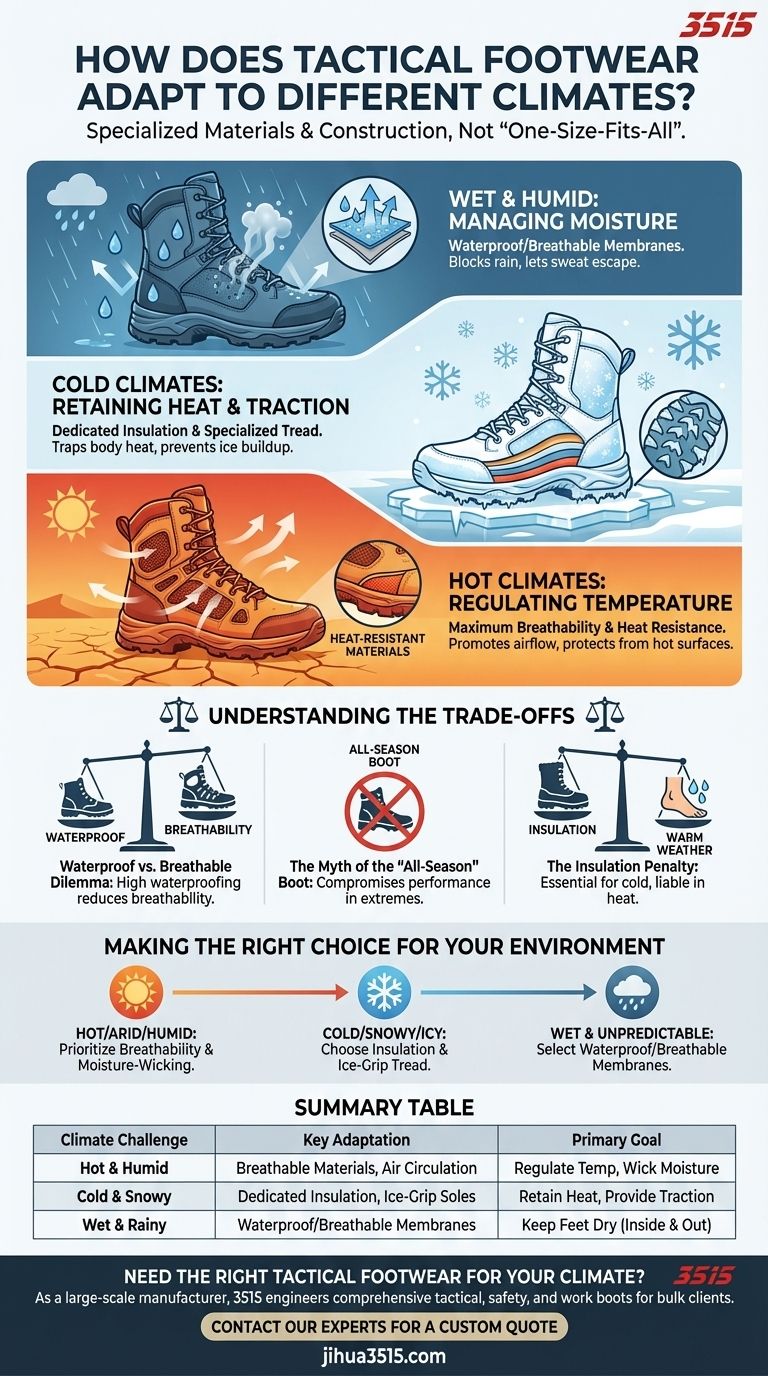
Managing Moisture in Wet and Humid Climates
The primary challenge in wet conditions is keeping external water out while letting internal sweat vapor escape.
Modern tactical boots achieve this with waterproof yet breathable membranes. These materials contain pores small enough to block liquid water molecules but large enough to allow water vapor (sweat) to pass through, keeping your feet dry from both rain and perspiration.
Retaining Heat in Cold Climates
In cold environments, the goal is to prevent heat loss and maintain stable footing on ice or snow.
This is accomplished with dedicated insulation. Insulated boots trap a layer of air, which is a poor conductor of heat, to keep your feet warm. Additionally, specialized tread patterns are used to provide grip without allowing snow and ice to compact and build up on the sole.
Regulating Temperature in Hot Climates
In hot climates, the main enemies are overheating and sweat buildup, which can lead to blisters and discomfort.
Footwear for these conditions prioritizes maximum breathability and air circulation. They often use lighter materials and construction that allows heat and moisture to escape quickly. For specialized fields like asphalt paving, they also incorporate heat-resistant materials in the sole to protect the foot from hot surfaces.
Understanding the Trade-offs
There is no perfect, all-climate tactical boot. Every design choice that enhances performance in one area typically compromises it in another. Understanding these limitations is critical.
The Waterproof vs. Breathable Dilemma
A highly effective waterproof membrane will inherently be less breathable than an unlined, vented boot.
In a hot, dry desert, a fully waterproof boot can become a "sweat box," trapping moisture and causing more problems than it solves. Conversely, a highly breathable desert boot offers little protection in a sudden downpour.
The Insulation Penalty
Insulation is essential for sub-zero temperatures but becomes a significant liability in moderate or warm weather.
Wearing an insulated boot in a warm climate will cause your feet to overheat and sweat profusely. This not only causes extreme discomfort but also increases the risk of fungal infections and blisters.
The Myth of the "All-Season" Boot
While some boots offer a balance of features for temperate climates, a true "all-season" boot that excels in both a blizzard and a heatwave does not exist.
Attempting to use one boot for every extreme will always result in subpar performance and potential risk. The most effective approach is to select footwear designed for the conditions you will most frequently encounter.
Making the Right Choice for Your Environment
Your selection must be driven by a realistic assessment of your primary operating environment.
- If your primary focus is hot, arid, or humid environments: Prioritize boots with maximum breathability and moisture-wicking capabilities to keep your feet cool and dry from sweat.
- If your primary focus is cold, snowy, or icy conditions: Choose footwear with dedicated insulation and a tread pattern engineered for grip on frozen surfaces.
- If your primary focus is wet and unpredictable weather: Select boots with a reliable waterproof and breathable membrane to balance protection from rain with internal moisture management.
Choosing the right footwear is about matching the specific tool to the environmental demand for peak performance and safety.
Summary Table:
| Climate Challenge | Key Adaptation | Primary Goal |
|---|---|---|
| Hot & Humid | Breathable Materials, Air Circulation | Regulate Temperature, Wick Moisture |
| Cold & Snowy | Dedicated Insulation, Ice-Grip Soles | Retain Heat, Provide Traction |
| Wet & Rainy | Waterproof/Breathable Membranes | Keep Feet Dry (Inside & Out) |
Need the right tactical footwear for your specific climate?
As a large-scale manufacturer, 3515 produces a comprehensive range of tactical, safety, and work boots for distributors, brand owners, and bulk clients. We can engineer the perfect solution for your target environment, whether it requires maximum breathability for desert heat, advanced insulation for arctic cold, or reliable waterproofing for wet conditions.
Contact our experts today to discuss your specific needs and get a custom quote.
Visual Guide
Related Products
- Durable Leather High-Ankle Tactical Boots for Wholesale & Custom Manufacturing
- Durable Leather Tactical Boots Wholesale & Custom Manufacturing for Brands
- Durable High-Ankle Tactical Boots Wholesale Manufacturer for Custom & Bulk Orders
- Durable Mid-Cut Tactical Boots for Wholesale & Private Label
- Wholesale Waterproof Tactical Boots Custom Suede & High-Traction Soles
People Also Ask
- How do military uniforms and tactical boots impact the prediction of thermal risk? Essential Safety Insights
- How does the material of tactical boots affect their performance? Choose the Right Material for Your Mission
- Why is sequential analysis utilized to evaluate tactical boots? Master Dynamic Boot Development and Ergonomic Performance
- How do tactical boots differ from regular boots? Performance, Durability & Design Explained
- What are the primary differences between tactical boots and combat boots? Choose the Right Boot for Your Mission



















