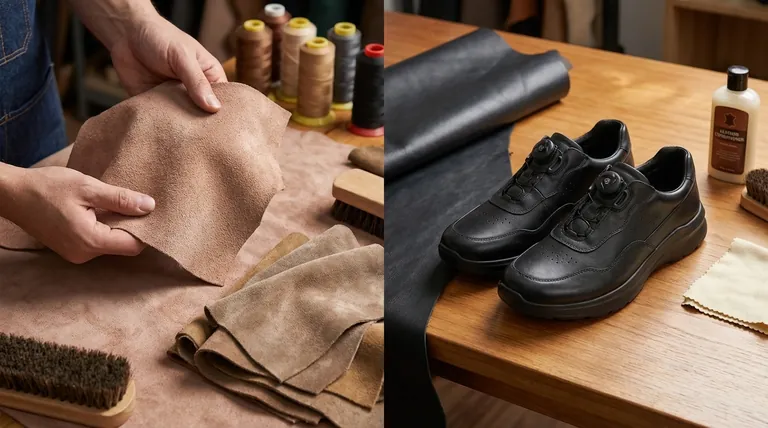
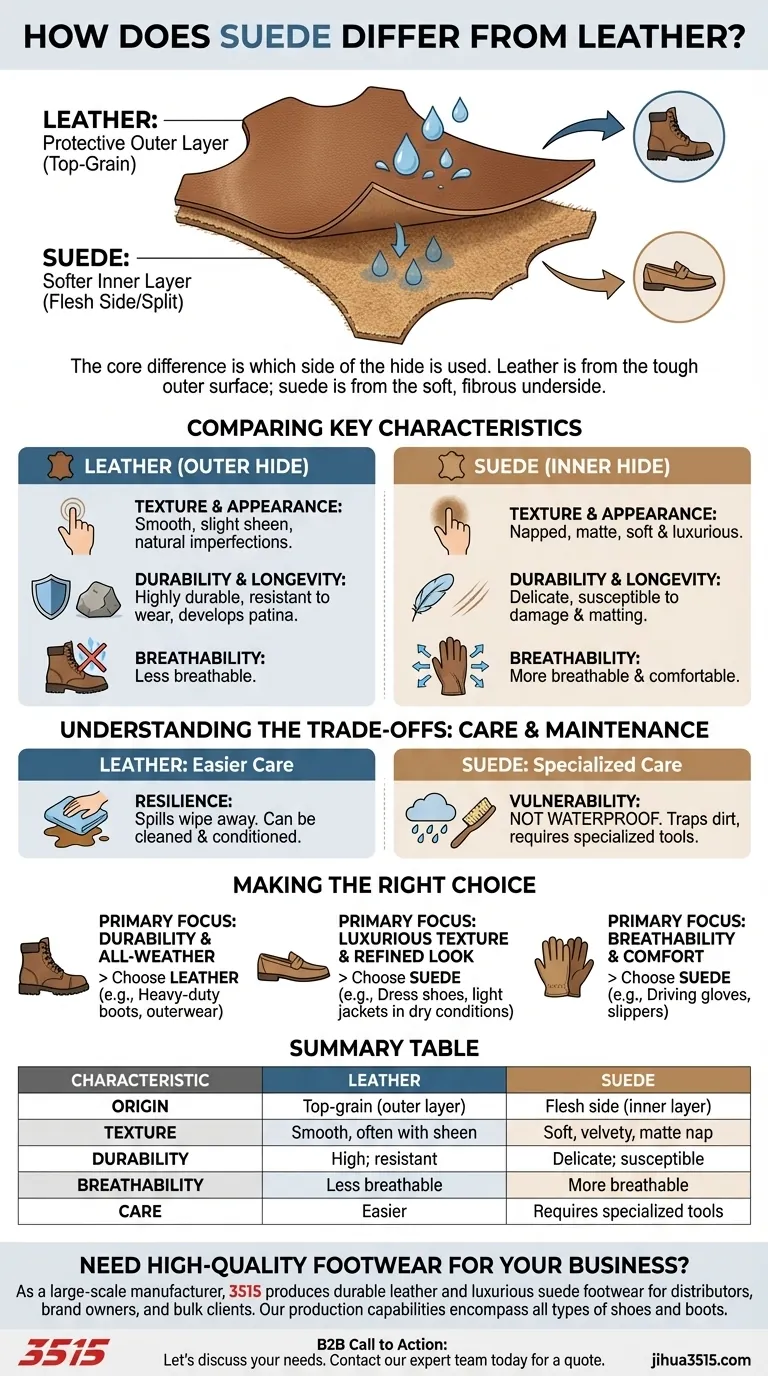
At its core, the difference between suede and leather comes down to one thing: which side of the animal hide is used. Traditional leather is made from the tough, smooth outer surface of the hide, while suede is crafted from the softer, more fibrous underside. This single distinction dictates their texture, appearance, and durability.
The essential trade-off is simple: Suede offers a uniquely soft and luxurious texture, but at the cost of the durability and weather resistance that define traditional leather.
The Fundamental Difference: It's All in the Hide
The properties of each material are a direct result of their origin. Think of an animal hide as having a durable exterior designed to protect from the elements and a softer interior.
Leather: The Protective Outer Layer
Leather is made from the top-grain of the hide—the external side. This layer is naturally dense and smooth.
Its surface is often tanned and treated to be tough, resilient, and less porous, which is why it naturally repels water and resists stains and scuffs more effectively.
Suede: The Softer Inner Layer
Suede is made by taking a thicker hide and splitting it, using the inner layer. Sometimes, the hide is simply flipped over so the underside is exposed.
This process reveals the fine, fuzzy protein fibers of the "flesh side," creating the signature soft, velvety nap that gives suede its matte appearance and pliable feel.
Comparing Key Characteristics
This difference in origin creates a cascade of other distinctions that impact how the materials look, feel, and perform in daily use.
Texture and Appearance
Full-grain leather typically has a smooth surface with a slight sheen and displays the natural imperfections of the hide.
Suede is defined by its napped, matte texture. It feels soft and velvety to the touch and has a uniform, luxurious look.
Durability and Longevity
Because it comes from the protective outer layer, leather is highly durable. It stands up well to wear, friction, and moisture, often developing a desirable patina over time.
Suede is significantly more delicate. Its porous, open-fiber structure makes it susceptible to damage, scuffing, and matting.
Breathability
The dense structure of most finished leathers makes them less breathable.
Suede's porous nature allows air to pass through more easily, making it a more breathable and comfortable material for items like gloves or shoe linings.
Understanding the Trade-offs: Care and Maintenance
The biggest mistake a consumer can make is to treat suede like traditional leather. Their care requirements are fundamentally different.
Suede's Vulnerability to Moisture
Despite some claims, suede is not waterproof. It is highly absorbent and easily damaged by water, which can cause staining and stiffening of the material.
While protective sprays can add a degree of water resistance, suede should always be protected from rain and snow.
The Challenge of Cleaning
Suede's absorbent nap readily traps dirt and oils, making it difficult to clean. Stains can set in quickly and often require specialized tools like a suede brush and dedicated cleaners.
Leather's Resilience
In contrast, most smooth leathers are far easier to care for. Spills can often be wiped away from the surface, and the material can be cleaned and conditioned to restore its look and feel.
Making the Right Choice for Your Needs
Selecting the right material depends entirely on your priority and the intended use of the item.
- If your primary focus is durability and all-weather use: Choose traditional leather for items like heavy-duty boots, outerwear, or bags that will face the elements.
- If your primary focus is a luxurious texture and a refined look: Choose suede for items worn in dry conditions, like dress shoes, light jackets, or accessories, but be prepared for diligent care.
- If you need breathability and comfort: Suede is an excellent choice for items like driving gloves or slippers where durability is less of a concern.
By understanding that one is a protective shield and the other is a soft inner lining, you can choose the right material for the right occasion.
Summary Table:
| Characteristic | Leather | Suede |
|---|---|---|
| Origin | Top-grain (outer layer) of hide | Flesh side (inner layer) of hide |
| Texture & Appearance | Smooth, often with a sheen | Soft, velvety, matte nap |
| Durability | High; resistant to wear and moisture | Delicate; susceptible to scuffs and stains |
| Breathability | Less breathable | More breathable and comfortable |
| Care & Maintenance | Easier to clean and condition | Requires specialized tools and protection |
Need High-Quality Footwear for Your Business?
As a large-scale manufacturer, 3515 produces a comprehensive range of durable leather and luxurious suede footwear for distributors, brand owners, and bulk clients. Our production capabilities encompass all types of shoes and boots, ensuring you get the right material for your target market.
Let's discuss your specific needs and how we can deliver value to your business.
Contact our expert team today to request a quote
Visual Guide
Related Products
- Wholesale Classic Leather Lace-Up Ankle Boots for Brand Manufacturing
- Durable Leather High-Ankle Tactical Boots for Wholesale & Custom Manufacturing
- Wholesale Leather Apron Toe Derby Shoes Custom Factory Production
- Wholesale Modern Perforated Leather Derby Shoes with Chunky Sole for Custom Branding
People Also Ask
- How are oils used to waterproof leather boots? A Guide to Deep Conditioning & Protection
- Why is regular maintenance necessary for the performance of leather boots? Boost Durability & Brand Reputation
- Why might it be beneficial to pre-heat the boots before applying wax? Achieve Deeper, Longer-Lasting Protection
- How can leather boots maintain their water resistance? A Guide to Lasting Protection
- What is the biggest enemy of leather boots? Protect Your Investment from Water Damage