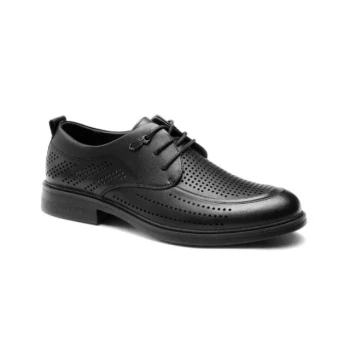
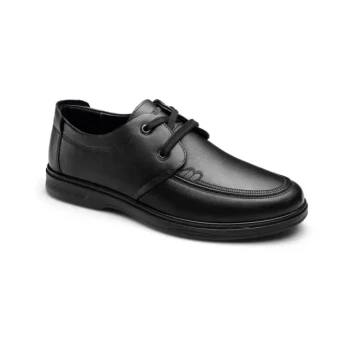
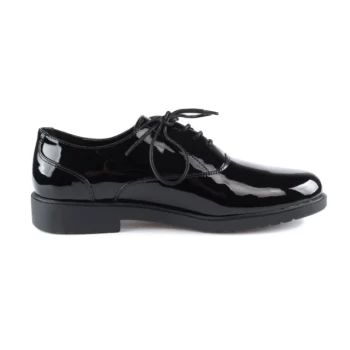
To identify authentic leather footwear, you must rely on a combination of sensory and visual cues. Genuine leather has a distinct natural, earthy scent, feels supple and slightly textured, and displays an irregular, imperfect grain pattern. These characteristics are difficult for synthetic materials to replicate perfectly.
The most reliable way to verify leather is not through a single "trick," but by understanding its nature as an organic material. A combination of observing the grain's unique imperfections, feeling the texture, and smelling its natural scent provides a far more accurate assessment than any one test in isolation.
A Systematic Approach to Verification
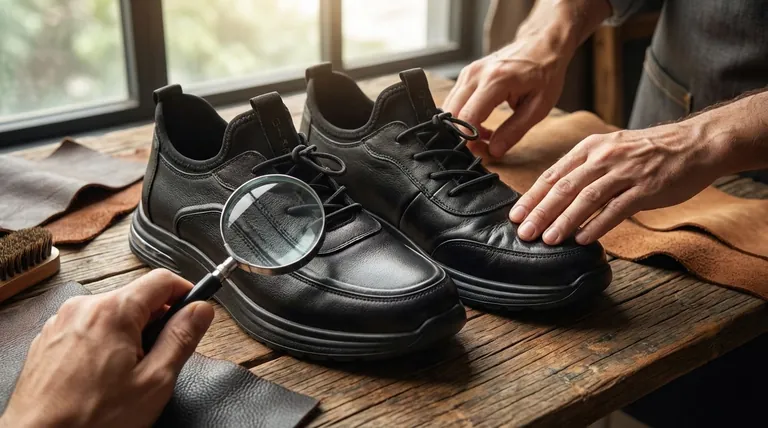
Verifying leather is an exercise in observation. Synthetic materials are engineered for uniformity, while genuine leather, a natural product, is defined by its subtle inconsistencies. By systematically evaluating its characteristics, you can confidently distinguish it from imitations.
The Sensory Evaluation: Smell and Touch
Your primary tools are your nose and hands. Authentic leather has an unmistakable organic smell due to the tanning process; it should not smell like plastic or chemicals.
When you touch it, real leather feels supple and warm. It has a slight give and flexibility. Faux leather often feels smooth, cold, and unnaturally uniform, like plastic.
The Visual Inspection: Grain and Creases
Closely examine the surface of the shoe. Real leather will have a unique grain pattern with minor imperfections, such as tiny pores, scars, or variations in texture. This is a hallmark of an authentic animal hide.
Synthetic materials are machine-made, so any grain pattern is typically stamped on and will look repetitive and unnaturally perfect. When you press or bend real leather, it will wrinkle and crease naturally, much like skin.
Examining the Material's Structure
If possible, inspect an unlined edge or the backside of the material, perhaps on the tongue or inside the shoe. Genuine leather has a fibrous, suede-like texture on its underside.
Faux leather will have a backing made of fabric or a thin layer of plastic, revealing its synthetic origin. This clear distinction between the surface and the backing is a definitive sign of an imitation.
Common Pitfalls and Misconceptions
While several tests exist, some are impractical or misleading. Understanding their limitations is key to making an accurate judgment and avoiding costly mistakes.
The Unreliability of a Single Test
No single test is foolproof. High-quality synthetic materials can mimic the smell or feel of leather, and some leather treatments can mask its natural scent or alter its reaction to water. Always use a combination of the visual and sensory checks described above.
The Danger of Destructive Tests
Tests like the fire test, scratch test, or water drop test are often cited but are highly impractical and should be avoided. Applying a flame, scratching the surface, or dropping water can permanently damage footwear you do not yet own.
These tests are not necessary when a careful sensory and visual inspection provides a more reliable and non-destructive answer.
The "Genuine Leather" Label
Be aware that the term "genuine leather" can be a specific grade of real leather, often referring to split leather. While technically authentic, it is a lower-quality grade compared to top-grain or full-grain leather. Authenticity does not always equate to the highest quality or durability.
A Practical Checklist for Your Next Purchase
Use this framework to guide your evaluation based on your specific goal.
- If you are evaluating a new pair in a store: Focus on the non-destructive tests. Check for the natural leather smell, feel the material's suppleness, and look for the unique, imperfect grain pattern on the surface.
- If you are assessing a used or vintage item: Look for a patina, which is the rich sheen that high-quality leather develops with age and use. Natural creases and wear patterns are also strong indicators of authentic material.
- If your primary focus is maximum durability: Learn to identify full-grain leather. It is the highest quality grade and will show the hide's natural surface imperfections, making it the most durable and long-lasting option.
Ultimately, your ability to identify authentic leather will grow with experience and careful observation.
Summary Table:
| Characteristic | Authentic Leather | Synthetic Material |
|---|---|---|
| Smell | Natural, earthy scent | Chemical or plastic odor |
| Texture | Supple, slightly textured, warm | Smooth, cold, unnaturally uniform |
| Grain Pattern | Unique, irregular, with imperfections | Repetitive, stamped, perfect |
| Creases | Wrinkles naturally when bent | May crack or crease unnaturally |
| Material Backing | Fibrous, suede-like | Fabric or plastic backing |
Need reliable, high-quality leather footwear? As a large-scale manufacturer, 3515 produces a comprehensive range of authentic leather shoes and boots for distributors, brand owners, and bulk clients. Our expertise ensures you receive durable, premium products—from full-grain to top-grain leather—backed by robust production capabilities. Contact us today (#ContactForm) to discuss your needs and benefit from our industry-leading quality and service.
Visual Guide

Related Products
- Durable Leather Work Boots for Wholesale & Custom Manufacturing
- Durable Leather High-Ankle Tactical Boots for Wholesale & Custom Manufacturing
- Factory Direct Wholesale Leather Comfort Shoes with Dial Closure
- Durable Goodyear Welt Leather Work Boots for Wholesale & Private Label
- Wholesale Women's Leather Derby Shoes Custom Factory Production
People Also Ask
- What is the difference between full-grain and top-grain leather? Premium Material Guide for Boot Manufacturers
- What are the common workplace hazards that can be mitigated with the right work boots? Protect Your Workforce
- What are the common foot issues workers face due to uncomfortable work boots? Prevent Pain & Deformities
- What are the advantages of leather versus synthetic work boots? A Guide to Choosing the Right Material
- What are the key components of modern work boots? Engineered for Ultimate Durability and Comfort