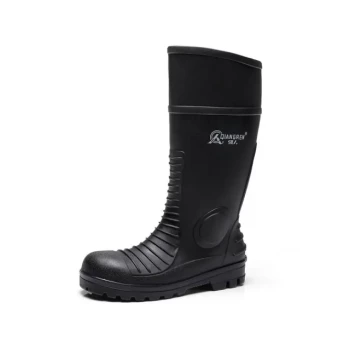
Professional protective footwear serves as a critical preventative barrier against plantar epidermoid cysts by fundamentally altering how mechanical forces interact with the foot. It utilizes high-performance shock-absorbing materials and ergonomic designs to redistribute pressure, thereby preventing the micro-trauma that forces epidermal skin fragments deep into the dermis.
Core Insight: The prevention of these cysts is not just about cushioning; it is about pressure redistribution. By alleviating localized stress on weight-bearing areas, protective footwear eliminates the mechanical trigger—the deep implantation of skin cells—required for cyst formation.
The Mechanism of Prevention
Preventing Traumatic Implantation
The primary cause of plantar epidermoid cysts in this context is chronic mechanical injury. Repeated stress and compression can drive fragments of the outer skin layer (epidermis) deep into the underlying tissue.
Professional footwear interrupts this process by acting as a buffer. The specialized materials absorb the energy of impact, reducing the force capable of pushing these fragments into the skin.
Redistributing Weight
Standard footwear often allows pressure to concentrate on specific "hot spots," typically the heel and metatarsal heads. This localized pressure creates the perfect environment for tissue damage.
Protective footwear employs ergonomic insole designs to spread the body's weight evenly across the entire sole. By expanding the surface area that bears the load, the peak pressure at any single point is significantly reduced.
Reducing Micro-Trauma
Continuous impact causes microscopic damage to the foot's soft tissue, known as micro-trauma. This is a precursor to the deep implantation of cells.
By managing force distribution and utilizing shock-absorbing components, protective footwear minimizes this repetitive trauma. This reduction in chronic stress directly correlates to a lower incidence of cyst formation.
The Role of Structural Stability
Managing Force Loads
While shock absorption handles vertical impact, structural stability handles stability. Supportive footwear uses structural components to provide external constraints.
This ensures that forces are managed predictably. When the foot is stabilized, it prevents abnormal movements that could generate shearing forces—another form of friction that contributes to skin trauma.
Eliminating Friction
Localized friction is a significant contributor to skin breakdown. By stabilizing the foot and preventing internal sliding, professional footwear maintains the integrity of the skin barrier.
This mechanical intervention prevents the initial abrasion or breakdown of the skin surface, which is the entry point for the epidermal fragments that eventually become cysts.
Critical Considerations for Effectiveness
The Necessity of Proper Fit
Technology cannot compensate for poor sizing. If protective footwear does not fit the user's foot geometry precisely, the ergonomic benefits are nullified.
A loose shoe introduces friction (shearing force), while a tight shoe introduces compression—both of which are triggers for cyst formation. The protective features rely entirely on a correct fit to function.
Material Fatigue
High-performance shock-absorbing materials are not permanent. Over time, the cellular structure of foams and gels will collapse under chronic mechanical stress.
Once these materials compress permanently, they lose their ability to redistribute pressure. Worn-out protective footwear can become a liability, returning the user to a high-risk state for micro-trauma.
Making the Right Choice for Your Goal
To effectively prevent plantar epidermoid cysts, you must match the footwear features to your specific mechanical stressors.
- If your primary focus is High-Impact Activity: Prioritize footwear with advanced shock-absorbing materials to dissipate the vertical energy of walking or jumping.
- If your primary focus is Standing/Static Load: Prioritize footwear with ergonomic, contoured insoles to maximize the surface area for weight distribution and alleviate heel pressure.
- If your primary focus is Long-Term Prevention: Prioritize a structured maintenance schedule, replacing footwear immediately when cushioning materials show signs of compression set or fatigue.
The most effective prevention strategy combines high-quality shock absorption with an ergonomic fit that rigorously manages pressure distribution.
Summary Table:
| Prevention Mechanism | Key Function | Impact on Foot Health |
|---|---|---|
| Pressure Redistribution | Spreads weight via ergonomic insoles | Eliminates high-pressure "hot spots" |
| Shock Absorption | High-performance energy dissipation | Prevents deep skin cell implantation |
| Structural Stability | Minimizes internal shearing forces | Maintains skin barrier integrity |
| Micro-Trauma Control | Reduces repetitive soft tissue damage | Blocks the mechanical trigger for cysts |
Secure Your Workforce with 3515 High-Performance Footwear
Prevent chronic mechanical injuries and ensure long-term foot health with professional-grade solutions. As a premier large-scale manufacturer, 3515 provides distributors and brand owners with world-class production capabilities across all footwear categories.
Our value to your business includes:
- Flagship Safety Shoes: Engineered with advanced shock absorption and ergonomic pressure distribution.
- Diverse Portfolio: Comprehensive manufacturing of tactical boots, outdoor shoes, training sneakers, and formal dress shoes.
- Scalable Quality: Reliable bulk production tailored to meet the rigorous demands of your target market.
Protect your customers and elevate your brand—contact us today to discuss your bulk requirements!
References
- Sungmi Jeon, Byung Jun Kim. Clinicopathologic features of epidermoid cysts in the upper and lower extremities, including a case of malignant transformation in the palmoplantar region. DOI: 10.12790/ahm.22.0049
This article is also based on technical information from 3515 Knowledge Base .
Related Products
- Wholesale Customizable Safety Boots Durable & Protective Footwear Manufacturing
- Premium Suede Sport Safety Shoes for Wholesale & Bulk Orders
- Wholesale Anti-Smash & Puncture-Proof Safety Shoes Custom Manufacturing for Brands
- Premium Safety Shoes with Rotating Buckle Safety Sneakers
- Premium Lightweight Safety Shoes for Wholesale & Bulk Orders
People Also Ask
- Why are industrial safety boots with steel toes necessary for machine operators? Essential Foot Protection for Safety
- What is the history of steel toe work boots? From German Invention to Modern Safety Standard
- What are the different types of steel toe work boots? Choose the Right Boot for Your Job
- What are the pros and cons of steel toe work boots? A Guide to Maximum Protection vs. Comfort
- What common features do safety toe work boots share regardless of style? Essential Protection Explained