Okay, so the user wants to know why keeping their feet warm in winter is good for their health. Not just the what, but the why. They're looking for the science. I need to explain the physiological mechanisms and provide practical advice, building up to a solid explanation with actionable steps.
I'm thinking I'll structure it like this: Start by directly answering the question: Warm feet mean good blood flow and a healthy immune system. Then I'll have a main takeaway box highlighting that this is crucial for the body's temperature regulation and immune defense.
My main body will have a detailed breakdown of the "why." I'll start with how cold feet cause blood vessels to constrict, slowing blood flow. Then, I'll link that to a potentially weaker immune response. I'll stick close to the references; they say it "supports the immune system" and "reduces the likelihood of illnesses such as colds and flu," so I'll stay within that scope. I'll also cover the serious risks of cold feet: frostbite, trench foot, and reduced mobility.
Next, I'll offer practical strategies: proper footwear, physical activity, and foot warmers. I'll end with some targeted advice: if you're worried about colds, focus on circulation; if you're outdoors, focus on avoiding frostbite; if you just want to feel better, focus on overall warmth.
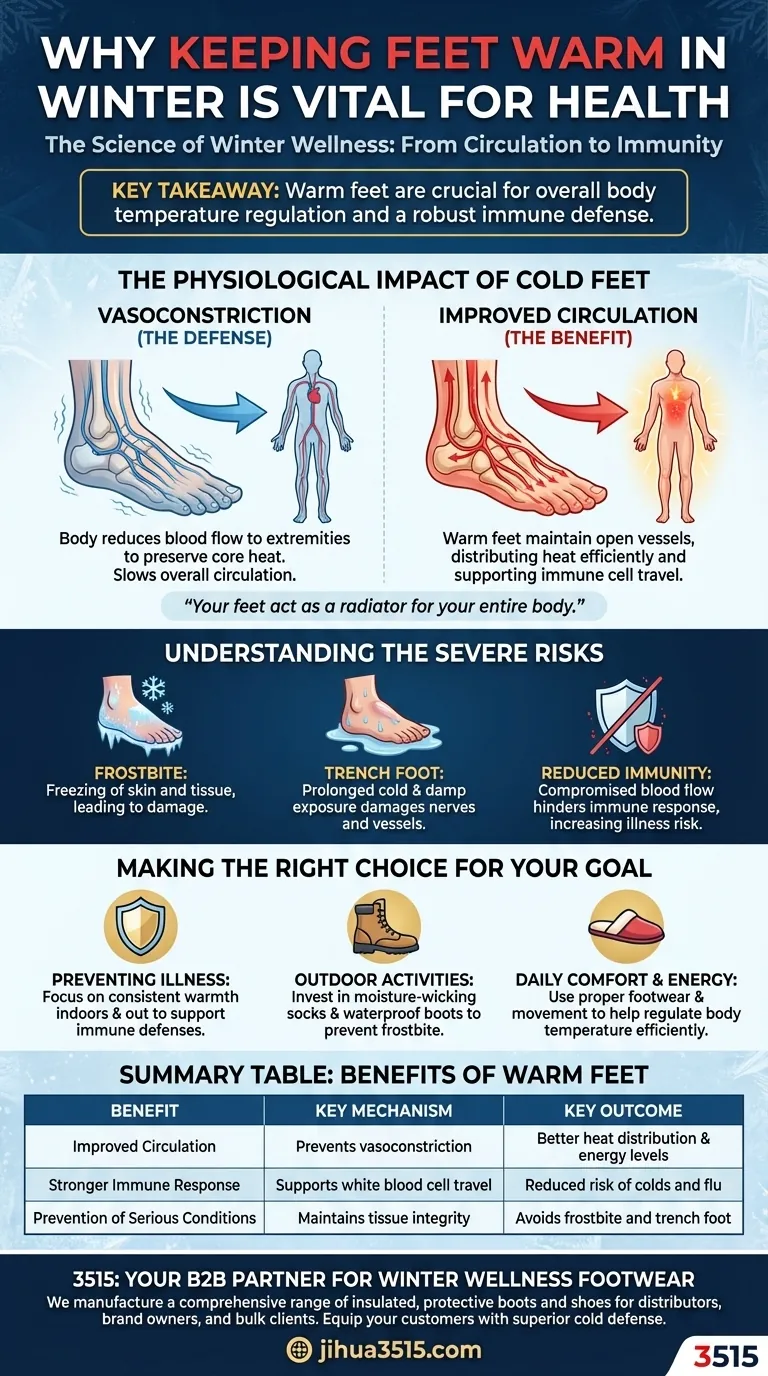
I'll synthesize this by focusing on: warm feet = good circulation, which means good heat distribution and immune support. Cold feet are a danger. And the solutions are proper boots, move your feet, and maybe some foot warmers. The key will be making a smooth narrative that is clear and easy to follow. I’ll make the paragraphs short and the formatting perfect to really make it pop for the user. To put it simply, keeping your feet warm in winter is a critical part of your body's overall temperature regulation and immune defense. When your feet are warm, blood vessels remain open, which improves blood flow, distributes heat throughout your body, and helps maintain a robust immune system to fend off common illnesses.
Your feet act as a radiator for your entire body. Keeping them warm ensures your circulatory system can efficiently distribute heat and support your immune defenses, moving beyond simple comfort to become a cornerstone of winter wellness.
The Physiological Impact of Cold Feet
When your feet get cold, they trigger a chain reaction that is designed for survival but can have negative consequences for your overall health and energy levels. Understanding this process reveals why a good pair of socks is so important.
Vasoconstriction: The Body's First Defense
Your body's primary goal is to protect its vital organs by maintaining a stable core temperature. When your feet sense cold, the blood vessels near the skin constrict in a process called vasoconstriction.
This reaction is an instinctual defense mechanism. It reduces blood flow to your extremities to minimize heat loss and keep your core warm.
The Effect on Overall Circulation
While vasoconstriction is protective, it slows down your entire circulatory system. Blood has a harder time reaching your hands and feet, which is why they feel cold first.
This sluggish circulation means that heat generated by your core is not distributed effectively, forcing your body to work harder to stay warm and potentially draining your energy levels.
The Link to Immune Response
Proper blood flow is essential for a healthy immune system. When circulation is compromised by cold, it can hinder the ability of immune cells to travel throughout your body.
Keeping your feet warm helps maintain optimal blood flow, supporting your immune system and reducing the likelihood of catching illnesses like the common cold or flu.
Understanding the Severe Risks
Neglecting to keep your feet warm can lead to more than just discomfort. In harsh conditions, it can result in serious medical issues that cause lasting damage.
Frostbite and Tissue Damage
Frostbite is a severe injury caused by the freezing of skin and underlying tissues. Cold feet are particularly vulnerable.
This condition can cause permanent damage to skin, tissues, blood vessels, and nerves, leading to numbness, swelling, and in extreme cases, tissue death.
Trench Foot: The Danger of Cold and Wet
Even without freezing temperatures, prolonged exposure to cold and damp conditions can cause trench foot.
This non-freezing cold injury damages nerves and blood vessels, resulting in significant pain and swelling. It underscores the importance of keeping feet not just warm, but also dry.
Making the Right Choice for Your Goal
You can proactively manage your health by focusing on your feet. Your specific strategy depends on your primary goal for the winter season.
- If your primary focus is preventing common illnesses: Prioritize keeping your feet consistently warm indoors and out to ensure your circulatory system can fully support your immune defenses.
- If your primary focus is enjoying outdoor activities: Invest in high-quality, moisture-wicking socks and waterproof boots to protect against severe conditions like frostbite and maintain your mobility.
- If your primary focus is daily comfort and energy: Make a conscious effort to keep your feet warm with proper footwear and simple movements, as this directly helps your body regulate its temperature more efficiently.
Treating your feet well is a simple yet powerful way to support your entire body's health throughout the winter.
Summary Table:
| Benefit of Warm Feet | Key Mechanism | Key Outcome |
|---|---|---|
| Improved Circulation | Prevents vasoconstriction | Better heat distribution & energy levels |
| Stronger Immune Response | Supports white blood cell travel | Reduced risk of colds and flu |
| Prevention of Serious Conditions | Maintains tissue integrity | Avoids frostbite and trench foot |
As a large-scale manufacturer, 3515 produces a comprehensive range of winter footwear designed to keep your feet warm, dry, and healthy.
Whether you are a distributor, brand owner, or bulk client, our production capabilities encompass all types of insulated boots and shoes that provide superior protection against the cold. Proper footwear is your first line of defense for maintaining circulation and supporting your immune system.
Let us help you equip your customers with the right gear for winter wellness. Contact our team today to discuss your footwear needs and explore our catalog.
Visual Guide