Okay, so the user wants to know about the performance benefits of high ankle support in work boots. My analysis tells me they're not just looking for a simple answer; they're trying to figure out if this feature is right for their specific work. That means I need to go beyond the basics.
My approach will be structured: start with the direct answer, back it up with a core takeaway, and then dive deep into the mechanics and application. I'll explain how high ankle support improves performance, focusing on stability and sprain reduction, but also touching on the more subtle benefits of enhanced proprioception – a level of insight the user will appreciate.
I'll lean on the reference material for core benefits and real-world examples, like drivers and warehouse workers, to make the information immediately relevant. But I won't stop there. The "Trade-offs" section is critical. I'll leverage my broader footwear knowledge to present a balanced view, highlighting that high support can mean less flexibility and potentially increased weight and heat. This builds trust and positions me as a reliable advisor.
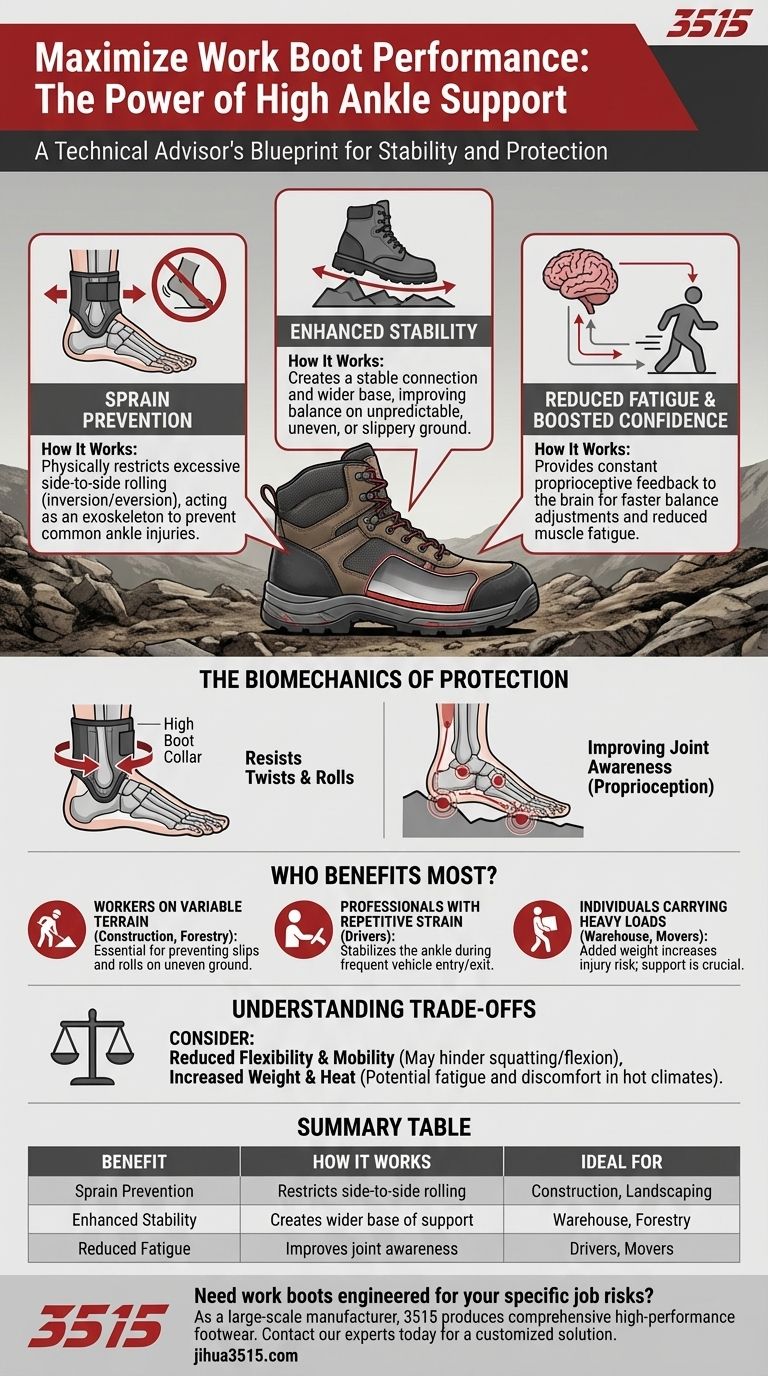
Finally, I'll provide actionable advice. I'll frame the decision around the user's specific job demands, offering tailored recommendations for different scenarios, from construction to warehouse work. Ultimately, my goal is to empower the user to choose the right boot – a piece of equipment that truly supports their work, not just their ankles. I'll provide a framework based on my analysis and research, incorporating my own expert synthesis and insights beyond the basic reference material. This user will walk away understanding the why as well as the what. The primary function of high ankle support in a work boot is to enhance stability and significantly reduce the risk of ankle sprains. By physically bracing the ankle joint, the boot restricts excessive side-to-side movement, which is the primary cause of common injuries, especially when walking on uneven or slippery surfaces.
The real value of ankle support isn't just about preventing a single, dramatic injury. It’s about providing continuous, low-level stabilization that improves balance, reduces muscle fatigue, and boosts confidence with every step you take on the job.
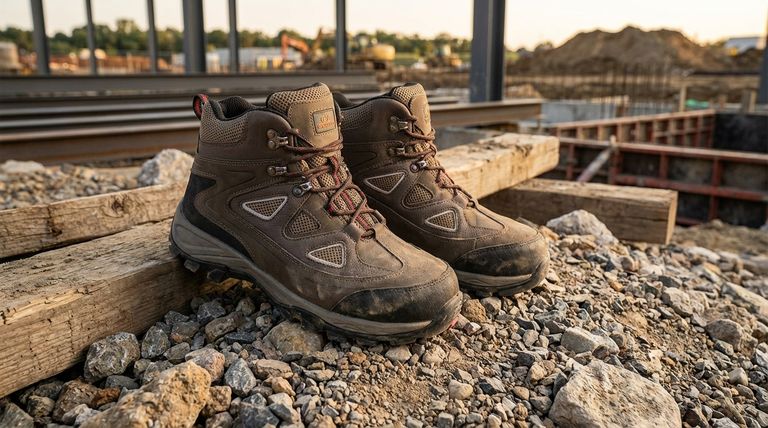
The Biomechanics of Ankle Protection
To understand a boot's performance, you must first understand the vulnerability of the ankle. The joint is designed for flexion (up and down) but is susceptible to injury from unnatural rolling or twisting motions.
Resisting Twists and Rolls
The most common ankle injuries are sprains caused by the foot rolling inward (inversion) or outward (eversion). A high-top boot with a padded collar acts as an external skeleton, or exoskeleton.
This structure physically blocks the ankle from exceeding its safe range of motion, turning a potentially severe sprain into a minor stumble.
Enhancing Stability on Uneven Ground
Work environments are rarely perfectly flat. On construction sites, trails, or even cluttered warehouse floors, the ground surface is unpredictable.
High ankle support creates a more stable connection between your leg and the boot's sole. This gives you a wider, more forgiving base of support, improving your balance and preventing missteps.
Improving Joint Awareness (Proprioception)
The gentle pressure a padded boot collar exerts on your ankle provides constant sensory feedback to your brain. This is known as proprioception, or your sense of body position.
This enhanced feedback allows your brain to make faster, more precise adjustments to your balance, helping you react instinctively to shifts in terrain without consciously thinking about it.
Key Beneficiaries of High Ankle Support
While beneficial for many, certain roles and environments see a disproportionate advantage from high-collared boots.
Workers on Variable Terrain
For professionals in landscaping, forestry, or construction, uneven and unpredictable ground is a constant. High ankle support is non-negotiable in these fields for preventing slips and rolls.
Professionals with Repetitive Strain
The reference to drivers is critical. The repeated motion of entering and exiting a tall vehicle cab puts unique, repetitive stress on the ankle joint. A supportive boot stabilizes the ankle during these awkward movements.
Individuals Carrying Heavy Loads
Warehouse workers and movers who frequently carry heavy loads are at a higher risk. Added weight increases the momentum and force behind any potential misstep, making a supportive boot essential for injury prevention.
Understanding the Trade-offs
No design feature comes without compromises. A truly informed decision requires acknowledging the potential downsides of high ankle support.
Reduced Flexibility and Mobility
The very nature of ankle support is to restrict movement. For tasks that require deep squatting or constant foot flexion, such as a mechanic's or flooring installer's work, this rigidity can become a hindrance and cause discomfort.
Increased Weight and Heat
More material means a heavier and warmer boot. Over a long shift, this extra weight can contribute to leg fatigue. In hot climates, the lack of airflow can also be a significant comfort issue.
Making the Right Choice for Your Goal
Selecting the right boot means matching its features to the specific demands of your workday.
- If your primary focus is maximum protection on unpredictable terrain: You need a rigid, high-cut boot that prioritizes stability above all else.
- If your primary focus is a balance of support and mobility for varied tasks: Look for a boot with a padded, flexible collar that offers support without excessive restriction, ideal for drivers or general laborers.
- If your primary focus is lightweight comfort on flat, predictable surfaces: A lower-cut safety shoe or boot will likely provide greater comfort and less fatigue throughout the day.
Ultimately, the right work boot is a specialized tool engineered to mitigate the specific risks you face on the job.
Summary Table:
| Benefit | How It Works | Ideal For |
|---|---|---|
| Sprain Prevention | Restricts side-to-side ankle rolling, the primary cause of injury. | Construction, Landscaping |
| Enhanced Stability | Creates a wider base of support on uneven or slippery surfaces. | Warehouse Workers, Forestry |
| Reduced Fatigue | Improves joint awareness (proprioception), leading to better balance. | Drivers, Movers |
Need work boots engineered for your specific job risks?
As a large-scale manufacturer, 3515 produces a comprehensive range of high-performance footwear for distributors, brand owners, and bulk clients. Whether your team needs maximum ankle support for rugged terrain or a balanced design for mobility, our production capabilities encompass all types of safety boots and shoes.
Contact our experts today for a customized solution that protects your workforce and enhances productivity.
Visual Guide
Related Products
- Durable High-Ankle Tactical Boots for Wholesale & Custom Manufacturing
- Durable High-Ankle Tactical Boots Wholesale Manufacturer for Custom & Bulk Orders
- Durable Leather High-Ankle Tactical Boots for Wholesale & Custom Manufacturing
- Wholesale Leather Ankle Boots with Lug Soles for Custom Brand Manufacturing
- Wholesale High-Traction Camo Boots - Custom Manufacturer for Brands
People Also Ask
- How do tactical boots protect against injuries? Discover the Integrated Safety System
- What are the different types of tactical boots available? Find the Right Boot for Your Mission
- How does additive manufacturing equipment reduce environmental risks? Sustainable Tactics for Modern Footwear Production
- What are the main construction similarities between tactical boots and tactical sneakers? Built for Performance & Durability
- How is the compatibility of polymer materials demonstrated in smart footwear? Enhancing Tactical & Training Performance