
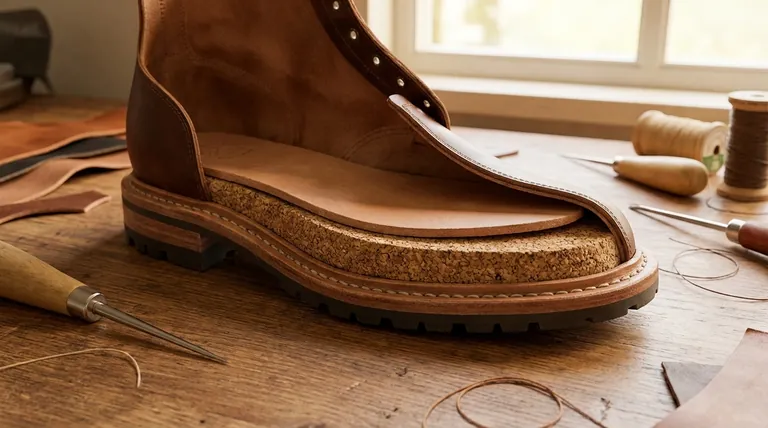
At its core, Goodyear Welt construction enhances comfort through a personalized footbed and structural stability. This is achieved by creating a small cavity between the insole and outsole that is filled with a layer of granulated cork. Over time, this cork layer compresses and molds to the unique shape of your foot, creating a custom-fit insole that provides support and cushioning with every step.
While often associated with durability, the true comfort of a Goodyear welted shoe is not about immediate softness. It's about developing a personalized, supportive fit that becomes more comfortable the longer you wear it.
The Anatomy of Goodyear Welt Comfort
To understand how the construction method creates comfort, we must look at its key components and how they work together as you wear the shoe.
The Cork Footbed: A Custom Mold
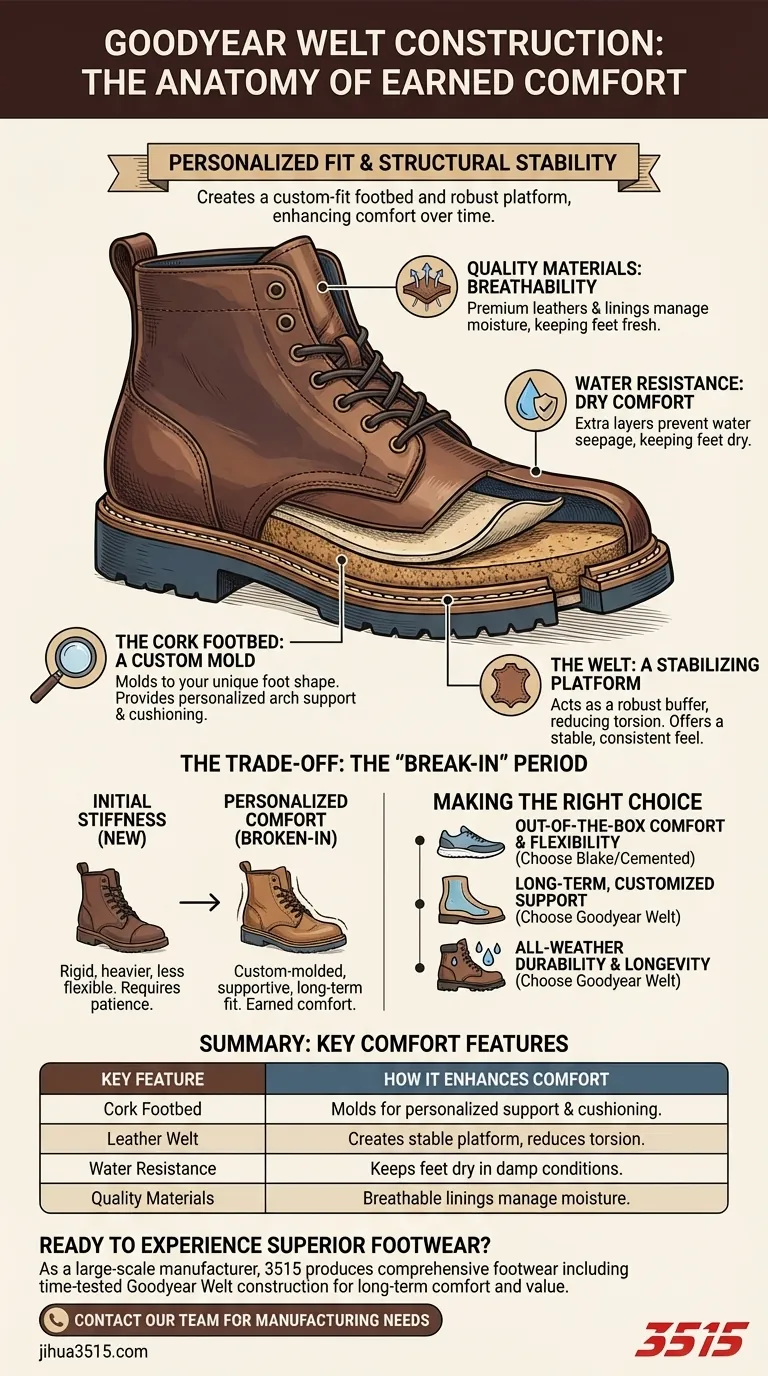
The defining feature for comfort is the space created between the insole and outsole. This cavity is filled with granulated cork.
Initially firm, the cork slowly compresses under the heat and pressure of your foot. This process creates a precise impression of your foot's shape, offering customized arch support and cushioning that is unique to you.
The Welt as a Stabilizing Platform
The welt—a strip of leather stitched around the perimeter of the shoe—acts as a robust buffer between the upper and the outsole.
This creates a stable, supportive platform for your foot. It reduces unwanted torsion and provides a consistent, solid feel, which enhances comfort over long periods of walking or standing.
Water Resistance for Dry Comfort
The welt construction adds an extra layer of material and stitching that helps prevent water from seeping into the shoe where the upper meets the sole.
Keeping your feet dry is a fundamental aspect of comfort, and the Goodyear welt provides a natural advantage in damp conditions.
Quality Materials and Breathability
While not exclusive to the welt itself, shoes built with this method typically use high-quality materials that contribute to comfort.
Linings are often made of soft, breathable calfskin, and uppers from vegetable-tanned leathers. These materials help manage moisture and perspiration, keeping your feet feeling fresh.
Understanding the Trade-offs: The "Break-in" Period
It is critical to understand that the comfort from a Goodyear welted shoe is earned, not immediate. The same features that provide long-term benefits create initial challenges.
Initial Stiffness is Normal
The multiple layers—insole, cork, midsole, and outsole—stitched together create a very rigid shoe out of the box.
This initial stiffness requires a "break-in" period. During this time, the thick leather and cork footbed begin to soften and conform to your foot's movement.
Heavier and Less Flexible
Compared to modern cemented or sneaker constructions, a Goodyear welted shoe is inherently heavier and less flexible.
This is the direct trade-off for its durability, stability, and resoleable nature. The construction prioritizes support and longevity over the lightweight flexibility of a more casual shoe.
Making the Right Choice for Your Goal
Deciding if this construction meets your needs depends on what you prioritize in footwear.
- If your primary focus is out-of-the-box comfort and lightweight flexibility: A different construction, such as a Blake stitch or cemented sole, may be a better initial fit.
- If your primary focus is long-term, customized support: The molding cork footbed and stable platform of a Goodyear welt are unparalleled for creating a personalized fit.
- If your primary focus is all-weather durability and longevity: The water-resistant and easily resoleable nature of this construction is its greatest strength, preserving the comfortable upper for years.
Ultimately, Goodyear welt construction offers an earned comfort that rewards patience with a truly personalized and supportive fit.
Summary Table:
| Key Feature | How It Enhances Comfort |
|---|---|
| Cork Footbed | Molds to your foot's unique shape for personalized arch support and cushioning. |
| Leather Welt | Creates a stable platform, reducing torsion for support during long wear. |
| Water Resistance | Helps keep feet dry in damp conditions for fundamental comfort. |
| Quality Materials | Breathable linings and uppers manage moisture to keep feet fresh. |
Ready to Experience Superior Footwear Comfort and Durability?
As a large-scale manufacturer, 3515 produces a comprehensive range of footwear for distributors, brand owners, and bulk clients. Our production capabilities encompass all types of shoes and boots, including the time-tested Goodyear Welt construction that offers unmatched long-term comfort and value.
Let us help you provide your customers with footwear that combines lasting support with exceptional quality. Contact our team today to discuss your manufacturing needs.
Visual Guide
Related Products
- Durable Goodyear Welt Leather Work Boots for Wholesale & Private Label
- Wholesale Durable Leather Work Boots | 8-Inch Goodyear Welt Manufacturer
- Durable Leather Work Boots Wholesale Manufacturer & Custom Factory
- Premium Lightweight Safety Shoes for Wholesale & Bulk Orders
- Wholesale Durable & Breathable Training Shoes for Custom Brands
People Also Ask
- What is the difference between full-grain and top-grain leather? Premium Material Guide for Boot Manufacturers
- What are the advantages of leather as an upper material for work boots? Unmatched Durability & Custom Comfort
- Why is it important to waterproof leather work boots? Protect Your Investment and Performance
- How should new leather work boots be broken in? A Guide to Comfort and Durability
- What are the advantages of leather uppers in work boots? Unmatched Durability & Protection













