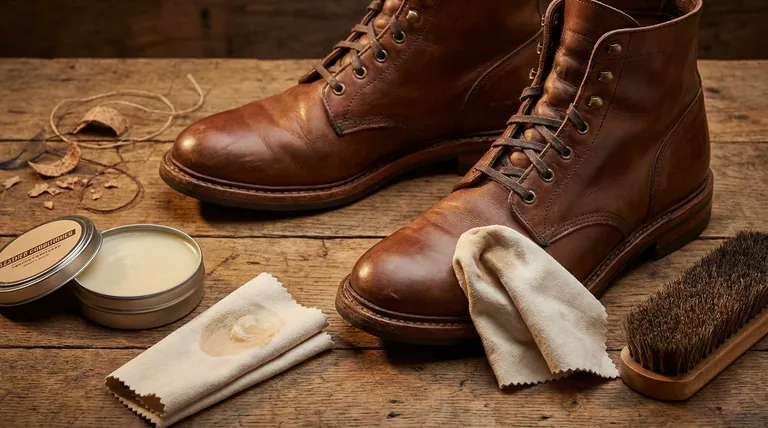
Simply put, conditioning is essential because it preserves the leather uppers, which are the limiting factor in a Goodyear welted shoe's lifespan. While the sole is designed to be replaced multiple times, the upper is largely permanent. Conditioning replenishes the natural oils in the leather, keeping it supple and preventing the cracks that would ultimately end the shoe's life.
The core value of a Goodyear welted shoe is its resoleability, which promises decades of use. Conditioning is the single most important maintenance act that ensures the leather upper lasts long enough to realize that potential.
The Foundation: Understanding the Goodyear Welt
A Goodyear welt is a specific, time-honored method of shoe construction valued for its incredible durability and longevity. Understanding its design reveals why conditioning is so critical.
Built for Longevity and Repair
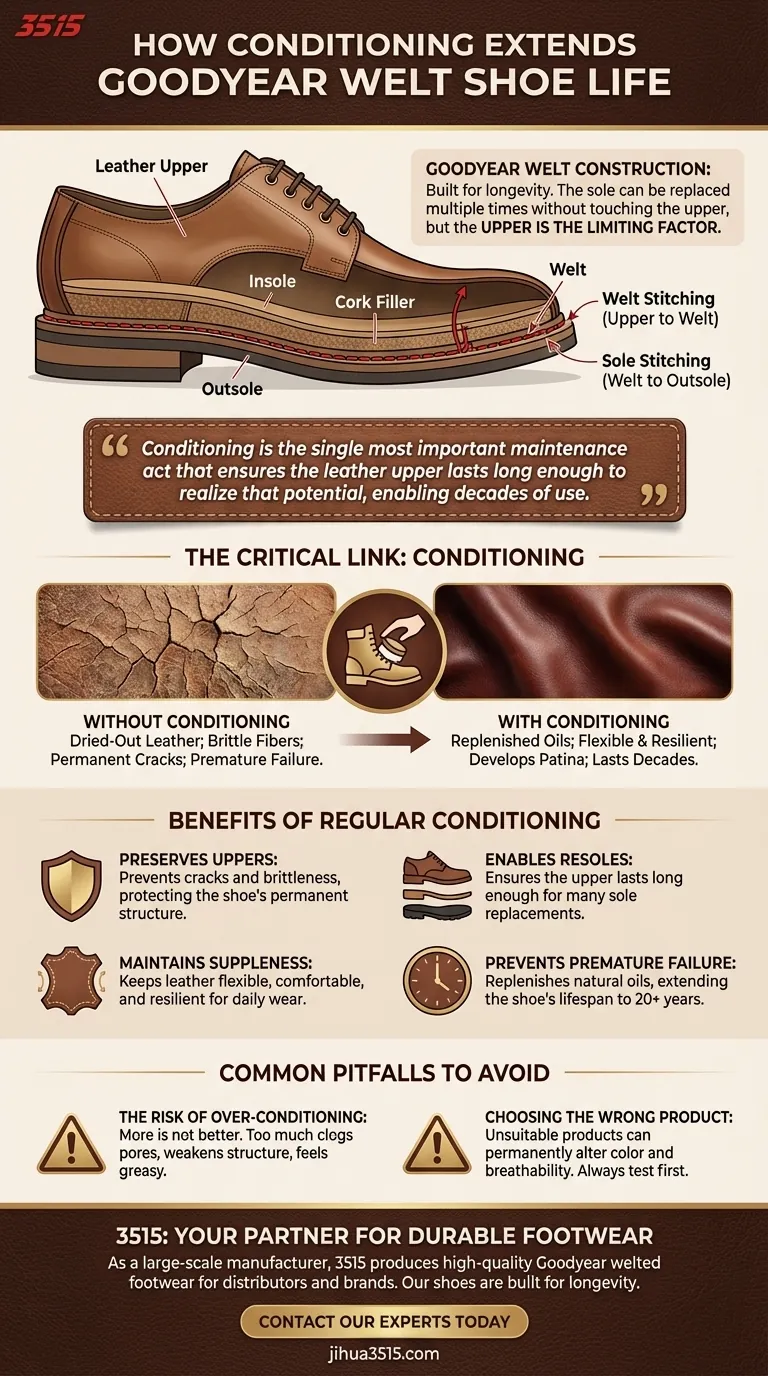
The construction involves stitching a strip of leather—the welt—to both the shoe's upper and its insole. The outsole is then stitched directly to the welt, not the upper.
This creates an exceptionally strong and stable shoe. More importantly, it creates a clear separation between the upper and the part of the shoe that sees the most wear.
The Promise of Resoleability
Because the outsole is stitched to the welt, a cobbler can cut the old stitches and remove a worn-out sole without ever touching the upper. A new sole can then be stitched onto the original welt.
This process can be repeated many times, giving the shoe a potential lifespan of 20 years or more. This is the fundamental reason people invest in Goodyear welted footwear.
Comfort and Water Resistance
The space between the insole and outsole is typically filled with a layer of cork. Over time, this cork molds to the unique shape of your foot, creating a custom, comfortable fit.
The welt also acts as a barrier, minimizing water penetration and keeping your feet drier than in more common cemented constructions.
Why Conditioning is the Critical Link
The ability to resole the shoe is only valuable if the uppers remain in good condition. This is where conditioning becomes the key to unlocking the shoe's full lifespan.
The Upper is the Limiting Factor
A cobbler can replace a sole, but they cannot fix large cracks or brittle, dried-out leather on the shoe's upper.
If the uppers fail, the shoe fails. It doesn't matter that the sole could be replaced if the leather holding everything together is compromised.
How Conditioning Protects Your Investment
Leather is a natural skin that contains oils. Over time, exposure to elements like water, heat, and dry air depletes these oils.
Conditioner replenishes these essential oils, restoring the leather's flexibility and moisture. This simple act prevents the fibers from becoming brittle and eventually cracking under the stress of walking.
Maintaining Suppleness for Decades
Regularly conditioned leather remains supple and resilient. It can flex thousands of times a day without breaking down, developing a rich patina over years of use instead of destructive cracks.
Common Pitfalls to Avoid
While essential, conditioning is not without its nuances. Applying the wrong product or applying it too frequently can cause its own set of problems.
The Risk of Over-Conditioning
More is not always better. Applying too much conditioner can oversaturate the leather, clogging its pores and weakening its structure.
Over-conditioned leather can feel greasy, attract more dirt, and may become permanently darkened beyond your desired patina. Condition only when the leather looks or feels dry.
Choosing the Right Product
Different types of leather require different care. A heavy, wax-based conditioner for rugged work boots is not suitable for fine calfskin dress shoes.
Using the wrong product can permanently alter the color, texture, and breathability of the leather. Always test a new conditioner on an inconspicuous area first.
Making the Right Choice for Your Goal
Your conditioning strategy should align with how you use your shoes and what you want from them.
- If your primary focus is maximum longevity: Condition the uppers whenever they feel dry to the touch, ensuring they are always ready for the next resole.
- If your primary focus is a beautiful patina: Choose a light, high-quality conditioner that nourishes the leather without excessively darkening it, allowing its natural character to develop.
- If your primary focus is weather resistance: Use a conditioner with some wax content, paying special attention to the welt area to create a better seal against moisture.
Ultimately, conditioning is the bridge between a good shoe and a shoe that lasts a lifetime.
Summary Table:
| Benefit of Conditioning | Why It Matters |
|---|---|
| Preserves Leather Uppers | The upper is the shoe's limiting factor; conditioning prevents cracks and brittleness. |
| Enables Multiple Resoles | Protects the investment by ensuring the upper lasts long enough for many sole replacements. |
| Maintains Suppleness | Keeps the leather flexible and comfortable, allowing it to develop a rich patina over time. |
| Prevents Premature Failure | Replenishes natural oils lost to wear, ensuring the shoe's structure remains intact for decades. |
Ready to build a durable footwear collection that lasts for decades?
As a large-scale manufacturer, 3515 produces a comprehensive range of high-quality Goodyear welted and other construction footwear for distributors, brand owners, and bulk clients. Our production capabilities encompass all types of shoes and boots, built with longevity in mind.
Contact our experts today to discuss how our manufacturing solutions can provide the durable, resoleable footwear your customers demand.
Visual Guide
Related Products
- Durable Goodyear Welt Leather Work Boots for Wholesale & Private Label
- Wholesale Durable Leather Work Boots | 8-Inch Goodyear Welt Manufacturer
- Wholesale Durable & Breathable Training Shoes for Custom Brands
- Custom OEM Training Shoes Wholesale Manufacturer Durable & Breathable
- Lightweight Breathable Training Shoes for Wholesale & Custom OEM Manufacturing
People Also Ask
- What protection do leather work boots need? A Complete Guide to Material Care and Worker Safety
- What is the complete process for deep cleaning leather work boots? A Step-by-Step Guide to Preserve Your Investment
- How can leather work boots be protected from environmental elements? A 3-Step Guide to Lasting Durability
- What are the advantages of leather uppers in work boots? Unmatched Durability & Protection
- How should new leather work boots be broken in? A Guide to Comfort and Durability