The industrial-grade hot press molding machine serves as the central processing unit for transforming loose raw materials into solid, high-performance leather composite sheets. By applying simultaneous heat and pressure within a controlled environment, this machine ensures the polymer matrix fluidizes completely to bond with reinforcing fibers. This process is essential for curing the material into a uniform, flexible sheet while expelling structural impurities like air and moisture.
The core value of this machine lies in its ability to create a "pressure-holding environment" that forces the polymer matrix to fully permeate the leather fibers, resulting in a dense, continuous structure with stable mechanical properties.
The Mechanics of Material Transformation
Fluidization of the Matrix
The primary function of the hot press is to create an environment where the polymer matrix can change states effectively.
By maintaining temperatures typically between 90 and 120 degrees Celsius, the machine allows the polymer to fully fluidize.
This liquid state is critical, as it allows the matrix to flow into every crevice of the mold and surround the leather fibers completely.
The Role of Controlled Pressure
Heat alone is insufficient for high-density composites; significant force is required to shape the material.
The machine applies specific pressure, generally ranging from 77 to 108 psi, to the mixed material.
This pressure ensures the fluidized polymer fills the mold geometry precisely, dictating the final shape and thickness of the sheet.
Expulsion of Impurities
A major challenge in composite manufacturing is the presence of voids or trapped elements that weaken the final product.
The pressure-holding phase significantly aids in expelling internal air that would otherwise create bubbles or weak points.
Simultaneously, the process extrudes residual moisture from the material, preventing steam pockets from forming during the cure.
Structural Integrity and Bonding
Enhancing Interfacial Bonding
The ultimate goal of the hot press process is to fuse dissimilar materials into a single entity.
The combination of heat and pressure ensures tight interfacial bonding between the organic leather fibers and the synthetic polymer matrix.
This creates a dense, continuous structure that exhibits excellent damping properties, which is particularly valuable in footwear applications.
Ensuring Uniformity
In industrial production, consistency across the entire surface area of the sheet is non-negotiable.
The machine’s ability to maintain a set temperature and pressure leads to flexible composite sheets with uniform thickness.
This stability ensures that mechanical properties, such as flexibility and durability, are consistent throughout every inch of the material.
Understanding the Operational Trade-offs
Parameter Sensitivity
While the hot press machine is powerful, it relies heavily on the precise maintenance of its operating window.
If the temperature drops below the optimal range (e.g., below 90°C), the matrix may not fluidize sufficiently to bond with the fibers.
Conversely, incorrect pressure settings can lead to incomplete air expulsion or uneven thickness, compromising the structural integrity of the sheet.
Making the Right Choice for Your Goal
To maximize the utility of an industrial-grade hot press molding machine, consider your specific production targets:
- If your primary focus is Structural Durability: Prioritize the pressure-holding phase to maximize air expulsion and ensure the tightest possible interfacial bonding between the matrix and fibers.
- If your primary focus is Product Consistency: Focus on strict temperature regulation (90-120°C) to guarantee the polymer fluidizes evenly, resulting in uniform thickness across the sheet.
By strictly controlling the curing environment, the hot press machine turns variable raw mixtures into reliable, high-grade composite materials.
Summary Table:
| Parameter | Range / Action | Role in Production |
|---|---|---|
| Temperature | 90°C - 120°C | Fluidizes polymer matrix to bond with leather fibers |
| Pressure | 77 - 108 psi | Shapes material, ensures mold filling, and dictates thickness |
| Air Expulsion | Pressure-holding | Removes internal voids and air bubbles to prevent weak points |
| Moisture Control | Extrusion | Prevents steam pockets and ensures a stable curing environment |
| Resulting Quality | Uniformity | Produces consistent thickness and high-performance mechanical properties |
Elevate Your Production with 3515’s Advanced Manufacturing Expertise
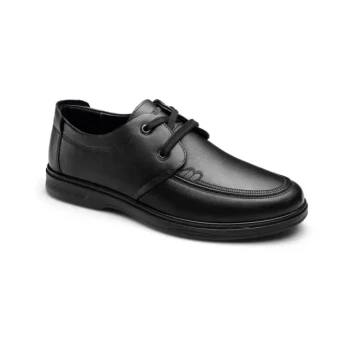
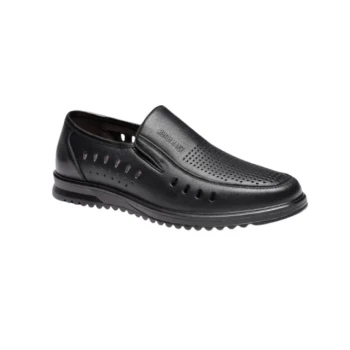
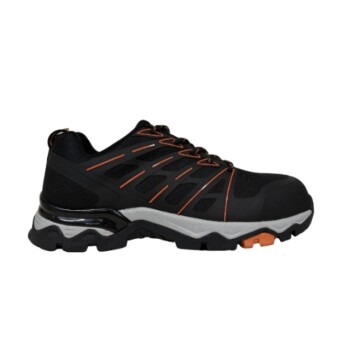
As a large-scale manufacturer serving distributors and brand owners worldwide, 3515 leverages industrial-grade hot press technology to deliver superior performance across our entire footwear range. Whether you are sourcing our flagship Safety Shoes series or require high-volume production for tactical boots, outdoor shoes, training sneakers, or formal dress shoes, we offer the technical precision needed to meet your bulk requirements.
Partner with us to benefit from:
- Unmatched Durability: High-density materials engineered for extreme work environments.
- Consistent Quality: Precision-molded components that ensure uniform thickness and flexibility.
- Scalable Solutions: Comprehensive production capabilities for diverse footwear categories.
Ready to enhance your product line with industry-leading footwear solutions? Contact us today to discuss your bulk needs!
References
- Shubham Sharma, S. Rajkumar. Effect of nanoadditives on the novel leather fiber/recycled poly(ethylene-vinyl-acetate) polymer composites for multifunctional applications: Fabrication, characterizations, and multiobjective optimization using central composite design. DOI: 10.1515/ntrev-2022-0067
This article is also based on technical information from 3515 Knowledge Base .
Related Products
- Wholesale Leather Apron Toe Derby Shoes Custom Factory Production
- Lightweight Breathable Sneakers with Wet-Traction Grip for Wholesale & Private Label
- Wholesale Modern Business Shoes with Dial Closure System for Bulk Orders
- Wholesale Durable Safety Boots Manufacturer Customizable Steel Toe Work Boots
- Durable Leather Moc Toe Work Boots for Wholesale & Custom Manufacturing
People Also Ask
- What historical figure is associated with the Derby shoe? The Earl of Derby's Comfort Revolution
- What are the features and appropriate occasions for wearing derby shoes? A Guide to Versatile Style
- What is the main difference between Derby Shoes and Oxford Shoes? It's All in the Lacing.
- How do Derby shoes fit into business casual attire? Master the Perfect Balance of Professional Style
- What are Derbies and how do they differ from Oxfords? A Guide to Lacing and Formality